


Our Top 12+ Impactful Leadership Team Building Activities
Leader shouldn’t just be a title held by a single person on the team—the best leaders know that leadership team building activities are your secret weapons for building extraordinary teams and harnessing every member’s superpowers.
Too many of today’s leaders get caught up in their titles and status, completely missing the point of authentic leadership. They forget how essential leadership development activities and training exercises are for themselves and their team members.
Successful leadership is a daily practice that relies on people-focused skills—these have nothing to do with how you look on an org chart. As Mahatma Gandhi famously said, “Be the change you wish to see in the world.”
In this guide, we’ll explore what organizational leadership really means, why it matters more than ever, and proven strategies for developing leaders at every level of your organization. Whether you’re an aspiring leader looking to grow or a senior executive building your leadership bench, you’ll find actionable insights that work.
What is organizational leadership?
Leadership is all about influencing the behaviors, attitudes, and thoughts of others. As a leader, your actions are held to an unspoken standard of what’s appropriate and what’s not. Team members learn about acceptable behaviors by observing the actions of their leaders.
Office dress code is a good example of this—by wearing clothes that meet the dress code, a leader indirectly demonstrates which attire is acceptable. While employees should have access to clearly defined policies, they’ll also take cues from how their leaders behave.
Organizational leadership extends beyond individual leader behavior. It’s about creating leadership systems, developing leadership capability across all levels, and building a culture where leadership is valued and nurtured throughout the entire organization.
Leadership vs management: Understanding the difference
One of the most important distinctions in organizational development is understanding leadership vs management. While both are essential, they serve different purposes.
Management focuses on:
- Maintaining systems and processes
- Ensuring consistency and efficiency
- Controlling and problem-solving
- Planning and budgeting
- Organizing and staffing
Leadership focuses on:
- Setting vision and direction
- Inspiring and motivating people
- Driving change and innovation
- Developing people and building culture
- Taking strategic risks
The best organizations need both strong managers and strong leaders. The key is understanding when each approach is needed and developing people who can flex between both styles.

Essential qualities of effective leaders
What makes a great leader? The core traits remain pretty consistent across all leadership positions:
Vision
Great vision makes great leaders. Leaders need to see the future clearly and articulate it compellingly. Vision provides direction, inspires action, and helps teams understand why their work matters. Without vision, you’re just managing tasks instead of leading toward something meaningful.
Empathy
Empathetic leadership has become one of the most critical leadership skills. As discussed in our podcast on the rise of empathetic leadership, leaders who understand and respond to employee emotions create stronger connections, better communication, and higher retention.
Team leaders in today’s workplaces need high emotional intelligence and empathy to connect with their teams. It’s a must for facilitating healthy communication. Emotional intelligence training courses can serve as practical leadership development activities to teach essential intrapersonal and interpersonal skills.
Communication
Effective leaders are exceptional communicators. They listen actively, speak clearly, provide context, and adapt their communication style to different audiences. They’re transparent about challenges and generous with information. Communication isn’t just about talking—it’s about ensuring understanding.
People-oriented leadership can help you create a safe work environment that encourages free thinking and calculated risk-taking. You should reward success and help employees view failures as learning opportunities. This shows them that taking risks is a good thing—those risks may lead to success, and if they don’t, they’re opportunities to learn and grow.
Trust
As explored in our podcast on leadership and trust, trust is the foundation of effective leadership. Leaders build trust through consistency, integrity, follow-through, and vulnerability. When leaders trust their teams and teams trust their leaders, everything else becomes easier.
You need to build trust and psychological safety in the workplace. Employees only reach their full potential when they have trust in those around them and feel safe at work. This ties back to communication—employees need to feel safe sharing their ideas and taking risks, even if those ideas and risks don’t pan out.
Adaptability
Strong leaders pivot when circumstances change. They’re comfortable with ambiguity and help their teams navigate uncertainty. They don’t cling to outdated approaches just because “that’s how we’ve always done it.” Adaptability includes willingness to learn, openness to feedback, and courage to change course when needed.
Strategic thinking
Leaders need to think strategically while having a visionary mindset. They have to drive innovation and have a vision of the future, but they also need strategic thinking to realize that vision. This means connecting dots others miss, anticipating challenges, identifying opportunities, and making decisions that position the organization for long-term success.
5 tips for strong leadership
Before we dive into our favorite leadership teamwork activities, let’s review some of the essentials of strong leadership.
From productivity to consistency, each of these tips will help strengthen your foundation so that you can be the leader your team members need.
1. Lead by example
Actions speak louder than words. What you do, the steps you take, and the decisions you make have an overall impact on how others perceive you.
If you’re hard-working, meticulous, and dependable, you can subtly set expectations and encourage your team members to strive to meet similar standards.
Likewise, if you emphasize courageous leadership, you can encourage your team members to tap into their inner wells of confidence when they’re navigating professional challenges.
No matter what they are, your actions as a leader will have a significant impact on your company culture, and it’s up to you to show your employees what your workplace is all about.
Bottom Line: Great leaders hold themselves up to the same standards as their team.
2. Empower your team
Effective leaders don’t just hear problems—they find positive solutions. You should be able to help solve the problems your team members are facing on a day-to-day basis.
When your team comes to you with problems, they expect you to help solve them. Being positive while you do so helps encourage them to continue turning to you for help and shows them how to behave when they’re solving problems, too.
- Be a compassionate listener
- Provide helpful advice
- Follow your words with concrete actions
- When you don’t have a solution for a problem, own it and be positive about it
- Work alongside your team to solve issues
Essentially, it’s all about helping your team find solutions and working with them when you have to find alternative methods of addressing situations.
Bottom Line: A good leader can use positivity to turn obstacles into learning opportunities.
3. Be accessible
As the team leader, you’re one of the most important resources for your team. It’s important to make sure that this resource (that’s you!) is accessible to them at all times.
If you exude positive energy and a judgment-free attitude, your team will be more likely to approach and trust you with their concerns, questions, and suggestions.
One of the best ways to ensure open communication is to create an open-door policy—this allows all employees to chat with upper management whenever they have concerns. After all, great teamwork starts with great relationships.
Bottom Line: Approachable leaders foster trust and open communication, which helps teams strengthen trust and collaboration.
4. Provide clear directions
As with anything in business, goals are crucial in nurturing a leadership team. You want clear, shared goals to unite them around a common cause. People can’t follow if they don’t know where you’re going. Avoid confusion by:
- Setting clear expectations
- Communicating priorities
- Explaining the why behind decisions
Bottom Line: When everyone understands how their work contributes to the bigger picture, they’re more motivated.
5. Make everyone feel like leaders
Great leaders create more leaders. Provide opportunities for continuous improvement, whether through training, leadership activities at work, or other methods. Mentor, coach, provide stretch assignments, and invest in people’s growth. Your success as a leader is measured by how well your team performs without you.
As discussed in our podcast on inclusive leadership, inclusion activist Ash Beckham emphasized: “If you have a team, you thrive when you’re getting the best from everyone.”
Assembling a high-performing leadership team
The first step in building a high-performing leadership team is assembling the right people. Not everyone is a natural leader—and that’s okay! However, for leadership teams, there are certain things you need to look for when undergoing a leadership transition.
Choosing the right people
When it comes to identifying people with leadership potential, there are certain qualities to look for:
- Communication skills: Leaders need to communicate effectively with team members and others within the organization.
- Collaboration abilities: Good leaders must be capable of working together with those around them and setting an example of how to collaborate.
- Strategic thinking: Leaders need to think strategically while having a visionary mindset. They drive innovation and have a vision of the future.
- Emotional intelligence: In our podcast episode on leadership culture, workplace culture consultant Haley Grayless observed, “almost every time, managers rate the culture more positively than individual contributors. They’re often out of touch.” The right managers can understand when their employees are struggling and know how to alleviate their stress.
Assessments and evaluations can help identify which candidates have leadership styles that will be a good fit for your team.
Diversity and inclusion
A diverse leadership team brings in a broader range of perspectives that can improve decision-making. Everyone sees things differently, and that’s a strength you should leverage.
Inclusive leaders create environments where diverse perspectives are valued, where everyone feels they belong, and where all voices are heard. They actively seek out different viewpoints, challenge their own biases, and ensure equitable access to opportunities.
Keys to inclusive leadership:
- Recognize and value differences
- Create psychological safety for all team members
- Ensure fair access to opportunities and resources
- Actively solicit diverse perspectives
- Address bias and discrimination swiftly
Diverse leadership teams bring broader ranges of perspectives that improve decision-making. Everyone sees things differently, and that’s a strength you should take advantage of.
Impactful leadership team building activities
Leadership and team building go hand in hand. Team building is a great way to build trust amongst team members and create psychologically safe environments. It’s also incredibly effective for developing the specific qualities and traits necessary for strong leadership teams.
Why is team building important in leadership? Leadership activities at work focus on the specific skills leaders need, making it an incredibly useful resource. Here are some of the most effective leadership team building activities:
1. Cultivate Team Improv Skills
There’s a strong link between improv and business. Improv is a unique tool to get your team to tackle challenging subjects in a fun and non-confrontational way.
At TeamBonding, we’ve designed group improv programs that train employees to perform at their best, even when faced with uncertain and volatile conditions.
This is a necessary skill set leaders must have, and it’s a great way to bond with your team!
There’s something special about the relaxed environment these programs create. After all, it’s hard to argue with having a safe place to build trust through shared laughter and fun.
2. Corporate Survivor
Corporate Survivor is a leadership teamwork activity that lets everyone’s skills shine. Your teams will work together to “save” their teammates through a variety of challenges, just like in the TV show.
Each challenge requires a different skill, giving everyone a chance to showcase their strengths.
During this fun leadership exercise, you’ll watch as new leaders emerge with increased confidence in their abilities. You’ll also help create lasting memories and new friendships within your team, which can significantly boost morale.

3. Team DNA
In our leadership development activity, Team and Leadership DNA, team members will complete their Belbin® profile and invite feedback from their colleagues.
Each employee’s profile is analyzed to identify any balances and imbalances present in the current team roles. From there, a TeamBonding expert introduces the best programs for your team members to apply the insights from their Belbin® Team Roles.
This leadership development activity helps teams maximize their work relationships and boost performance. It’s also available for virtual, hybrid, or in-person teams, which means you can benefit from it regardless of how your office is structured!
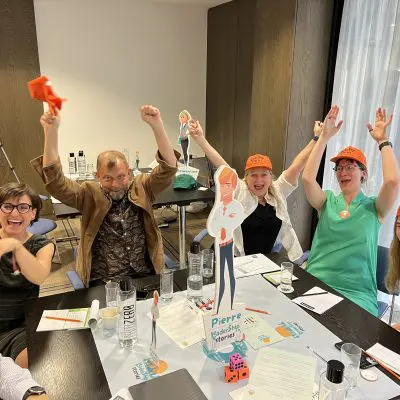
4. Leadership Stories
Investing in your company’s key players can benefit everyone in the organization. The Leadership Stories program uses the proven powers of gamification to keep even your busiest, most distracted leaders engaged.
Your employees will join small teams to compete against each other. They’ll consider a series of scenarios that require crisp, smart leadership decisions as they choose the best courses of action for each part of the game.
5. Beat the Box
Beat the Box will have your team working together for a series of mind-bending escape room challenges, putting their collaboration to the test. It also helps identify individual strengths, which is a big part of working together as a team.
This activity emphasizes teamwork and communication, which are essential leadership skills that you’ll want to foster.
6. Bridging the Divide
Bridging the Divide is a great event that will get your team members working together. They’ll have to rely on each other as they tap into their creativity to build a physical bridge for an RC car to drive over.
Your team will have to communicate and innovate to accomplish their goal, practicing key leadership skills while growing closer.
7. Team PechaKucha
Team PechaKucha (TPK) is all about building trust in 6 minutes and 40 seconds! It’s a fantastic way for teams to exchange broad and diverse ideas in a short amount of time.
TPK uses an internationally renowned storytelling format to foster trust through business storytelling. Teams get to pick their topics, plan their presentations, and share their values to strengthen a foundation of trust along the way.
8. ibuild
ibuild is one of our most fun, unifying leadership team building activities. It offers strong outcomes by focusing on language, feedback, and the importance of creating a step-by-step project strategy.
This activity emphasizes the idea that every member is vital to the team’s overall success. Participants will split into small groups, assign specific roles, and then work to replicate a model in a set amount of time while using simple components.

9. Chain Reaction
The Chain Reaction Challenge involves teams designing fun and complex Rube Goldberg devices. This activity is designed to encourage innovation, creativity, and problem-solving, all essential skills for effective leadership and teamwork.
Looking for even more fun? Try following up on this one with Corporate Crime Scene Investigation. This event involves working together to solve a mock crime, promoting collaboration and problem-solving, and it’s always a wild ride.
10. Professional Development Programs
High-performing leadership teams are constantly growing, so professional development is essential for creating and adding new members to your leadership team.
Your team should always be learning, developing, and growing, and our professional development programs are designed to make it happen.
Try introducing professional development workshops, networking events, mentorship programs, and industry conferences to engage the whole team and help their leadership skills shine.
You might also encourage regular job shadowing to help team members learn about other roles within the organization.
11. DISC Assessment Training
DISC Assessment Training is all about helping your team improve communication and cooperation by learning more about each other. It helps build the connections and trust that are necessary for effective teamwork and leadership development.
12. StrengthsFinder 2.0
StrengthsFinder 2.0 is based on Clifton StrengthsFinder Training. This simple online assessment comes with accompanying resource materials to serve as guides for discovering the true strengths of your team members.
It’s designed to put success, both in life and leadership, within the grasp of every participant from your team.

Ready to develop your leadership team?
Investing in leadership team building activities will always pay off if your goal is to work toward a motivated and productive team. It’ll show your team that you’re not placing yourself on a pedestal as “The Leader,” but looking to do your best and bring out the best in every employee.
By creating a supportive and healthy environment, you can foster a positive company culture that will benefit your organization and employees. Remember, a title does not define your leadership qualities, but your abilities and behaviors do.
Ready to take your leadership to the next level? Want to foster high-performing leadership teams? Consider partnering with TeamBonding.
In our 25+ years of experience, we’ve gained the knowledge, experience, and tools necessary to help your leadership teams achieve their full potential.
Take a look at our events and get in touch with us today to get the ball rolling and create a team of leaders who will drive your organization forward!


Get more insights in our newsletter:
* every subscription supports charity!
PODCAST
Get ideas, inspiration and best practices from across the globe.




Plays well with these activities.