

Corporate Volunteering vs. Team Building: What’s the Difference?
THE GIST: Corporate volunteering and team building both strengthen workplace culture, but they serve different purposes: volunteering is impact-first, while team building is connection-first. This blog explains how each supports employees, communities, and company culture—and how blended programs can deliver both meaningful service and stronger team relationships. It also offers clear definitions, examples, and expert guidance from our Director of CSR to help leaders choose the right experience for their goals.
As TeamBonding’s Creative Director of CSR, I spend a lot of time thinking about how people connect—both with each other and with the causes they care about. Over the years, I’ve watched employees look for more from their work than just productivity or performance.
People want a sense of shared purpose. They want to feel their company reflects their values. And they want meaningful ways to strengthen relationships while also giving back. That’s where conversations about corporate volunteering, corporate philanthropy, and team building really begin.
Even though corporate volunteering and corporate team building often happen in the same cultural space, they serve different goals.
- Corporate volunteering is impact-driven. It’s about supporting nonprofits, addressing real community needs, and creating experiences rooted in service.
- Team building is connection-first. It focuses on communication, problem-solving, morale, and the day-to-day relationships that help a team thrive.
Understanding the difference between team building and volunteering helps leaders design experiences that actually meet their goals rather than blending everything together and hoping for the best.
Many companies look to the benefits of volunteering as a team to enhance morale and strengthen employees’ sense of purpose. Others build broader strategies around the CSR benefits for businesses and employee happiness. More organizations are also exploring how social purpose shapes culture. These aren’t separate conversations—they’re connected parts of a workplace culture where people want to feel both valued and valuable.
This article will walk through what corporate volunteering is, what team building is, where they differ, and where they overlap. My goal is to give you clear definitions, practical examples, and guidance on choosing what fits your team—whether you’re trying to build stronger connections, make a bigger impact, or bring both together in meaningful, memorable ways.
What is corporate volunteering?
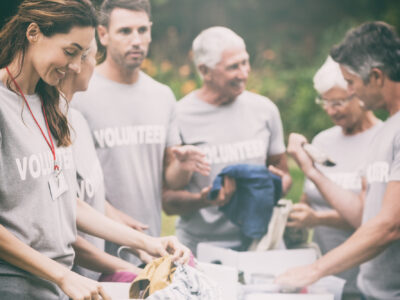
Corporate volunteering gives employees structured opportunities to donate their time, skills, or energy to support nonprofits or community projects. These initiatives come in many shapes—from hands-on service to skills-based support—but the focus is always the same: make a tangible, meaningful impact.
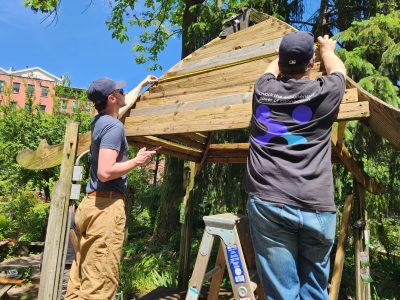
The purpose behind corporate volunteering is to address real community needs. When teams build something for a family, send educational materials to students, or support a nonprofit with professional expertise, the contribution immediately becomes more than an activity. It becomes a shared moment of purpose.
Team building can include many different formats, such as collaborative challenges, outdoor adventures, creative workshops, learning-based experiences, and virtual options for remote teams. The right mix depends on what your team needs most right now: energy, skill-building, connection, or all three.
Corporate volunteering programs like skills-based volunteering make it easy for teams to support causes that align with your company’s values while creating a memorable experience that employees feel proud of.

Why companies should invest in corporate volunteering
Many companies invest in corporate volunteering because it helps them live their values. Supporting nonprofits through meaningful service aligns directly with the bottom line of CSR goals, whether those goals involve sustainability efforts, education initiatives, or community uplift.
Corporate volunteering also strengthens your employer brand. People want to work for companies that care—not just in words, but in action. When employees see their company showing up for the community, it reinforces trust and pride.
It’s also an engagement driver. Employees feel more connected and fulfilled when they participate in work that makes an impact. That sense of purpose boosts motivation and helps attract and retain talent, especially among teams that want values-driven workplaces.
Most importantly, volunteering builds company culture. When teams unite around meaningful work, they strengthen the shared values that define how they collaborate and support each other.
What is corporate team building?
Corporate team building brings employees together through structured activities that are designed to strengthen collaboration, communication, trust, and overall morale. These experiences help teams work better together, communicate more effectively, and build the kind of relationships that matter in day-to-day work.
The purpose of team building is connection. When people step out of their routines to solve problems, try something creative, or experience something fun together, it becomes easier for them to show up authentically back on the job.
Team building can include many different formats, such as:
Collaborative challenges that encourage creative thinking
If your team loves friendly competition, Corporate Survivor is a great fit. In this high-energy experience, teams tackle a mix of mental, physical, and creative challenges designed to build trust and communication in real time. Another collaborative favorite is Go Team – High-Tech Scavenger Hunt, where teams use a custom GPS app and mobile devices to navigate hotspots, complete photo and video missions, and solve clues together.
Outdoor or adventure activities that energize and inspire
Outdoor programs work especially well when your team needs a reset. Outrageous Games turns a company outing into a field-day style relay series, with non-athletic but highly engaging challenges that get people laughing, cheering, and moving together. Experiences like this are perfect for breaking routine, boosting energy, and giving people a shared story they’ll keep talking about.
Creative workshops that help people share ideas in new ways
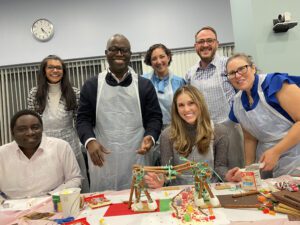
Creative team building experiences invite people to experiment, play, and see each other in a new light. The Chocolate Challenge blends innovation, problem-solving, and a serious amount of chocolate as teams design and build structures or “products” using candy as their raw material. Workshops like this help teams practice collaboration and idea-sharing in a low-pressure, fun environment.
Learning-based experiences like leadership or communication sessions
Some teams are ready for deeper skill-building. Improv for Team Building uses group improvisation to strengthen active listening, presence, trust, and responsiveness—skills that translate directly into meetings, client work, and cross-functional projects. Bridging the Divide gives teams a hands-on challenge: design and build a physical bridge under tight constraints, then test it with a remote-controlled car. Both experiences help employees practice communication, leadership, and problem-solving in a memorable way.
Virtual team building options for remote teams
Remote and hybrid teams need shared experiences too. Haunted House Virtual Escape Room brings people together online to solve cryptic clues, complete challenges, and “escape” under time pressure, all while practicing teamwork across locations. For lighter, fast-paced connections, Almost Anything Goes – Virtual Team Trivia uses themed rounds and customizable questions to spark conversation, laughter, and a sense of belonging for distributed teams.
When these moments happen consistently, employees feel more aligned, more confident working together, and more supported in their roles.
Why companies invest in team building
Companies invest in team building because strong relationships create strong teams. Shared experiences improve cross-functional connection and help people collaborate more naturally.
Team building also boosts morale. Stepping away from daily responsibilities to connect with colleagues helps reduce burnout and reminds employees that they’re part of something bigger.
These experiences strengthen communication and reinforce alignment. When teams practice problem-solving in a low-pressure environment, it improves creativity and decision-making back at work.
Finally, team building supports distributed teams. Virtual or hybrid-friendly activities help remote employees feel included, valued, and connected to the company culture—no matter where they’re located.
Corporate volunteering vs. team building at a glance
When you compare corporate volunteering vs. team building, the biggest difference is the intention behind each experience.
Impact first vs. connection first
Corporate volunteering is driven by social impact. The primary goal is to support nonprofits, uplift communities, or contribute to a broader CSR or ESG strategy. Team building is driven by team cohesion. The focus is on improving communication, trust, and workplace relationships.
Emotional outcomes
Volunteering often creates feelings of purpose, fulfillment, and a sense of service. Team building leans into fun, bonding, and motivation.
Organizational outcomes
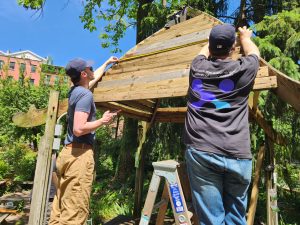
Volunteering supports CSR metrics, nonprofit partnerships, morale, and community alignment. Many teams explore the mental health benefits of volunteering as a team to deepen their impact. Others emphasize the business benefits of corporate social responsibility when aligning volunteering with corporate culture goals.
Team building improves communication, morale, collaboration, and overall workplace performance. Teams often track progress through successful problem-solving tasks, leadership moments, and communication effectiveness—indicators of strong interpersonal dynamics.
Experience structure
Volunteering is tied to nonprofit needs and community partnerships, often influenced by social issues or cause areas. Team building experiences are intentionally designed for interpersonal growth through challenges, workshops, or creative activities.
Volunteering often pairs with company values, while team building often pairs with organizational goals.
Where they overlap
Corporate volunteering and team building overlap when a single experience is intentionally designed to create both community impact and meaningful team connection. These blended experiences give employees the chance to support a cause together while also strengthening their relationships.
Some great examples include:
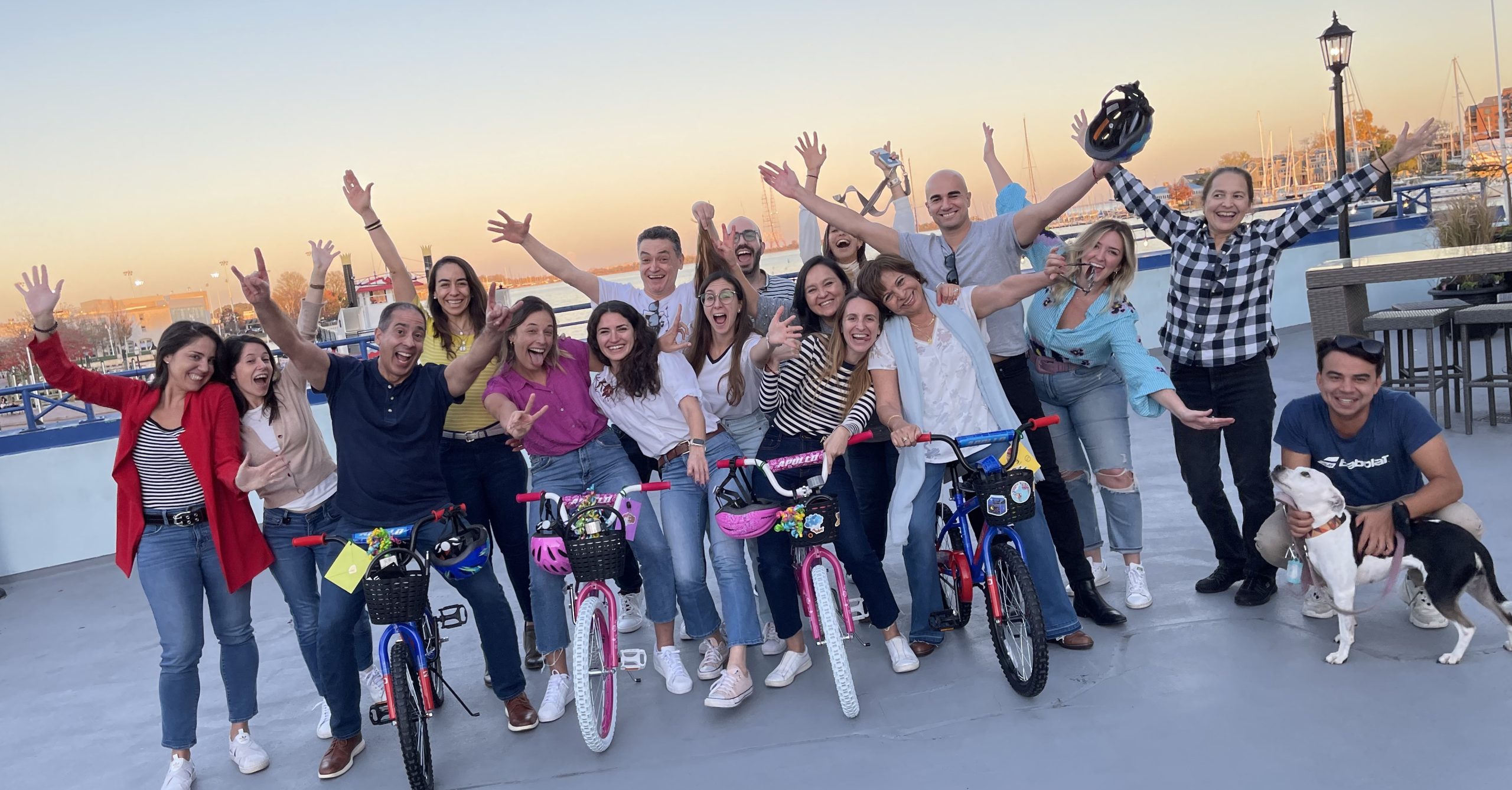
- Charity Bike Build — Teams work together to assemble bikes that are gifted to children through local nonprofits; the build requires coordination, shared effort, and culminates in meaningful community impact.
- The Donation Station — Your group assembles donation kits (snack packs, care packages, themed supply kits, or birthday-party kits) that go directly to shelters, food banks, or community organizations—blending charity work with collaborative teamwork.
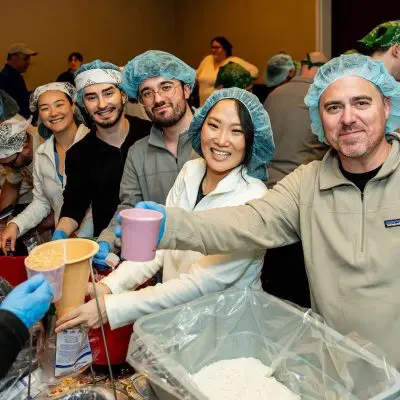
- Meal Pack Give Back — Participants pack meals for individuals or families in need, working as a team under time and volume goals—a hands-on volunteering activity that builds unity as much as it builds community support.
- Mission ImPAWssible — A charitable build program (for example, pet wheelchairs or animal-shelter support kits) that combines hands-on volunteering, meaningful social impact, and team collaboration.
- Just Roll With It – Skateboard Build — Teams assemble and decorate skateboards (or similar donation items) that are gifted to children or community youth programs—merging creative teamwork with charitable giving.
- Foodbank Showdown — A grocery-themed challenge where teams compete to “win” real groceries, then donate them to local food banks—turning competition, fun, and teamwork into direct support for people facing food insecurity.
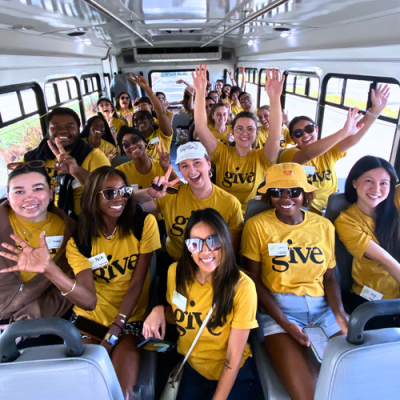
- Do Good Bus — A surprise volunteer outing where teams are taken to a nonprofit project or community site, offering an immersive service + team building experience that mixes adventure, giving, and bonding.
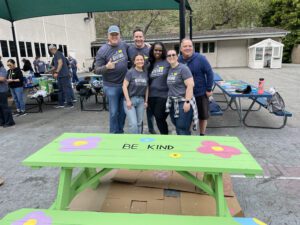
These programs blend service, creativity, teamwork, and shared values. Teams collaborate closely, complete something tangible, and immediately see who their work supports.
This hybrid approach is increasingly popular. Employees want purposeful work, and companies want meaningful engagement that lasts beyond the event. Nonprofits benefit from reliable, well-organized support. And when teams create something impactful together, the emotional resonance is deeper and more lasting.
You don’t have to choose
Corporate volunteering and corporate team building each offer something valuable. One strengthens communities. The other strengthens workplace relationships. Most teams need both to build a culture that feels connected, purposeful, and aligned.
The most effective programs blend purpose and connection. When employees can give back and grow together, the result is a more motivated, bonded, and socially responsible team.
If you’re ready to bring more meaning and connection into your culture, you can explore the full range of opportunities through our corporate volunteering options. It’s an easy way to build bonds, support communities, and create experiences your team will remember.


Get more insights in our newsletter:
* every subscription supports charity!
PODCAST
Get ideas, inspiration and best practices from across the globe.




Plays well with these activities.