


Social Purpose and Brand Purpose: How Companies Build Trust and Impact
As Director of CSR at TeamBonding, I spend a lot of time thinking about why companies do what they do. Not just what appears in a mission statement, but what actually shows up in day-to-day behavior. How teams treat each other, how leaders make decisions, and most importantly, what people feel proud of when they talk about their work.
That’s where purpose comes in.
Social purpose has been part of workplace conversations for years, especially as teams look for more meaning beyond a paycheck. More recently, brand purpose has entered the mix, adding another layer to how organizations define who they are and how they show up in the world. When these ideas are aligned, culture feels grounded and authentic. When they aren’t, employees notice quickly.
In this article, I’ll break down what social purpose is, what brand purpose is, how they relate to each other, and how companies can bring both into their culture in a way that feels real, not performative.
Do customers care about social impact?
Before companies invest time and energy in social purpose, they want to know whether customers actually care, or if it is just a nice idea on paper.
The data say they care, and they’re making decisions based on it.
Research shows that 89% of consumers prefer brands that share their values, and 66% will stop buying from companies whose values don’t align with their own.
There’s also a clear willingness to back those values financially. According to PwC’s 2024 Voice of the Consumer survey, customers are willing to pay 9.7% more on average for sustainably produced or responsibly sourced goods, even as budgets tighten.
Younger consumers are especially direct. Roughly 70% of Americans ages 18–30 believe companies should take a stance on social issues, and many assume that silence means inaction.
From a CSR perspective, this matters because customers don’t separate what a company does from who it is. Social impact has become integral to building trust, loyalty, and long-term relationships. It’s no longer a side consideration. It’s part of the decision-making process.
Social impact, social purpose, and social responsibility: what’s the difference?
These terms get used interchangeably all the time, and that’s where confusion creeps in. Social impact, social purpose, and corporate social responsibility are related, but they are not the same thing.
Understanding the difference matters if you want your efforts to feel intentional instead of scattered. Each plays a distinct role in how a company presents itself internally and externally.
Let’s break them down.
Social purpose: Why does the company exist?
Social purpose sits at the center of everything.
It’s not a marketing slogan or a mission statement you hang on the wall and forget about. Social purpose lives deep within the organization. It’s tied directly to the core of the company and influences how decisions are made, how people are treated, and how success is defined.
I think of social purpose as the why behind what a company does. It shapes the business model and the company culture, even when no one is explicitly talking about it.
Social purpose is:
- Woven into a company’s core mission and identity
- A guiding force behind major decisions
- Often expressed as a commitment to help address specific social issues
- A long-term focus, not a short-term campaign
- Intrinsically tied to how the business operates
- Just as important as profit
When a company has a clear social purpose, it shows up consistently. Businesses and brands with social purpose actively support causes they believe in, not because it looks good, but because it aligns with who they are.
That purpose becomes part of the organization’s corporate culture and daily experience. It often connects to broader social, political, or environmental priorities like:
- Diversity
- Environmental conservation
- Justice reform
- Education

Social impact: What outcomes does the company create?
If social purpose is the why, social impact is the result.
Social impact refers to the measurable effects a company’s actions have on people, communities, and the world. This is where intention turns into evidence.
Companies often track social impact through programs, initiatives, and operational changes. It’s how purpose becomes visible and accountable.
Social impact is:
- Often the result of dedicated programs and core business operations
- Measured using specific metrics and performance indicators
- A tangible outcome of a company’s actions
- Either positive or negative, intended or unintended
In my work, social impact helps answer an important question. Are we actually making the difference we say we want to make? Purpose without impact stays theoretical. Impact turns it into something real.
Social responsibility: How does the company behave responsibly?
Corporate social responsibility (CSR) focuses on how a company manages its obligations to society and the environment.
There’s a difference between social impact and brand missions versus corporate social responsibility. CSR tends to be more structured, program-based, and sometimes separate from day-to-day operations.
Social responsibility is:
- Often centered around volunteering, philanthropy, and environmental efforts
- Traditionally viewed as separate from the core business model
- Focused on being a good corporate citizen
- Frequently organized as specific initiatives or departments
CSR plays an important role in accountability and community engagement. One way companies bring this to life is through charitable team building events, which give teams a hands-on way to contribute while building stronger connections with each other.
Do you need to focus on social purpose, impact, and responsibility?
This is where many organizations get overwhelmed.
Maybe your company has supported social responsibility efforts for years. You volunteer. You donate. You’ve made operational changes that reduce environmental impact. Those things matter.
But is that enough?
In practice, companies that realize the greatest benefits are those that integrate all three concepts rather than treating them separately.
Each pillar serves a different function:
- Social purpose supports strategic clarity, employee engagement, customer loyalty, long-term planning, and stakeholder trust
- Social impact provides measurable results, accountability, continuous improvement, partnership opportunities, and clear communication
- Social responsibility strengthens community relationships, reputation, regulatory goodwill, leadership development, and operational integrity
When these elements work together, they reinforce each other.
This isn’t about checking boxes or maintaining a philanthropic checklist. It’s about defining what your company believes in and how that belief shows up through action.
What brand purpose is and why it matters
Brand purpose answers a slightly different question than social purpose. Instead of focusing on what a company contributes to the world, brand purpose focuses on how a company defines itself and what it promises to the people who interact with it.
I think of brand purpose as the story a company tells about who it is.
It’s the reason a brand exists beyond selling a product or service. It shapes how a company communicates, how it positions itself in the market, and how people feel when they engage with it. When brand purpose is clear, customers understand not just what you do, but why you do it and why it matters to them.
Brand purpose shows up in things like messaging, tone, visual identity, and customer experience. It influences how a company talks about its work and how it wants to be remembered. Unlike social purpose, which is often inward-facing and values-driven, brand purpose is more outward-facing and identity-driven.
That distinction matters.
Employees experience brand purpose through consistency. Customers experience it through trust. When brand purpose is strong, people quickly recognize what a company stands for without needing an explanation.
How brand purpose and social purpose reinforce each other
When brand purpose and social purpose are aligned, people don’t have to work hard to understand what a company stands for. It’s obvious in how decisions are made, how teams talk about their work, and how the brand shows up in the world.
Social purpose sets the internal direction. It defines the values that guide behavior and priorities. Brand purpose carries that direction outward. It shapes how the company communicates and how it wants to be known.
When those two are connected, several things happen:
- Employees see their values reflected in the company’s public identity.
- Teams feel less friction between culture and messaging.
- Customers experience consistency instead of mixed signals.
- Purpose feels practical, not aspirational.
When they aren’t aligned, the disconnect is noticeable. Marketing sounds good, but culture doesn’t match. Employees disengage. Customers grow skeptical.
The goal isn’t to package social purpose for branding. It’s to let real values shape the brand naturally. When that happens, brand purpose becomes an honest expression of how the company operates, not a layer added on top.
That’s when purpose feels real, both inside the organization and beyond it.
Why you need to focus on social purpose, brand purpose, and social impact
There are clear moral and ethical reasons to care about social purpose and social impact. But from where I sit, that’s only part of the story.
Companies that take purpose seriously tend to make better decisions, build stronger cultures, and earn deeper trust over time. When social purpose and brand purpose are aligned, those benefits multiply. Purpose stops living in a silo and starts shaping how the company operates, communicates, and grows.
Here’s how that shows up in real, tangible ways.
Reputation and trust
Consistency is what builds trust. When a company stands by its values internally and reflects those values clearly through its brand, people notice.
Brands like Patagonia didn’t build trust overnight. Their reputation comes from years of aligning what they say with what they do. Even people who don’t buy Patagonia products often know where the company stands and what it advocates for.
That kind of alignment strengthens brand recognition and credibility. Customers are more likely to support businesses that feel authentic, and that trust extends beyond individual purchases. When brand purpose reflects genuine social purpose, reputation becomes an asset instead of something you have to manage defensively.
Employee involvement and motivation
Purpose is one of the strongest drivers of engagement I see in teams.
When employees understand what their company stands for and see that reflected both internally and externally, they feel more connected to their work. Social purpose gives teams a shared direction. Brand purpose reinforces that direction by making it visible and consistent.
This kind of alignment helps employees stay motivated, invested, and proud of where they work. Building a team around shared values, whether that’s supporting local schools, advancing equity, or participating in empathy training, creates focus and cohesion.
It also matters when it comes to attracting talent. More people want to work for organizations whose values align with their own, and they pay attention to how those values show up in both culture and brand.

Community impact
Businesses don’t exist in a vacuum. They’re part of the communities they serve, and often play a visible leadership role within them.
A strong social purpose encourages companies to think beyond their walls. Whether the focus is healthcare access, education, or environmental stewardship, businesses can make a meaningful difference through their resources, reach, and influence.
That impact can take many forms, from corporate volunteering and donations to internal initiatives and fundraisers. Making a genuine effort to better their communities strengthens relationships and reinforces trust.
When brand purpose reflects that commitment, customers understand not just what a company sells, but what it contributes. That connection often influences purchasing decisions, especially for people who want their support to align with their values.
Financial benefits
There’s a common assumption that focusing on purpose comes at the expense of profit. In practice, that hasn’t been my experience.
Companies with a clear social purpose and a brand that reflects it tend to attract more loyal customers. Modern consumers pay attention to a company’s beliefs, priorities, and policies, and they’re more likely to support businesses that demonstrate consistency.
Younger consumers, in particular, often prioritize values when making purchasing decisions. But the financial benefits of purpose go even further.
Benefits go beyond sales
Purpose can also drive innovation and operational efficiency.
Beer manufacturer SABMiller focuses on sustainable water use, addressing environmental concerns and improving its manufacturing processes. By reducing water use, the company advances its sustainability goals while lowering production costs.
This is where social impact, brand purpose, and business strategy intersect. Purpose creates pressure to think differently, and that often leads to smarter systems, stronger partnerships, and long-term resilience.
When purpose is treated as part of how the business works, not a separate initiative, it supports both impact and performance.
How to incorporate social purpose, brand purpose, and social impact into your company
When companies decide to take social purpose seriously, they often realize they haven’t spent much time thinking about social issues at all. That’s more common than people admit, and it’s not a failure.
Purpose isn’t something you either have or don’t. It’s something you define, refine, and commit to over time.
The key is making sure your social purpose and social impact efforts align with who you are as a business and how your brand shows up in the world. When those pieces support each other, purpose becomes sustainable instead of overwhelming.
1. Start by looking at who you are
Social purpose should make sense for your business. It shouldn’t feel borrowed or forced.
A car manufacturer might focus on renewable energy or emissions reduction. A clothing company might prioritize sustainable materials or ethical sourcing. Your brand purpose already hints at where your social purpose should live.
Social impact goals can then flow directly from that purpose.
Step back and ask questions like:
- What do we stand for as a company, beyond what we sell?
- How does our mission show up in the communities we serve?
- Which social issues feel genuinely connected to our work?
- Where could our resources, influence, or expertise make a meaningful difference?
These conversations help clarify purpose in a way that supports both culture and brand identity.
2. Act on your social purpose
Once you’ve identified your social purpose and the impact you want to have, action matters more than language.
That might look like changing suppliers, updating policies, donating a portion of profits, partnering with grassroots organizations, or rethinking internal practices. There’s no single formula. What matters is consistency.
Brand purpose is shaped by what you do repeatedly, not what you announce online. When actions reinforce your stated values, customer trust builds naturally. When they don’t, people notice just as quickly.
3. Integrate your purpose at every level of the company
Purpose can’t live only in leadership statements or annual reports. For it to work, it has to be felt throughout the organization.
That means giving employees real ways to participate, contribute, and see the impact of their efforts. Shared experiences help turn abstract values into something tangible.
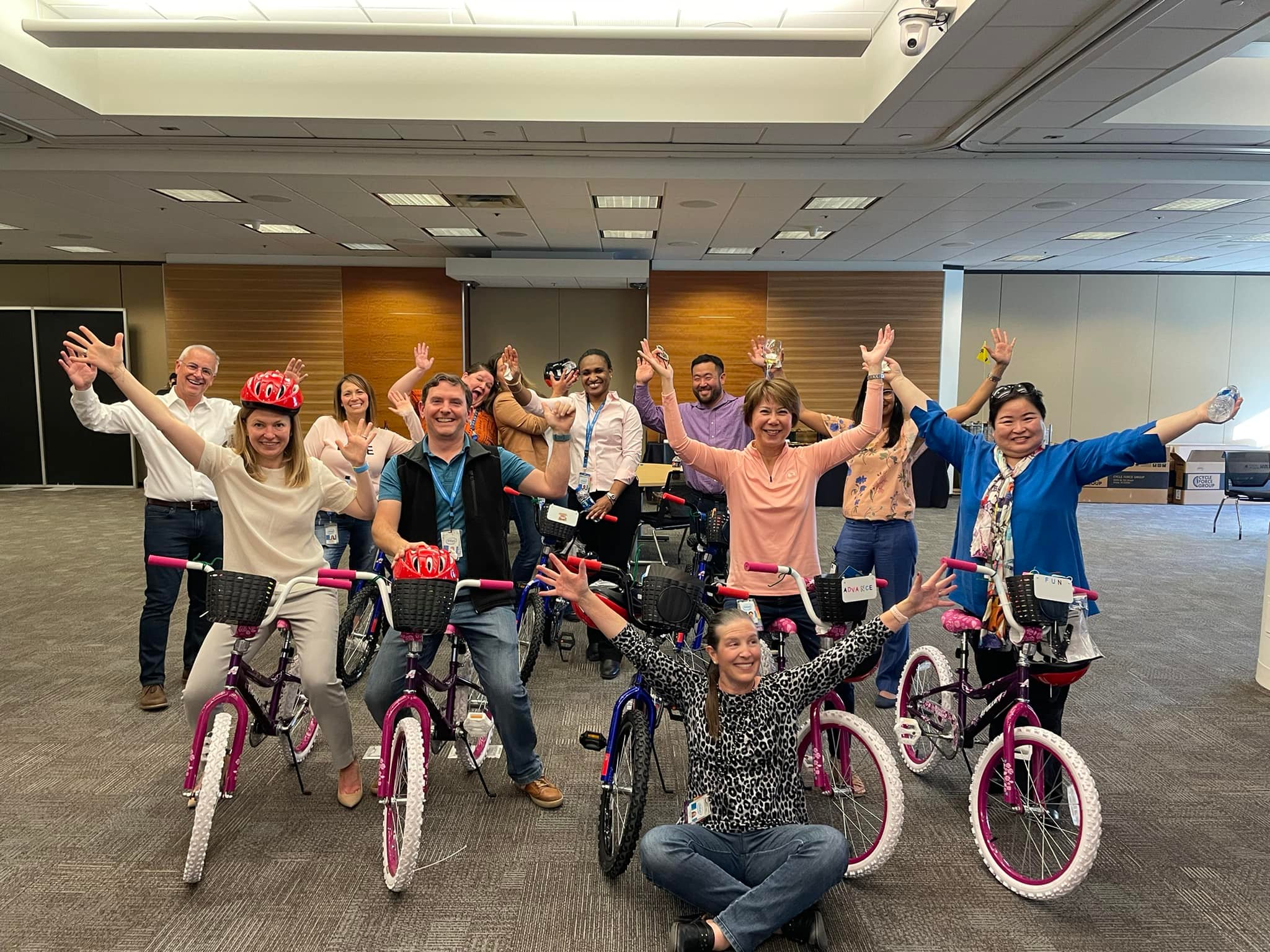
Team building activities like a charity bike build are powerful because they connect people directly to the cause they support. They make values visible and shared, not theoretical.
Remote social purpose initiatives
Purpose doesn’t disappear when teams are distributed.
Remote and hybrid teams already contribute to environmental goals by reducing commuting and office footprints. If sustainability or community impact is part of your social purpose, there are still meaningful ways to engage.
Programs like Impact Online give remote teams a shared way to contribute, reinforcing purpose while keeping everyone connected.
4. Set clear short-term and long-term goals
Once your purpose is defined, structure helps sustain momentum.
Setting short and long-term goals gives teams clarity and direction. It also reinforces that purpose is something you work toward together, not a one-time initiative.
Clear goals help teams:
- Stay motivated and connected to a shared outcome
- Understand how their efforts contribute, even when results take time
- Keep purpose visible during busy or uncertain periods
- Build confidence through collective progress
Purpose becomes more durable when it’s paired with realistic planning.
Incorporate professional development into your purpose goals
Employees don’t stop being members of their communities when the workday ends. The skills they build through purpose-driven work carry far beyond a single initiative.
Participating in social purpose efforts strengthens skills like empathy, communication, leadership, and problem-solving. When done well, purpose supports professional growth rather than competing with it.
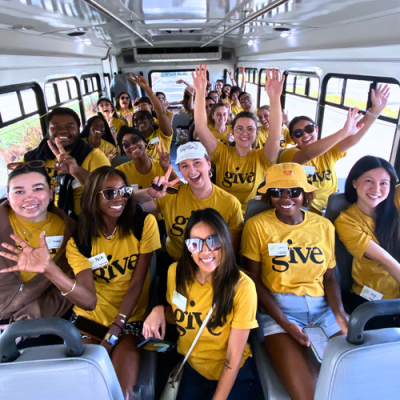
Programs like the Do Good Bus or Tools for Schools allow teams to collaborate while contributing to causes that matter. These experiences build confidence, trust, and shared accountability, all of which carry over to the workplace.
Brands that align purpose with identity
The strongest examples of social purpose are the ones that feel inseparable from the brand itself. These companies don’t treat purpose as a side initiative. It’s embedded in how they operate and how they’re known.
Ben & Jerry’s
Ben & Jerry’s is often cited for its deeply integrated social commitments. A look at their website shows a clear focus on issues like:
- Voting rights
- Campaign finance reform
- Racial justice
- Climate reform
- LGBTQIA+ rights
What stands out isn’t just what they support, but how consistently those beliefs influence decisions. From sourcing to hiring to advocacy, their social purpose shapes operations.
Their commitment to increasing partnerships with Black-owned and Black-led suppliers, supporting independent farmers, and prioritizing environmental and animal welfare reflects a values-based approach that’s visible throughout the brand.
Patagonia
Patagonia offers another clear example of alignment.
In 2022, the company made headlines when its owner transferred the company to a trust and nonprofit dedicated to addressing climate change and protecting undeveloped land.
Patagonia’s social purpose is evident in everything from material choices to financial commitments. They use organic cotton, responsibly sourced down, and prioritize environmentally preferred fabrics. They also commit an additional 1% of sales to environmental preservation and encourage other companies to do the same.
This alignment makes sense. Patagonia serves customers who spend time outdoors and care deeply about protecting natural spaces. Their social purpose reinforces their brand identity instead of competing with it.
TeamBonding

At TeamBonding, we aim to give back with each client interaction. Social purpose and social impact aren’t separate from our work. They’re built into how we operate.
That approach started with a simple question: What if bettering your team bettered the world?
As a B1G1—Buy One Give One—partner, we make a charitable contribution every time someone subscribes to our newsletter, downloads an eBook, or submits an event inquiry.
In an episode of our podcast featuring Masami Sato, founder and CEO of B1G1, she shared a perspective that resonates deeply with our work:
“Small businesses have great power. We talk about the Power of Small because microgiving can create a bigger impact than we realize.”
Our giving efforts focus on areas like:
- Hunger relief
- Health equity
- Education access
- Water security
- Housing assistance
- Sustainability
We also offer charitable team building programs that allow teams to contribute meaningfully while strengthening connections, including:
- Clean Water Connection
- The Prosthetic Hand Project
- Team Teddy Rescue Bear
- Just Roll With It—Charitable Skateboard Build
- Mission ImPAWssible: Dog Wheelchair Build
Purpose works best when it’s actionable. Our role is to make that easier for teams.
“I believe every business starts with a sense of purpose. The owners care deeply about something—education, wellbeing, food, the future. B1G1 helps make that purpose tangible through everyday giving,” added Masami.
Ready to put purpose into action?
Social purpose, brand purpose, and social impact aren’t optional anymore. They shape how companies build trust, attract talent, and stay relevant.
When purpose is clear and aligned, it strengthens culture, reputation, and performance at the same time. It also creates opportunities to contribute meaningfully to the world we all share.
If you’re not sure where to start, our charitable and CSR events are a practical way to begin. They help teams connect around purpose while building stronger working relationships.
When you’re ready, get in touch with us. We’d love to help you turn purpose into an experience your team can share.


Get more insights in our newsletter:
* every subscription supports charity!
PODCAST

Get ideas, inspiration and best practices from across the globe.




Plays well with these activities.