


The Jobs AI Can’t Replace (And the Human Skills Behind Them)
I’ll be honest: I’ve spent over 20 years facilitating team development across dozens of industries, and right now, the number one thing people are asking me is some version of “will AI take my job?”
I’ve heard it from entry-level employees. I’ve heard it from C-suite executives. And I’ve heard it from HR professionals trying to figure out what their workforce will look like in five years. It’s a fair question, and it deserves a real answer.
So when Anthropic, the company behind one of the world’s most widely used AI models, published detailed new research on which jobs AI will replace and which ones aren’t going anywhere, I read every word. Here’s what it says, and more importantly, what it means for your team right now.
What the Anthropic research tells us
In March 2026, Anthropic published a study called “Labor Market Impacts of AI: A New Measure and Early Evidence.” Their researchers introduced a metric called “observed exposure,” which measures how their AI model Claude is being used in real workplaces, not just what it’s theoretically capable of doing.
That distinction matters a lot. Theoretical capability is what AI could do. Observed exposure is what it’s genuinely doing today. And right now, those two numbers are very far apart.
The conclusion? Actual AI adoption across most industries remains well below its theoretical ceiling. The predicted mass displacement of workers hasn’t happened yet. But the data does show a real and growing gap, and some roles are drifting closer to the edge than others.
Which jobs are safe from AI, and which ones are more exposed?
According to Anthropic’s research, the most theoretically exposed occupations are concentrated in areas like computer and mathematical work, business and financial operations, management, office and administrative support, and legal roles. In those fields, more than 80% of the individual tasks involved could theoretically be handled or accelerated by AI.
But there’s the critical word: tasks. Not jobs. Jobs consist of dozens of tasks, and AI might assist with many of them. What it can’t do is step into the full human reality of being in that role.
On the other end of the spectrum, the same research identifies areas with significantly lower AI exposure. Roles in sectors like ground maintenance, agriculture, food and personal care services, transportation, construction, and skilled trades all fall well below 20% in theoretical AI coverage; they require physical presence, manual dexterity, real-time judgment, and hands-on interaction that algorithms simply can’t replicate.
And even within high-exposure fields, the gap between theory and reality is striking. Computer and mathematical occupations have a theoretical AI coverage of 94%, yet Anthropic’s own data shows Claude covering just 33% of tasks in that category. The ceiling is high, but the floor is still a long way below it.
What skills will survive AI?
Here’s where I want to slow down, because this is the part that matters most for anyone managing a team.
Whether you lead a group of five people or five hundred, the skills that are truly AI-resistant come down to one thing: what makes us fundamentally human. Research consistently shows that the capabilities AI struggles most to replicate are interpersonal ones: empathy, moral judgment, nuanced communication, and the ability to navigate genuinely ambiguous situations where lived experience and human context matter.
These aren’t “soft” skills in the dismissive sense of the word. They’re power skills. And right now, they’re your team’s most durable competitive advantage.
Skills AI can’t replace: Where to focus your energy

After two decades of working with teams across virtually every sector imaginable, I’ve observed firsthand which capabilities consistently separate good teams from exceptional ones. They’re the same ones AI simply cannot manufacture.
Here are the human skills that remain AI-resistant now and for the foreseeable future:
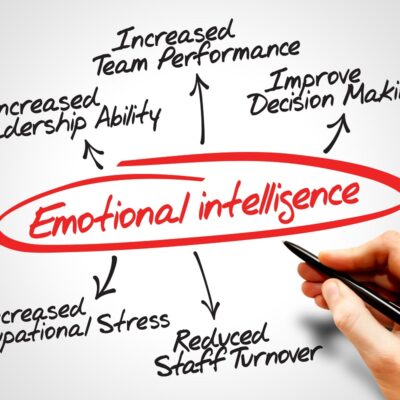
- Empathy and emotional intelligence. AI can detect sentiment patterns, but it can’t genuinely care about a teammate who’s struggling, or navigate a conflict with nuance and compassion. Emotional intelligence in the workplace is increasingly the defining quality of high-performing teams, and it starts with self-awareness.
- Creative thinking and original problem-solving. AI can remix what already exists, but the kind of contextual creativity that connects your organization’s values to a real opportunity, or finds a genuinely novel solution, still belongs to humans. Creativity in the workplace isn’t a luxury; it’s a survival skill in an AI-augmented world.
- Complex communication and relationship-building. Reading a room, adjusting your message on the fly, managing stakeholders with competing priorities: these are deeply human skills. AI can draft an email. It cannot build trust over time.
- Leadership under uncertainty. Great leaders don’t just execute plans; they maintain calm, build psychological safety, and make confident decisions when the path forward isn’t clear. That requires judgment, courage, and self-awareness that no model can replicate.
- Adaptability and resilience. The ability to pivot, absorb change, and grow through disruption may be the most important skill of the AI era, and that can’t be outsourced.
I’ve worked with teams undergoing significant organizational shifts, and the ones that handle changes most gracefully aren’t necessarily those with the most advanced tools. They’re the ones with strong interpersonal foundations.
The jobs that AI can’t replace have one thing in common
Whether we’re talking about a healthcare worker, a skilled tradesperson, a teacher, or a team leader navigating a corporate restructure, the jobs that can’t be replaced by AI all demand one thing: genuine human presence and judgment.
Anthropic’s researchers used teachers as a concrete example of this: AI can grade homework, but it can’t manage a classroom of children, mentor a struggling student, or make a kid feel seen. That last part is everything.
Across the thousands of facilitation hours I’ve logged with clients ranging from pharma and finance to nonprofits and tech startups, the pattern is consistent. The skills that keep people irreplaceable are the human ones: connection, adaptability, empathy, and leadership.
The question isn’t whether AI will change your industry. We all know that it will. The question is whether you and your team are investing in the capabilities that will matter most when it does.
Why this is a call to action for HR and team leaders
If you’re responsible for people, whether hiring, developing, or retaining them, this research is an invitation, not a warning.
The organizations that will thrive in an AI-augmented world aren’t just the ones that adopt the most tools. They’re the ones who invest in the human capabilities that AI can’t touch. That means professional development is no longer a discretionary line item. It’s a human-centric strategy.
And it’s not just individual skill-building that matters. Teams that communicate well, trust each other, and know how to work through conflict constructively will outperform teams that don’t, regardless of the tools they use. Corporate workshops focused on human skills go beyond nice team moments and become investments in AI-resistant capability.
If you’re already thinking about reskilling your workforce for the age of AI, the smartest place to start isn’t with a new tech stack. It’s with the people skills that sit underneath everything else.
Programs that help you navigate the AI era

At TeamBonding, we offer professional development programs that directly address the human skills most relevant to today’s workplace. Here are three I recommend consistently for teams navigating this landscape:
Human Skills training is one of my favorites for teams that want to actively practice soft skills in a high-energy, experiential format. Using GPS-enabled iPads, teams navigate real-world challenges at customizable checkpoints, building empathy, decision-making, open-mindedness, and creativity in ways that stick. These are the exact capabilities that put you in the category of jobs AI won’t replace.
Leading with Clarity in Chaos is designed for managers who need to lead effectively through change and uncertainty. Participants walk away with practical tools for rapid decision-making, clear communication under pressure, and building confidence within their teams in turbulent environments. In a world where AI is reshaping entire industries, leaders who can hold steady and guide others forward are invaluable.
Emotional Intelligence for Teams takes a deep, practical dive into the interpersonal skills that drive performance. Each participant completes a personal EI assessment and explores competencies like self-awareness, empathy, self-regulation, and effective persuasion. As Daniel Goleman has noted, emotional intelligence encompasses self-awareness, self-management, empathy, and social skills—a set of capabilities no AI can authentically replicate.
These aren’t just feel-good experiences. They’re structured, facilitated sessions that deliver real, measurable capability: the kind that holds up in an AI-augmented world.
The bottom line on AI and jobs
Will AI replace some jobs? Yes. Some tasks within some roles will be automated or accelerated, and some functions will change significantly. The Anthropic data is clear on that, and anyone telling you otherwise isn’t being straight with you.
But the picture is far more nuanced than the headlines suggest. The mass displacement hasn’t arrived, and it might take a long time before it does. And the jobs AI will replace most completely are the ones that are already transactional, repetitive, and low on human judgment. The rest, especially the ones requiring genuine leadership, emotional intelligence, creativity, and complex communication, are going to need more from humans, not less.
That’s the real opportunity. And it starts with investing in the people already on your team.
If your team is ready to lean into the skills that will matter most in the years ahead, explore our professional development programs to see how we can help.


Get more insights in our newsletter:
* every subscription supports charity!
PODCAST
Get ideas, inspiration and best practices from across the globe.




Plays well with these activities.