

How Teamwork in the Workplace Really Happens: A Guide to Better Relationships
Teamwork in the workplace starts with people, not project plans. Every team we meet brings unique strengths, habits, and communication styles. Those differences shape how relationships form and teams collaborate..
We’ve seen how teamwork grows from the inside out. Individual skills such as self-awareness, emotional intelligence, and empathy influence group dynamics. Strong relationships then create the conditions for a team to communicate clearly, solve problems together, and stay aligned.
As an African proverb reminds us: “If you want to go fast, go alone. If you want to go far, go together.”
Let’s explore how relationships influence collaboration. We’ll also offer practical ways to strengthen workplace teamwork through everyday habits and shared experiences.
The Importance of Great Teamwork in the Workplace
Great teamwork in the workplace matters because it strengthens relationships, builds trust, and helps people work toward shared goals with more confidence. When a team feels connected, communication becomes easier, challenges feel more manageable, and everyone contributes with a sense of ownership.
“Teamwork is the ability to work together toward a common vision. The ability to direct individual accomplishments toward organizational objectives. It is the fuel that allows common people to attain uncommon results.”
— Andrew Carnegie
Teamwork grows when people feel supported. Those connections shape how openly teammates share ideas, handle conflict, and regroup when plans shift.
We see this synergy in every team building experience we lead. When people communicate clearly, appreciate one another’s strengths, and understand what they are working toward, productivity naturally improves. Teamwork in the workplace becomes a culture where collaboration rises, creativity increases, and people show up ready to support one another.

Why are relationships the foundation of teamwork in the workplace?
Relationships form the foundation of teamwork in the workplace because people collaborate more easily when they trust one another. Trust makes it simpler to share ideas, ask questions, and admit when help is needed. When people feel connected, they communicate with more honesty and listen with more intention.
“In union there is strength.”
— Aesop
Individual qualities like self-awareness, empathy, and emotional intelligence shape how each person shows up. Those qualities help teammates read situations accurately, respond with understanding, and avoid unnecessary conflict.
Stronger relationships also help teams solve problems faster. People who value one another communicate more clearly and stay open to different perspectives. They rely on shared goals to guide their decisions. As these habits develop, teamwork starts to feel natural instead of forced.
This shift becomes visible during team building experiences. Once a group begins connecting on a personal level, collaboration improves almost instantly. The work becomes easier, conversations flow more smoothly, and the team starts to operate with a sense of unity that supports long-term success.
The core dynamics behind effective teamwork
The most effective teamwork in the workplace develops when communication, trust, shared goals, and recognition come together in a supportive environment. These dynamics create a sense of alignment that helps people move forward with clarity and confidence.
Effective communication gives teammates the information they need to collaborate. When people share ideas openly and listen with care, misunderstandings decrease and solutions come faster. Clear communication also helps teams stay organized and reduces friction during busy moments.
“Motivation comes from working on things we care about. It also comes from working with people we care about.”
— Sheryl Sandberg
Trust grows as people keep their commitments and show consistency in how they treat one another. Trust makes difficult conversations easier and allows teams to navigate setbacks without losing momentum. Shared goals provide direction. They help everyone understand what they are working toward and why it matters.
Recognition also plays a key role. When people feel valued for their strengths and contributions, they engage more fully. They speak up more often, support one another naturally, and take ownership of their work.
When a team builds communication, trust, shared purpose, and appreciation into daily routines, teamwork becomes steady and far more enjoyable.
What stands in the way of building stronger workplace relationships?
Several common barriers can weaken teamwork in the workplace, even when people have good intentions. Miscommunication is often the first obstacle. If messages are unclear or incomplete, teams lose time clarifying details or correcting mistakes. Small misunderstandings can snowball into tension when left unaddressed.
Competing priorities also get in the way. When people are unsure which tasks matter most, they begin working in different directions. Over time, this misalignment weakens trust and makes collaboration feel disjointed. Clear expectations help prevent this problem, but teams also need relational awareness.
“We cannot win in team situations or in relationships by ourselves.”
— Terry Orlick
Relationship challenges also appear when teams avoid difficult conversations. When concerns stay unspoken, frustration builds quietly. This makes it harder for teammates to connect, even if they share the same goals. Honest, respectful discussion helps create understanding before issues become bigger.
Remote or hybrid work can add additional layers of distance. Without regular moments of connection, misunderstandings become more common. People may assume the worst or feel isolated from their coworkers. Improving team communication helps bridge the gap and keeps relationships strong.
Being aware of these barriers makes it easier to address them early. When teams acknowledge the challenges and approach them with curiosity, they create space for healthier interactions and foster collaboration.

Nurturing teamwork for stronger workplace relationships
You can nurture teamwork in the workplace by creating intentional moments of connection, communication, and appreciation. Teams grow stronger when they interact in ways that build trust and help people understand one another’s strengths. These small moments create a culture where people feel supported.
“None of us, including me, ever do great things. But we can all do small things, with great love, and together we can do something wonderful.”
— Mother Teresa
Meaningful conversations help relationships deepen. When teammates feel heard, they communicate more openly and share ideas. Regular check-ins also help people stay aligned, especially during busy periods.
Simple habits can strengthen teamwork every day. Teams can celebrate wins together, ask curious questions during meetings, and make space for different perspectives. Employee recognition also plays a big role in building connections. When people feel appreciated, they participate more fully and support one another.
We see these shifts often during team building experiences. Once a group connects, collaboration becomes smoother. People communicate with more clarity, solve problems with less friction, and carry that momentum into daily work.
How can we build stronger relationships to improve teamwork in the workplace?
You can build stronger relationships in the workplace by practicing habits that support a culture of trust, understanding, and honest communication. Strong relationships help people feel comfortable sharing ideas and speaking up when challenges arise.
“If everyone is moving forward together, then success takes care of itself.”
— Henry Ford
Active listening is one of the most effective ways to strengthen relationships, build respect, and reduce misunderstandings. Asking thoughtful questions, confirming what you heard, and staying curious during discussions all support this connection.
It also helps to assume positive intent. Most conflict begins with unclear expectations, not ill will. When people approach conversations with patience, they create room for better problem solving. This mindset keeps the team focused on solutions.
Awareness of individual strengths also builds stronger relationships. When people understand what each person brings to the team, collaboration becomes more natural. They can divide tasks more effectively and appreciate different working styles.
These habits lay a foundation for workplace teamwork that thrives far beyond any single moment. When relationships stay strong, teams adapt more quickly and face challenges with greater confidence.
What are some top games to build teamwork in the workplace?
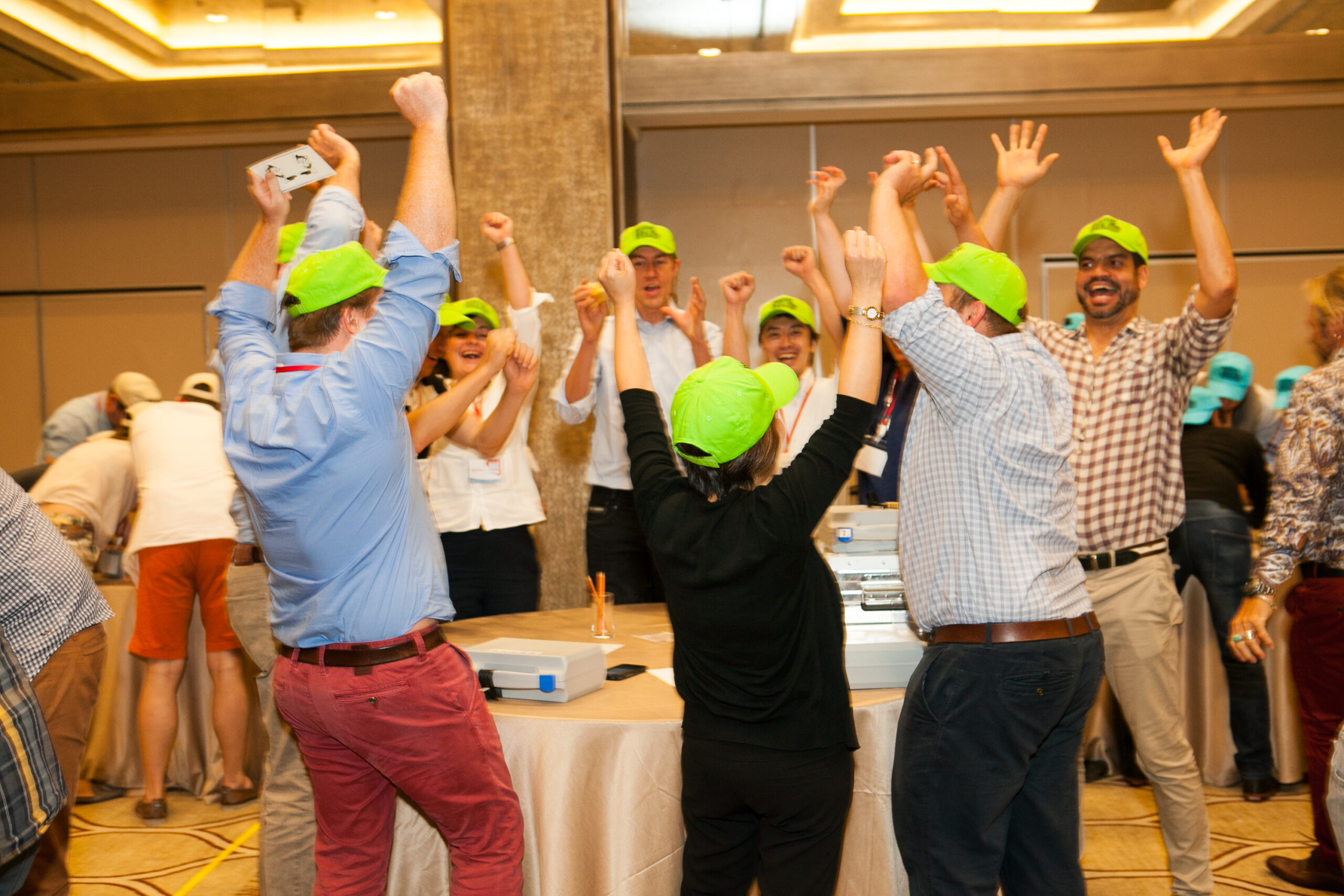
Games to build teamwork in the workplace let people connect and collaborate in a fresh environment. These shared experiences strengthen trust and help teams practice the skills they rely on every day. When teams learn together through play, relationships grow faster and teamwork becomes more natural.
Here are some of our most popular programs for teams that want hands-on challenges and collaborative problem solving.
Domino Effect
As one of our most engaging games to build teamwork in the workplace, Domino Effect combines creativity, planning, and group coordination. Teams work together to design and build a large chain-reaction contraption using a variety of materials. Success depends on communication, thoughtful decision-making, and patience.
This program teaches teams how small actions connect to larger outcomes. It also encourages people to slow down, listen to one another, and combine ideas in a way that’s both fun and productive. The final reveal gives everyone a shared sense of accomplishment.
This program strengthens teamwork by:
- Helping teammates practice communication and cooperation
- Encouraging creative problem-solving under time pressure
Meal Pack Give Back
A fun activity that blends teamwork with purpose, Meal Pack Give Back is a meaningful game that builds teamwork in the workplace. Teams work together to pack nutritious meal kits for people facing food insecurity. The activity is upbeat and high-energy, but it also connects people through a shared sense of impact.
Teams communicate constantly as they move through packing stations, check quality, and keep the pace steady. The experience brings people closer because they are contributing to something larger than themselves. As they work, teammates build trust, encourage one another, and develop a rhythm that strengthens collaboration.
This activity strengthens teamwork by:
- Building unity through shared impact and service
- Encouraging fast, clear communication and supportive teamwork
Beat the Box

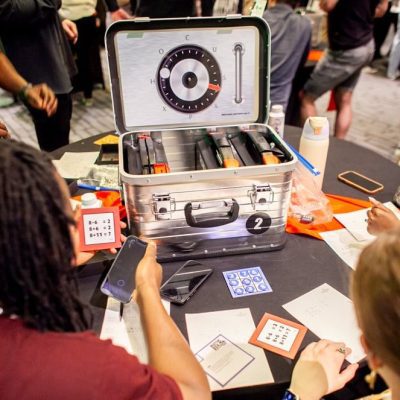
Want a high-energy game to build teamwork in the workplace? Beat the Box challenges teams to solve interconnected puzzles, open locked cases, and uncover clues before time runs out. The activity feels like a collaborative escape-room experience and pushes teams to think quickly while staying calm and organized.
Success depends on how well teammates communicate under pressure. People must share ideas, delegate tasks, and adapt when clues take an unexpected turn. This kind of teamwork helps strengthen trust and build confidence in one another’s problem-solving abilities.
This fun activity strengthens teamwork by:
- Encouraging clear communication and role clarity
- Helping teammates stay focused and composed under time pressure
In It To Win It
This is one of our fastest-paced games to build teamwork in the workplace. Inspired by fun, one-minute challenges, In It To Win It brings teammates together through rapid problem-solving, encouragement, and shared energy. Every task is simple on the surface, but teams need clear communication and quick coordination to earn each win.
The short, upbeat challenges help people loosen up, build momentum, and connect through laughter. As teams rotate through different stations, they practice giving and receiving support while learning how to stay focused under pressure. The experience encourages people to step outside their comfort zones and rely on one another in a lighthearted setting.
This high energy game strengthens teamwork by:
- Encouraging quick decision-making and positive communication
- Helping teammates build trust through shared wins and upbeat challenges
How can leaders support teamwork and relationships at work?
Leaders support teamwork in the workplace by setting clear expectations, modeling healthy communication, and creating a space where people feel safe sharing ideas. When leaders show consistency and fairness, teams respond with greater trust and engagement.
“One man can be a crucial ingredient on a team, but one man cannot make a team.”
— Kareem Abdul-Jabbar
Being present and approachable helps relationships grow. Simple habits such as checking in, clarifying goals, and offering timely feedback make collaboration smoother. When people feel heard, they participate more fully and raise concerns before they become problems.
Clear direction also prevents confusion. When leaders help teams define priorities and next steps, everyone works with more confidence. Recognition reinforces good habits by showing people that their efforts matter.
Strong leadership often results from steady communication and thoughtful listening. When leaders build trust and promote connection, teamwork in the workplace becomes more resilient and rewarding.
Teamwork examples show strong relationships in action
Seeing great teamwork examples among your employees is one of the clearest signs that your team building efforts are creating real change. When people begin applying what they’ve practiced, the difference shows up in how they support each other through the workday.
A key indicator is when teammates offer help before challenges escalate. Instead of letting tasks stall, people share insights, lend a hand, or shift responsibilities to keep the work moving. This kind of instinctive support reflects a group acting as a cohesive unit.
Another example of teamwork might occur during planning sessions or quick check-ins. Teams with healthy relationships listen well, ask thoughtful questions, and build on each other’s ideas. The atmosphere feels steady and constructive because everyone focuses on solutions instead of attention.
You may also notice this during periods of rapid change. Groups that trust one another adjust quickly and make decisions together. They stay grounded amid uncertainty because they know they can rely on the team’s collective strength.
These teamwork examples show that positive habits are becoming part of your culture. When employees bring new skills into their daily work, collaboration becomes smoother, and your team becomes more resilient.
Ready to strengthen teamwork in the workplace today?
When teams begin communicating more clearly and supporting one another, those changes usually come from the experiences they’ve shared. Team building gives people space to connect, try new approaches, and understand each other in ways that make everyday work feel smoother.
If you want to help your team build stronger interpersonal relationships and collaborate with more confidence, explore our full range of programs. We create experiences that energize groups, spark real connection, and help positive habits stick.
Take a look at what we offer and find the program that fits your team’s goals and momentum.


Get more insights in our newsletter:
* every subscription supports charity!
PODCAST
Get ideas, inspiration and best practices from across the globe.




Plays well with these activities.