


Mutual Understanding in the Workplace: The Key to Happier, More Productive Teams
I’ve spent more than 30 years helping teams work better together, and one thing I keep coming back to is this: the most successful teams aren’t just talented; they genuinely understand each other. That mutual understanding means going deeper than being polite or getting along. It shapes how people communicate, collaborate, and show up for one another every day.
In our piece on teamship, we touched on mutual understanding as a core ingredient in building teams that truly thrive. This article goes deeper. I want to explore what mutual understanding at work actually looks like, why mutual respect is the foundation beneath it, and how leaders can start cultivating both right now.
What is mutual understanding?
Mutual understanding means each person on a team has a working knowledge of where their colleagues are coming from. That inclues their perspectives, pressures, goals, and working styles. At work, that translates into fewer miscommunications, less friction, and more genuine collaboration.
It doesn’t mean everyone has to agree on everything. It means people take the time to actually hear each other before reacting. That small shift creates a dramatically different working environment.
Think about the last time a project went sideways not because of a skills gap, but because two people were simply talking past each other. That’s a connection failure in action.
What is mutual respect, and how does it connect coworkers?
If mutual understanding is knowing where someone is coming from, mutual respect is honoring what you find when you get there—even when it’s different from your own view.
What is mutual respect at work, exactly? It’s treating colleagues as capable, thoughtful professionals whose contributions matter. It shows up in how you give feedback, how you handle disagreement, and whether you make space for other voices in the room.
According to Pew Research Center’s 2024 job satisfaction survey, 82% of workers say their supervisors treat them with respect all or most of the time — yet satisfaction scores drop noticeably when that experience is absent. Respect isn’t just a nicety; for most employees, it’s the baseline expectation. When it’s missing, everything else suffers.
Mutual respect and genuine understanding are deeply intertwined. You can’t sustain one without the other for long. Respect creates the safety for people to be honest; understanding gives that honesty somewhere productive to go.
Why mutual understanding at work matters more than ever
The modern workplace is more complex than it was even a decade ago. Hybrid teams, generational differences, and distributed workforces all create more opportunities for misalignment. When people can’t read each other’s body language in a hallway conversation or sync up informally over lunch, intentional understanding becomes essential, not optional.
Psychological safety lives downstream of mutual understanding. When people feel genuinely understood, they’re more likely to speak up, take risks, and offer ideas. When they don’t, they go quiet, and that silence is expensive.
Research from Oxford University’s Saïd Business School has shown that happy employees are 13% more productive than their unhappy counterparts. And what drives that happiness? Consistently, the data points to relationships: to feeling valued, respected, and understood by the people they work alongside.

The real-world impact on employee satisfaction and productivity
Here’s what I’ve observed across thousands of team building events and programs: when people feel seen and understood, they work differently. They’re more engaged, more willing to take initiative, and less likely to disengage or leave.
A few numbers that back this up:
- 63% of employees are more satisfied at jobs where they feel respected, according to research cited by Harvard Business Review
- 72% of workers name respectful treatment as the top driver of job satisfaction (SHRM)
- Organizations with high employee satisfaction outperform competitors by significant margins in productivity and reduced turnover costs
None of these outcomes happen by accident. They’re the result of environments where mutual respect in the workplace is actively practiced, not just assumed.
How a lack of mutual understanding shows up on teams
Before we get into solutions, it’s worth naming what a low-understanding culture actually looks like—because it can be subtle, especially when everyone is technically “professional.”
Signs that a team is struggling in this area often include:
- Frequent miscommunications that require constant clarification and rework
- Silos forming where teams protect information instead of sharing it
- Feedback that lands poorly because context and intent aren’t communicated well
- Unresolved tension that festers because no one feels safe naming it
- A high turnover rate among strong performers who feel unseen or undervalued
When I see these patterns, I know the problem isn’t always a process failure. Often, it’s a connection failure.
Building mutual understanding: where to start
Active listening as a leadership practice
The fastest way to show someone they’re understood is to listen—not to respond, but to actually take in what the other person is saying. Leaders set the tone here. When a manager listens fully, asks thoughtful follow-up questions, and reflects back what they’ve heard, it models behavior the entire team tends to adopt.
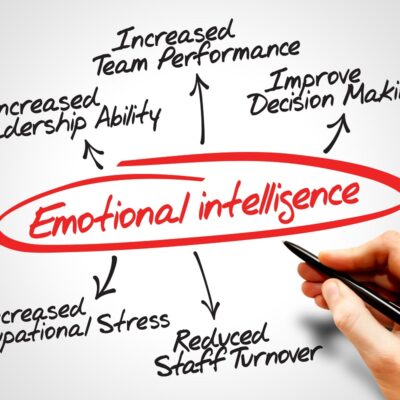
This kind of emotional intelligence in the workplace isn’t soft skills fluff. It’s a practical leadership tool with measurable outcomes.
Creating shared language and shared context
Teams that understand each other tend to have explicit conversations about how they work, not just what they’re working on. That includes:
- How each person prefers to receive feedback
- What communication channels work best for different types of decisions
- What “done” looks like on a shared project
- How disagreements will be raised and resolved
These conversations feel vulnerable to some leaders—but the teams that have them consistently outperform those that don’t. Our Effective Communication program was designed specifically to help teams build this kind of shared language in a structured, low-stakes environment.

Addressing conflict before it becomes corrosive
One of the places where this shared understanding breaks down most visibly is conflict. When people don’t feel understood, disagreements tend to escalate—or go underground, which is worse.
Good conflict resolution depends on both parties believing the other person is approaching the situation in good faith. That good faith comes from the foundation of mutual respect. When that’s in place, teams can navigate real differences without it becoming personal.
Mutual respect in the workplace starts with leadership behavior
I want to be direct about something: mutual respect doesn’t trickle up. It trickles down. The way leaders treat their teams sets the ceiling for how colleagues treat each other.
That means showing up consistently—acknowledging contributions, naming what you don’t know, and modeling the kind of listening and openness you want to see in your culture. It means building trust through small, repeated acts of integrity, not sweeping gestures.
One of my favorite observations about this comes from the co-elevation model: the teams that elevate each other don’t do it by pretending everything is great. They do it by being honest enough to hold each other accountable and supportive enough to make that feel safe. That’s mutual respect operating at its best.
How team building creates the conditions for mutual understanding
Experience is one of the fastest teachers. When people go through something together—a challenge, a creative task, a moment of unexpected collaboration—they learn about each other in ways that meetings simply can’t replicate.
This is why experiential team building consistently accelerates understanding. In activities like our High-Performing Team Workshop, teams do more than have a good time. They observe how each other thinks under pressure, leads in ambiguous situations, and shows up when things get hard. That’s insight they carry back to the workplace.
The conversations that follow a well-facilitated experience are often the most honest a team has had in months. And honest conversation, consistently practiced, is exactly how that connection deepens over time.

What sustained mutual understanding looks like
Building mutual understanding at work isn’t a one-time initiative. It’s a culture, and cultures are built through repetition.
Teams that sustain it tend to do a few things consistently:
- Regular one-on-ones focused on how people are doing, not just what they’re delivering
- Retrospectives that examine team dynamics alongside project outcomes
- Recognition practices that highlight specific contributions and the people behind them
- Clear norms around communication and conflict that everyone helped create
These aren’t complicated. But they require intention, especially in fast-moving organizations where it’s easy to let the relational infrastructure slide in favor of output.
The business case is clear
I started TeamBonding because I believed in the power of shared experience to change how people relate to one another. Nearly four decades later, the evidence keeps stacking up.
Mutual understanding at work isn’t nice tohave, it’s a key performance driver. Teams that get it right communicate more efficiently, resolve problems faster, retain their best people longer, and create cultures where good work is more likely to happen.
If you’re ready to help your team build the kind of genuine connection that mutual respect requires, let’s talk. We design experiences that make understanding real—not theoretical.
Explore our High-Performing Team Workshop and Effective Communication programs to get started.


Get more insights in our newsletter:
* every subscription supports charity!
PODCAST
Get ideas, inspiration and best practices from across the globe.




Plays well with these activities.