

Conflict Resolution Activities That Build Stronger Workplace Teams
I’ve spent years facilitating team building events, and if there’s one thing I know for certain, it’s this: conflict isn’t the problem. Avoiding it is.
Workplace tension is inevitable. It shows up as a passive-aggressive Slack message, a missed deadline that nobody addresses, or two team members who simply can’t seem to get on the same page. Left unattended, those small frictions compound. People disengage, trust erodes, and eventually, someone leaves—not because the job was hard, but because the work relationships were.
That’s why I’m such a firm believer in purposeful conflict resolution activities. When teams build the skills to handle disagreement well, conflict stops being a threat and starts being a tool. In this post, I’ll walk you through why workplace conflict happens, how to build a culture that addresses it head-on, and the conflict resolution team building activities I recommend most to HR leaders, managers, and team facilitators.
Why does conflict happen in the first place?
Most people assume workplace conflict is about poor communication. And sure, that’s often where it shows up—but it’s rarely where it starts.
In my experience, conflict tends to stem from a few deeper sources:
- Misaligned expectations around roles, workloads, or communication styles
- Lack of psychological safety, where people don’t feel safe speaking up before tension boils over
- Generational differences in how people prefer to give and receive feedback
- Unspoken interpersonal patterns, like one person who assumes the best in others, while another is always braced for criticism
That last one is especially important. When different people receive the same piece of feedback differently—one takes it in stride, another internalizes it as a personal attack—the gap between them isn’t about the feedback itself. It’s about the lens they’re each looking through. When those patterns go unnamed and unexamined, misunderstandings escalate fast.
The good news is that none of this is inevitable. With the right activities for conflict management and a culture that normalizes honest conversation, teams can learn to close those gaps before they widen.
What role does empathy play in conflict resolution?
Empathy is the foundation of nearly every conflict and resolution activity I’ve ever facilitated—and there are actually two types worth distinguishing:
- Emotional empathy: The ability to feel what someone else is feeling without being swept away by it
- Cognitive empathy: The ability to understand someone else’s perspective, even if you disagree with it
Both matter. Emotional empathy helps reduce aggression in tense moments. Cognitive empathy is what opens the door to creative problem-solving when two people seem stuck.
Here’s what I tell teams: you don’t have to like someone to empathize with them. You just have to be curious. Ask more questions. Lean into the discomfort. Read a memoir once in a while—studies show fiction builds emotional intelligence and empathy because it puts you in someone else’s shoes.
When teams practice empathy consistently, how to deal with conflict in a team becomes less of an HR talking point and more of a lived skill.

Are you building a feedback culture that actually works?
One of the biggest gaps I see in organizations is the disconnect between saying you welcome feedback and actually building structures that make feedback safe.
Real feedback cultures are designed, not an accidental happenstance. That means creating predictable, recurring moments for two-way conversations—not just top-down performance reviews, but spaces where employees can surface issues before they become crises.
Ask yourself:
- Do employees have regular, structured opportunities to provide upward feedback?
- Is feedback normalized from day one, or only brought up when problems arise?
- Do leaders follow through on what they hear—and communicate back that they did?
When employees know they’ll be asked how things are going, and they see their input leads to change, they stop waiting for conflict to explode and flag it early. That’s the whole game.
Team building conflict resolution programs are one of the most effective ways to model this kind of mutual feedback in action—because they create a low-stakes, structured space to practice exactly that.
5 conflict resolution strategies you can start using today
You don’t need a full-day workshop to start shifting your team’s conflict dynamics. These five strategies are ones I use and recommend regularly, and they work whether you’re managing a remote team, prepping for a difficult conversation, or leading a post-conflict debrief.
1. Practice active listening—for real
Most people think they’re good listeners. In conflict, most people are actually just waiting for their turn to talk.
Real active listening means removing distractions, making eye contact, and letting the other person finish before you respond. Then reflect back what you heard using their words: “What I’m hearing is that you felt left out of the decision-making process on this project. Is that right?”
That goes beyond mere agreement to real understanding. And it’s the fastest way to defuse tension and rebuild trust.
2. Name the shared goal
Conflict often feels personal, but it usually isn’t. Most of the time, two people are arguing about how to get somewhere—not where they’re going.
In tense conversations, pause and redirect to common ground:
- “We both want this project to succeed.”
- “I know we’re both under pressure—and I think we want the same thing here.”
- “Let’s step back. What are we actually trying to solve?”
This reframing is especially powerful in conflict mediation activities and strategy-based programs, where teams must align quickly under time pressure.
3. Invite feedback—then act on it
Inviting feedback isn’t the hard part. Acting on it is. Too many teams run pulse surveys or host feedback sessions that disappear into a void. The result? Employees learn that their input doesn’t matter and they stop offering it.
Build a proactive feedback loop instead:
- Start 1:1s with “What’s one thing I could be doing differently?”
- Include anonymous “stop/start/continue” segments in retrospectives
- Close the loop: “You mentioned needing clearer meeting agendas. I’ve been sending those out the night before. Is that helping?”
When people see their feedback reflected in real change, they become invested in solving problems together rather than venting about them separately.

4. Move before you mediate
This one sounds simple, but it’s backed by real physiology. When you’re in a conflict, your body is often in fight-or-flight mode—which is terrible for clear thinking, empathy, or productive conversation.
A five-minute walk before resuming a tense conversation can completely change the outcome. Physical movement helps regulate the nervous system so you can return to the discussion grounded, not reactive.
That’s part of why so many of our best conflict resolution games and team activities happen on their feet—scavenger hunts, outdoor challenges, movement-based programs. The energy shift is real, and it opens people up in ways a conference room never will.
5. Learn the language of repair
When conflict happens, most people either avoid it entirely or over-apologize in ways that feel hollow. Neither builds trust. What actually works is repair—and it’s a learnable skill.
A basic repair statement has three parts:
- Acknowledge impact: “I know that came across as dismissive.”
- State intent: “That wasn’t my goal. I was trying to keep us on schedule.”
- Offer adjustment: “Next time, I’ll make sure everyone’s had a chance to weigh in before we move on.”
Try building a repair moment into your weekly team huddle. A simple “Is there anything from this week we want to clear the air about?” normalizes course correction and prevents small misunderstandings from calcifying into long-term resentment.
Conflict resolution team building activities that actually work
Strategy and self-awareness will only take a team so far. Skills need practice—and the best practice happens in structured, experiential settings where the stakes are low enough to take risks, but real enough to matter.
Here are five programs I point teams toward when they’re ready to take conflict resolution activities from the whiteboard to real life.
1. Resolve Smart: Healthy conflict in action
This is the program I’m most proud of, and the one I recommend first for teams dealing with real, recurring conflict dynamics.
Resolve Smart is a hands-on conflict management training that shifts how teams think about disagreement entirely. Instead of avoiding tension or waiting for it to derail collaboration, participants learn to harness it—using curiosity, emotional intelligence, and clear communication to turn heated moments into productive breakthroughs.
Through role-play simulations and practical frameworks, leaders practice separating the problem from the person, managing emotional triggers, defusing defensiveness through curiosity, and navigating challenging behaviors with confidence. It’s available in half-day and full-day formats for groups of up to 25.
This isn’t theory. Participants leave with a personalized action plan they can use immediately—and a completely different relationship to conflict.
2. Donation Station
Great for: Perspective-taking, building empathy across departments
In this CSR-driven event, teams assemble essential kits for communities in need while learning about the people they’re helping. As teammates work together toward a shared purpose, personal stories surface naturally—and the empathy built here tends to carry over directly into how people treat each other at work. It’s one of my favorite examples of how charitable team building can do double duty.
3. Meal Pack Give Back
Great for: Coordination under pressure, practicing calm in chaos
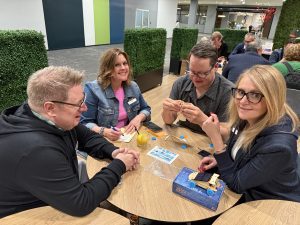
Teams work in assembly-line style to package meals for families facing food insecurity. Every role depends on every other role, which mirrors workplace dynamics almost perfectly. Small miscommunications cause real delays. Slowing down and syncing up becomes a necessity, not a suggestion. It’s one of our most effective problem-solving team building exercises for teams that struggle with communication under pressure.
4. Hope for the Holidays
Great for: Reconnecting with values, cross-department bonding
Year-end burnout is real, and this activity channels it into something meaningful. Teams connect with stories of gratitude and purpose while assembling personalized gifts for seniors in local nursing homes. It creates the kind of emotionally safe, low-pressure environment where people let their guard down—which is often exactly what teams dealing with ongoing tension need most.

5. The Big Picture
Great for: Aligning vision, making teamwork visible
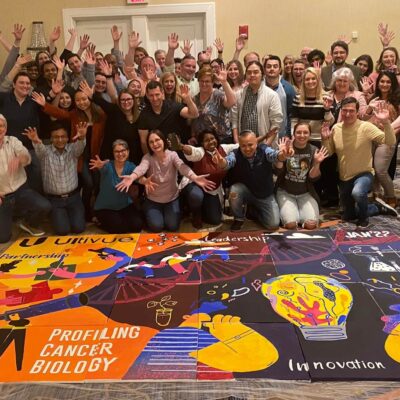
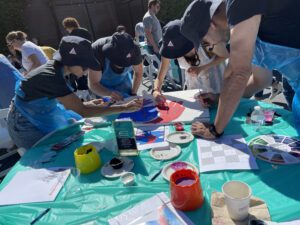
Each participant paints a section of a larger mural—without seeing the full picture until the very end. It’s a literal metaphor for collaboration: you have to trust the process, communicate across your section, and contribute to something bigger than your piece. For teams struggling to stay aligned on shared goals, this one tends to land hard in the best way.
Practice makes progress
Here’s the truth: conflict isn’t a sign that your team is broken. It’s a sign your team is made of humans.
But when you give those humans the tools to navigate disagreement with skill—empathy, structure, repair, and regular practice—conflict stops being something to dread and starts being something you can actually work with.
Even small things matter. Normalizing a five-minute walk before a hard conversation. Asking for feedback and following up on it. Ending team meetings with a quick check-in: “Anything we want to clear the air about?” These aren’t just wellness gestures. They’re culture-building acts.
And when your team is ready to go deeper, conflict resolution activities like Resolve Smart give people the real-world practice they need to make those skills second nature.
Ready to build a more resilient team? Explore our full catalog of team building programs designed to help teams communicate better, build trust faster, and grow through conflict—not in spite of it.


Get more insights in our newsletter:
* every subscription supports charity!
PODCAST
Get ideas, inspiration and best practices from across the globe.




Plays well with these activities.