


Volunteer Time Off: What It Is, Why It Matters, and How Teams Use It
As Creative Director of CSR at TeamBonding, I spend a lot of time paying attention to how work actually feels for people. Not the policies on paper, but the moments that shape culture day to day. What people talk about after meetings and what they remember months later. It’s about what makes them feel connected to the team, rather than just employed by the company.
Volunteer time off sits quietly in that space.
It’s not flashy or loud. But when it’s done well, it changes how people relate to their work, their coworkers, and the organization behind the policy. I’ve seen teams light up when they’re given the freedom to step away from their desks and contribute somewhere that matters to them—on their own terms, during the workday.
That’s why conversations around VTO keep coming up. It’s a signal that teams want more meaningful ways to connect their values with how they spend their time.
What is volunteer time off?
At its most basic level, volunteer time off is paid time off that employees can use to volunteer with nonprofit or community organizations.
That definition answers the common questions: What is VTO? What is VTO at work? How does paid time off to volunteer actually function? It’s simple, and it’s accurate.
What it doesn’t capture is why volunteer time off resonates so strongly with employees.
Volunteer time off works because it treats time as something valuable, not just something to be optimized. It acknowledges that giving back is not a distraction from work, but a meaningful part of how people show up as humans, which inevitably carries back into how they show up as teammates.
What does VTO look like at work?
There’s no single version of VTO at work, and that’s part of the appeal.
Some companies offer a set number of volunteer hours each year. Others provide one or two full days of volunteer service. Some encourage teams to volunteer together, while others leave the choice entirely up to the individual. All of these approaches can work, as long as they’re clear and supported.
You’ll often see volunteer time off policies structured around a few common models:
- A fixed number of paid volunteer hours per year
- One or two designated volunteer days
- Flexible VTO time off employees can use throughout the year
- Department-led volunteer days
- Individual volunteer time chosen independently
The difference between a policy that gets used and one that sits untouched usually comes down to good communication. When people understand how volunteer time off works and feel confident using it, participation tends to follow.

Why volunteer time off matters to teams
Volunteer time off matters because it changes the context in which people operate.
When someone volunteers during a workday, they step out of their usual role. There are no deliverables, inbox, or performance metrics hovering over the experience. Instead, there’s a shared task, a clear purpose, and often a group of coworkers seeing each other in a completely different light.
That shift sticks longer than people expect.
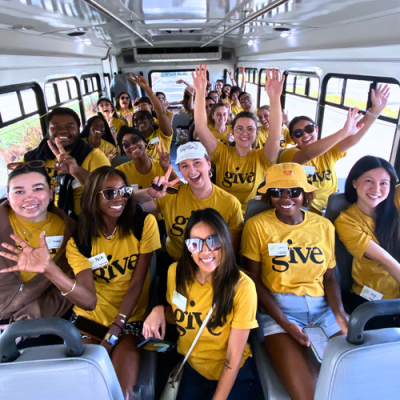
I’ve seen teams return from volunteer days more open, relaxed, and willing to engage. Conversations feel easier, and collaboration feels less forced. The experience becomes a reference point, something shared that didn’t happen in a conference room.
That team building result isn’t accidental. It’s what happens when people have space to connect without pressure.
Volunteer time off and team building
Volunteer time off supports team building, whether or not it’s labeled that way.
When teams volunteer together, hierarchy fades quickly. People step in where they’re needed, communication becomes practical rather than performative, and problem-solving happens in real time. It’s teamwork without the script.
Those moments often become the teamwork examples teams reference later, not because they were polished or planned, but because they felt genuine.
This is why volunteer experiences pair so naturally with team building efforts. Both rely on shared effort, shared purpose, and shared memory; they just take place in different environments.
What makes a volunteer time off policy actually work?
A volunteer time off policy doesn’t need to be elaborate to be effective. In fact, complexity tends to work against it.
The policies that work best are usually the ones that feel human, not procedural.
Strong volunteer time off policies tend to include:
- Clear expectations around how much VTO is available
- Simple request and approval processes
- Flexibility in the types of volunteer organizations employees can support
- Trust-based use rather than strict oversight
- Visible leadership participation
The goal is not to manage every hour, but to create a structure people feel comfortable using. When trust is present, misuse is rare.
Volunteer opportunities that fit real schedules
One of the biggest misconceptions about volunteer time off is that it requires large or highly organized efforts. In reality, the most successful volunteer opportunities are often the simplest.
They’re local, practical, and fit into real lives.
1. Animal shelters and rescue organizations
Animal shelters consistently attract employees.
Volunteering might include walking dogs, socializing animals, cleaning spaces, or supporting adoption events. The work is hands-on and immediately meaningful, which appeals to people who want to see the impact of their time right away.
It’s also a quieter option, which can be a better fit for employees who prefer smaller groups or lower-pressure environments.
2. Food banks and community pantries

Food banks and community pantries offer some of the most accessible volunteer opportunities available.
Help includes sorting donations, packing meals, stocking shelves, and assisting with distribution. These roles are straightforward and easy to step into, whether someone is volunteering alone or with coworkers.
The need is visible, and so is the impact, which makes the experience especially grounding.
3. Environmental cleanups and conservation projects
Environmental volunteering works well for teams that enjoy being active.
Community cleanups, park restoration efforts, and conservation projects offer clear goals and tangible results. By the end of the day, teams can usually see exactly what they have accomplished, creating a strong sense of closure and shared success.
4. Youth mentoring and education support
Skills-based volunteering often creates a longer-term impact.
Tutoring, mentoring, supporting after-school programs, or helping with career readiness initiatives usually require consistency. Volunteer time off can make that consistency possible by removing the time barrier that keeps many people from participating.
This is where paid time off to volunteer becomes especially meaningful.
5. Community service organizations and mutual aid groups
Local community organizations are almost always in need of support.
Helping at community centers, supporting senior programs, assisting with housing initiatives, or contributing to mutual aid efforts allows employees to engage close to home. That local connection often makes the experience feel more personal and more lasting.

Introducing volunteer time off to your team
Rolling out volunteer time off should feel clear and genuine, not overly formal.
People need to understand what volunteer time off is, how to use it, and why the organization supports it. Examples help, and stories help even more.
Leadership participation matters here. When managers and leaders use their own VTO, it normalizes the behavior and signals that taking time to volunteer is truly supported, not quietly discouraged.
Volunteer time off also works best when it connects to broader people initiatives, including team building, wellness programs, and engagement efforts.
Common concerns about VTO time off
Questions about productivity or misuse often arise when discussing volunteer time off.
In practice, those concerns tend to be minimal when expectations are clear. Most employees want to use VTO responsibly, and trust is usually met with trust.
Another concern is participation. Not everyone will volunteer, and that’s fine. Volunteer time off is an option, not a requirement.
Where volunteer time off fits into the bigger picture
Volunteer time off works best within a broader workplace culture that values connection, purpose, and trust.
On its own, it still matters. Paired with thoughtful leadership and intentional team experiences, its impact grows. It becomes part of how people understand what their workplace stands for.
At TeamBonding, we focus on creating moments that help teams connect in meaningful ways. Volunteer time off supports that same goal by giving people space to engage with the world beyond their desks.
A final thought on VTO at work
Volunteer time off doesn’t need to be flashy to be effective.
When it’s offered with sincerity, it permits people to show up as humans, not just employees. Sometimes, the most meaningful thing a company can offer isn’t another program or perk.
It’s the time and space to feel like they made a difference.
Ready to offer VTO through a corporate volunteer program? We’re here to help.


Get more insights in our newsletter:
* every subscription supports charity!
PODCAST

Get ideas, inspiration and best practices from across the globe.




Plays well with these activities.