

From Talk to Action: Creating an Inclusive Culture at Work
I’ll be honest: most organizations know they need to prioritize diversity and inclusion. The challenge is figuring out what to actually do about it. Posting a values statement on your website is one thing. Building inclusive teams where every person feels seen, heard, and valued is something else entirely. That’s where diversity and inclusion team building activities come in, and when they’re done right, they can shift your workplace culture in ways that training modules and policy manuals simply can’t.
Karith Foster, comedian, speaker, and founder of INVERSITY™, puts it well. She emphasizes that real change starts from the inside out, because you can’t lecture someone into caring. You have to reach their heart, make it personal, and connect them to the experience. That philosophy should guide every inclusion effort you lead, from the first icebreaker to the company-wide initiative.
In this article, I’ll walk you through why diversity and inclusion team building matters, how to approach it in a way that resonates, and a list of specific activities you can use to start building inclusive teams today.
What does diversity and inclusion actually mean at work?
Diversity refers to the wide range of characteristics that make each person unique. That includes race, ethnicity, gender, age, sexual orientation, disability, neurodiversity, socioeconomic background, religious beliefs, and more. Inclusion is the practice of creating a workplace culture where all of those differences aren’t just present but genuinely welcomed and respected.
Here’s the distinction that trips up a lot of leaders: diversity is who’s in the room, and inclusion is whether those people feel like they belong there. You can have the most diverse team on paper and still foster an environment where people feel pressured to hide parts of themselves just to fit in.
As Karith Foster points out, inclusion has to be intentional and ongoing. It’s not a checkbox you mark once a quarter. It’s something you practice every single day.
Why is diversity and inclusion team building so important?
The business case for building inclusive teams is well documented. According to McKinsey, companies with greater ethnic and gender diversity consistently outperform their less diverse peers. But the benefits run deeper than financial performance.
Reduced turnover
When employees feel valued and included, they stay longer. As Karith notes, if you’re not making sure you have a healthy culture, you’re going to lose money replacing the people who leave.
Stronger innovation
Diverse teams bring different perspectives, which leads to more creative problem solving and better ideas. Research from Deloitte found that inclusive teams outperform their peers by a significant margin in team-based assessments.
A wider talent pool
Organizations known for prioritizing an accessible and inclusive work environment attract stronger candidates. A Glassdoor survey found that a majority of job seekers consider workplace diversity a critical factor when evaluating job offers.
Better decision-making
Teams that represent a broad range of viewpoints and experiences make faster, more effective decisions with fewer blind spots.
The takeaway is straightforward. Investing in diversity and inclusion team building activities isn’t just the right thing to do. It’s one of the smartest strategic moves your organization can make.
How do you build inclusive teams? Start with awareness
One of the first steps toward building inclusive teams is acknowledging that every person carries unconscious biases. We all do, whether we realize it or not. These biases are shaped by our upbringing, experiences, media exposure, and social circles, and they influence how we perceive, evaluate, and interact with others.
Awareness alone won’t fix everything. But it creates a foundation for meaningful change. Here are a few ways to start:
- Encourage open dialogue: Create safe spaces where employees can talk honestly about their experiences, ask questions, and listen without judgment. Open communication is at the core of every empathetic workplace.
- Educate continuously: A single training session won’t move the needle. Make inclusion part of your ongoing professional development strategy with regular workshops and learning opportunities.
- Model inclusive behavior from the top: Leadership sets the tone. When managers and executives actively participate in inclusion efforts, it signals that this is a genuine organizational priority, not a box-checking exercise.

Inclusive team building activities to try with your team
Now for the practical stuff. Below is a list of diversity and inclusion team building activities you can bring into your workplace. Some are simple icebreakers; others are deeper experiences, but we designed all of them to foster connection, empathy, and understanding.
1. The Commonality Game
This one is deceptively simple and incredibly effective. Divide your group into small teams and challenge them to find things they have in common, things they never would’ve guessed. Maybe two teammates both grew up on farms. Maybe three of them share a fear of spiders. The point is to highlight shared humanity across apparent differences.
TeamBonding’s Knowing Me, Knowing You turns this concept into a high-energy competition. Teams race against the clock to uncover hidden commonalities, racking up points with every unexpected connection they discover. It’s fast-paced, fun, and surprisingly revealing.
2. Paint Soles for Souls
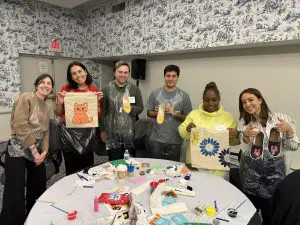
Charitable team building is one of the most powerful ways to bring people together, and Paint Soles for Souls does it beautifully. In this event, team members decorate TOMS shoes that are then donated to children in South America. The activity sparks creativity, encourages collaboration, and connects your team to a global cause. Plus, for every pair of shoes, TOMS invests a portion of profits into community-based initiatives. It’s inclusive team building with a real-world impact.
3. Diversity calendar celebrations
Take the time to learn about and celebrate the holidays, cultural milestones, and observances that are meaningful to the people on your team. This doesn’t have to be complicated. A short presentation during a team meeting, a shared meal featuring dishes from a specific culture, or even a simple acknowledgment in your team Slack channel goes a long way.
The key is making it genuine. Ask your team what matters to them rather than guessing. That small act of asking communicates more about your values than a dozen corporate memos.
4. “I Am, But I Am Not”
Hand out paper and pens and ask each participant to write down common stereotypes associated with their identities, followed by the truth. For example: “I am a millennial, but I am not entitled” or “I am an engineer, but I am not antisocial.” Sharing these statements opens up honest, often eye-opening conversations about assumptions and misconceptions.
This activity works best when leaders participate first and model vulnerability.
5. Story Sharing Circles
Set aside time for team members to share personal stories around a theme, such as a time they felt like an outsider, a cultural tradition that’s meaningful to them, or a moment that shaped who they are. The only rules are to listen actively and respond with curiosity rather than judgment.
Storytelling builds connection faster than almost any other exercise. When people share something real about themselves and feel heard, trust follows.
6. Diversity book or film club
Choose a book, documentary, or film that explores themes of diversity, equity, and belonging, and build a group discussion around it. Rotate the selection each month and let different team members lead the conversation. This creates a structured way to learn about experiences different from your own without placing the burden on any one person to serve as the educator.
7. High-Performing Team Workshop
Diversity and inclusion efforts shouldn’t exist in a silo. They should be woven into how your team operates every day. TeamBonding’s High-Performing Team Workshop helps teams explore the dynamics that separate functional groups from truly great ones, including trust, communication, psychological safety, and mutual accountability. When you build high-performing teams with inclusion at the foundation, the results speak for themselves.
8. Walk a mile in my shoes
Pair team members from different backgrounds and ask them to share a social experience outside of work, such as grabbing lunch, attending a cultural event, or going to a community gathering. Afterward, have each pair share what they learned about each other’s perspectives and traditions.
This activity turns abstract concepts of diversity into personal, tangible experiences.
9. The Diversity Flower
Give each team a large sheet of paper and ask them to draw a flower. In the center, they write a trait that everyone in the group shares. On each petal, individuals write something unique about themselves. Then, the groups swap flowers and discuss what they discover. It’s lighthearted, visual, and surprisingly effective at celebrating both commonalities and differences.
Tips for making diversity and inclusion team building activities stick
Running a single event and calling it done isn’t going to transform your culture. Here’s how to make these efforts last:
- Make it ongoing: Build diversity and inclusion team building activities into your regular team rhythm, not just during awareness months.
- Keep it voluntary and inviting: Forced participation breeds resentment. Create experiences people actually want to join.
- Debrief every activity: The real learning happens in the conversation after the event. Ask what surprised people, what made them uncomfortable, and what they want to carry forward.
- Measure what matters: Track engagement, retention, and employee satisfaction alongside your inclusion efforts. Data helps you understand what’s working and where to invest more.
- Get leadership involved: When leaders show up, participate, and share honestly, it gives everyone else permission to do the same.

Building inclusive teams is an ongoing practice
Diversity and inclusion team building isn’t a destination you arrive at. It’s a practice you commit to, a way of working and relating to one another that evolves as your team grows and changes. As Karith Foster reminds us, this work has to be personal. It has to reach people where they are.
The good news is that you don’t have to do it alone. Whether you’re planning an afternoon icebreaker or a full-day workshop for your team, the activities above offer real, actionable ways to build a workplace where everyone belongs. Start with one. See what resonates. Then keep going.
Your team is worth the effort, and so is the culture you’re building together.


Get more insights in our newsletter:
* every subscription supports charity!
PODCAST
Get ideas, inspiration and best practices from across the globe.




Plays well with these activities.