


Mental Health Awareness Activities to Build a Happier, Healthier Team
Across industries, stress and burnout are quietly eroding performance and morale. Between blurred work-life boundaries and the lingering effects of remote fatigue, many teams are struggling to stay energized. According to the World Health Organization, depression and anxiety cost the global economy around US$1 trillion each year in lost productivity.
Mental health awareness activities aren’t a one-time HR initiative. They’re how organizations build the kind of culture where people can actually thrive. As a corporate trainer certified in Emotional Intelligence, DiSC, and the Myers-Briggs Type Indicator, I’ve spent over 30 years working with teams across industries on exactly this. In this article, I want to walk you through why workplace mental health matters, what leaders can do about it, and the mental health awareness activities and programs that make a real, measurable difference. May is Mental Health Awareness Month, but the truth is, this work doesn’t belong on a calendar. It belongs in your culture year-round.
5 reasons mental health in the workplace matters
A strong culture of care benefits both people and performance. When you prioritize mental wellness, employees feel more secure, focused, and valued, which translates directly into better business outcomes.
As mental health counselor Ramona Wink explains on the TeamBonding podcast, “One in five adults will suffer from a mental health disorder. If that person is not you, you are still impacted.”
It’s a reminder that building a mentally healthy workplace isn’t just about supporting the people who are visibly struggling. It’s about creating an environment where everyone can do their best work.
Here are five key reasons to make it a top priority:
1. It affects nearly everyone
Mental health challenges touch every workplace. One in five adults will experience a mental health issue, and nearly everyone will work alongside someone who does. Acknowledging that reality reduces stigma and opens space for understanding and support.
When people feel safe enough to say “I’m not okay,” the whole team benefits.
2. Burnout is widespread
89% of Americans have experienced burnout in the past year, a clear signal that chronic stress is no longer the exception. Unchecked burnout leads to decreased motivation, higher absenteeism, and lost innovation. Leaders who spot the warning signs early can help prevent exhaustion before it becomes resignation.
3. It shapes company culture
The emotional tone of a workplace affects how people collaborate and solve problems. When employees are anxious or disengaged, creativity and teamwork suffer. In contrast, teams that feel mentally supported are more likely to take risks, share ideas, and trust one another.
4. It improves retention
Employees stay where they feel seen, valued, and understood. People increasingly view mental wellness as part of job satisfaction, just as important as salary or benefits. A workplace that supports brain health creates loyalty that money alone can’t buy.
5. It drives long-term performance
Healthy employees are consistent employees. Sustainable productivity depends on balancing drive with recovery. Teams that prioritize well-being are better equipped to handle challenges and maintain focus over the long term, not just during crunch times.
6 ways leaders can promote mental wellness at work
Leadership plays a defining role in how teams experience stress, balance, and a sense of belonging. When you show that mental wellness matters, your team feels safer speaking up and asking for what they need. Here are six practical ways to support mental health across your organization:
1. Set and respect boundaries
Hybrid work has muddied the distinction between personal and professional life. There’s a blurred line that’s really hard to step away from when you’re always plugged in.
As a leader, you can help by avoiding late-night emails when possible, setting clear expectations about response times, and modeling what it looks like to truly log off at the end of the day. When you protect your own time, you give your team permission to protect theirs.
2. Normalize mental health days
Vacation time shouldn’t be the only acceptable reason to step away. When leaders treat mental health days like any other health need, it sends a powerful signal. Try something simple: “I’m taking a mental health day to recharge.” A message like that opens the door for others to care for themselves, too.
3. Have meaningful check-ins
Quick “How are you?” questions rarely uncover what someone is really going through. Instead, use one-on-ones to ask specific, open-ended questions:
- How is your workload feeling right now?
- Is anything making it hard to focus?
- What would make the next few weeks more sustainable?
Listen without judgment, reflect on what you’re hearing, and follow up on any action items you discuss. Over time, these conversations build trust and psychological safety.
4. Encourage use of benefits
Many employees are unsure whether it’s truly okay to use therapy benefits, coaching, or employee assistance programs. You can remove that doubt by regularly reminding your team what’s available and framing these resources as a normal part of staying healthy.
The more you normalize getting support, the more people will actually use it.
5. Share self-reflection tools
In my training sessions, I teach a simple framework employees can use in stressful moments:
- What am I feeling?
- What do I need?
- What can I do?
Naming emotions, identifying needs, and taking small, realistic steps forward is what emotional intelligence actually looks like in practice. You can even open a meeting by inviting people to quietly run through these questions as a check-in. It helps people get grounded before the work begins.
6. Integrate team-based wellness
Wellness in the workplace doesn’t have to be a solo activity. Shared experiences bring people together in ways that individual resources alone can’t replicate. We also offer guidance on preventing employee burnout to help you keep your team feeling their best year-round.
Over time, shared wellness rituals can become part of your culture, giving employees something positive to look forward to and talk about.
Building a culture that supports mental health
A healthy culture doesn’t just talk about mental wellness; it demonstrates it daily. That starts with open dialogue and removing the stigma around mental health.
One reframe I’ve found useful: many organizations are now using “brain health” as a more neutral, approachable term. It shifts the conversation away from crisis and toward maintenance. You don’t have to be struggling to benefit from good mental health practices.
When leaders model that kind of authenticity, employees feel permission to do the same. That openness can transform a workplace from reactive to resilient.
Mental health awareness activities and programs that work
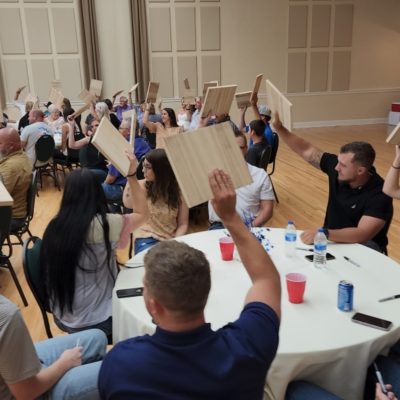
Team building isn’t just about fun. It’s about connection, trust, and emotional well-being. The right mental health activities for the workplace help employees notice each other’s needs and build a shared language around wellness. These mental health awareness activities for the workplace work because they’re experiential: people don’t just learn about well-being, they practice it together.
Here are four experiences at TeamBonding designed to support mental wellness and team resilience:
Employee Wellness Program
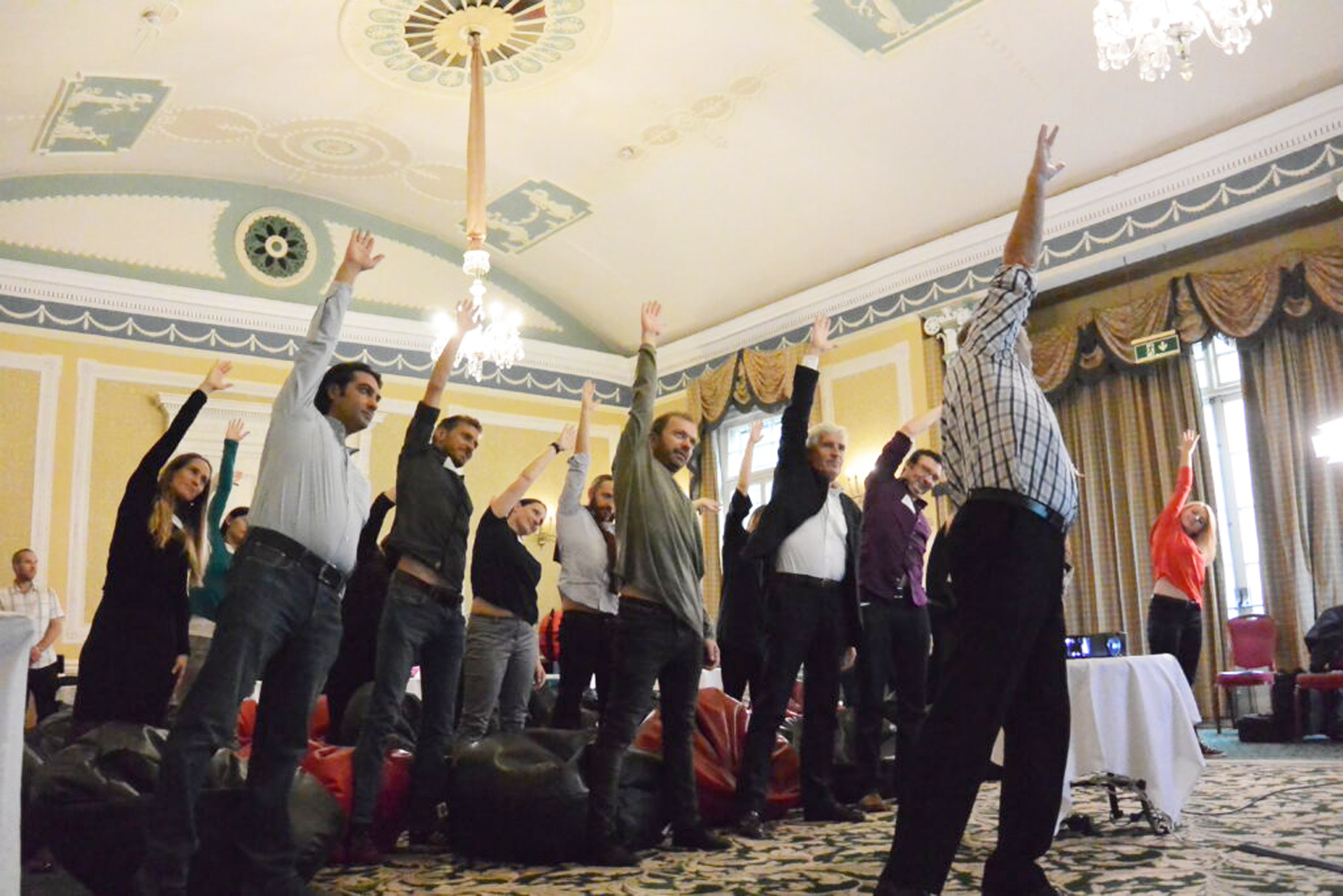
This experience blends movement, laughter, and light physical activity to reduce stress and lift energy. It’s a great mental health activity for employees, regardless of team size, and it gives people a shared framework for self-care that they can carry forward long after the event.
Scheduling these mental health awareness activities for employees throughout the year shows that caring for mental health in the workplace is an ongoing priority, not a one-time initiative.
Team Resilience Training Workshop
This is one of the mental health team building activities I’m most proud to be part of. It teaches teams to bounce back and even thrive amid stress, uncertainty, and change. Participants walk away with a concrete resiliency plan at both the individual and team levels.
The program covers what happens in the brain under stress, how to return to calm, the role of sleep and movement in mental fitness, and the power of social connection. Available in person or virtually, it’s a program where people consistently leave saying it changed how they think about pressure.
Meditainment
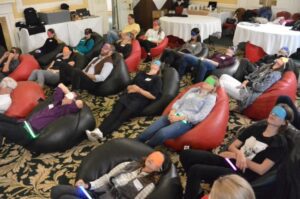
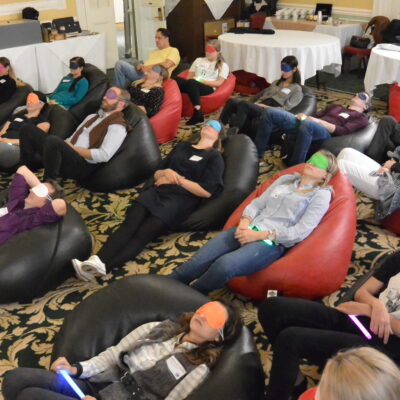
Guided mindfulness exercises help employees quiet their minds and refocus. For teams that are carrying a lot, this kind of structured calm can make a real difference. People need a baseline of calm to keep stress manageable, and this program helps them find it together.
What fuels each generation?
Something that often gets overlooked in conversations about mental health awareness activities for employees is that different generations have different needs, stressors, and work expectations.
Today’s workplace spans five generations, each shaped by different historical, social, and economic experiences. Baby Boomers may value stability and recognition. Gen X prizes autonomy and independence. Millennials often seek purpose-driven, collaborative environments. Gen Z wants authenticity, belonging, and real flexibility.
When those different needs go unaddressed, tension builds. People feel misunderstood, disengaged, or overlooked, and that takes a real toll on mental wellness.
Our Multi-Generational Workforce Training helps teams understand what fuels each generation, adapt communication styles, and turn generational friction into productive collaboration. Participants move from awareness to application through interactive discussions, realistic scenarios, and hands-on exercises. When every generation feels understood and valued, the whole team is healthier. That’s not just good culture work; it’s a smart mental health strategy.
How to measure mental health initiatives in your workplace
Progress starts with listening. Use short surveys, anonymous feedback forms, and stay interviews to understand how employees are really doing. Simple metrics like participation in wellness programs, retention rates, and time-off usage can reveal whether your culture is becoming more balanced.
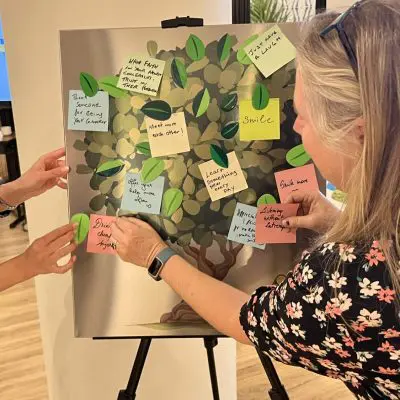
Sometimes the most powerful approach is the quietest one: an anonymous virtual whiteboard or pulse check can help teams surface issues before they grow, giving people space to share a little more than they might otherwise.
The goal is to keep learning, adjusting, and showing up consistently.
Build a stronger, healthier workplace with TeamBonding
Mental health awareness events and ongoing mental health awareness activities are how organizations turn good intentions into a lasting culture. When leaders combine clear boundaries, honest conversations, and tangible resources with the right shared experiences, mental wellness stops being a side topic and becomes part of how work gets done.
Whether you’re looking for mental health games and activities for the workplace or a full professional development program, TeamBonding has experiences designed to meet your team where they are.
Browse all of our programs and start building a happier, healthier workplace today!


Get more insights in our newsletter:
* every subscription supports charity!
PODCAST
Get ideas, inspiration and best practices from across the globe.




Plays well with these activities.