


How Storytelling at Work Can Transform Your Team and Communication
Storytelling at work plays an important role in all of our lives, whether we realize it or not. When most people think of storytelling, books, movies, and TV shows come to mind. But the power of storytelling goes far beyond entertainment; it is one of the most effective tools available in any workplace.
Stories can teach us lessons, motivate us, help us connect with others, and so much more. A good story can unite everyone around a goal, engage them, and leave them feeling inspired. Leaders who understand the importance of stories can use them to transform their team and drive real results.
In today’s blog, we’re going to take a look at the power of storytelling at work, its importance, how it can improve your team, and how you can become a more effective storyteller.
The power of storytelling at work
Let’s start with why storytelling is such a powerful workplace tool. Business storytelling can help you and your organization in numerous ways: teaching a lesson, conveying a message, bringing people together, and much more.
One of the most unique things about storytelling is its ability to convey complex emotions, feelings, and thoughts. Oftentimes, those complex ideas can get in the way of effective communication, but you need to be able to convey those ideas to your employees. That’s where storytelling comes in.
A story can make it easy for others to understand feelings and perspectives that are otherwise difficult to articulate. It gives you a way to convey something incredibly complex in a much simpler and more relatable way.
Stories can also be a more enjoyable way of communicating. Serious work talk can get tiring over time, and a well-told story provides a fun, engaging alternative. They can help you build better relationships with employees, which translates into better teamwork and productivity.
The numbers back this up. Harvard Business School professor Thomas Graeber published research in 2023, finding that while the impact of a statistic fades by roughly 73% over the course of a single day, the effect of a story fades by only about a third. And according to research from the London School of Business, people retain just 5 to 10% of information presented as statistics alone; but when that same information is wrapped in a story, retention jumps to 65 to 70%.
All that said, storytelling at work is only effective if you know how to do it. It’s not as easy as it might seem, and there are a lot of things you have to be mindful of when telling a story. Things like characters, conflict, and resolution all play a big role in how effective your story is.

Elements of effective workplace storytelling
To get results from storytelling, your stories need to work. And to have an effective story, there are several key elements to get right.
One of the first things you should do is identify the main message or lesson. You’re telling a story for a reason: do you want to motivate? Inspire? Show your team that mistakes aren’t the end of the world. Whatever it is, get clear on your message before you begin.
The message also needs to be easily identifiable to your audience. You don’t want your story to end with people asking, “So what was that about?” The point you’re trying to make should be clear.
That leads to the next point: you also need to know your audience. You should tailor your story to the people you’re talking to. It’s easy to focus on the story itself, but it’s nothing without its audience.
Karen Eber, CEO and Chief Storyteller of Eber Leadership Group, spoke to this in her episode of the Team Building Saves the World podcast on how storytelling can turn tales into potential.
“Storytelling starts with your audience and not with the story,” she explained. “It has to be in service of the audience and what you’re trying to do. Otherwise, you’re that uncle at the holiday table who is telling the same story so much that everyone around the table is mouthing the words because they’ve all heard it before.”
Your story also needs the core building blocks: conflict, resolution, relatable characters, facts, and emotion. You need to balance all of those elements to tell a story that sticks. With all those elements together, you can tell stories that are both memorable and impactful.
Applications of storytelling in different work scenarios
With the basics covered, let’s look at how you can apply workplace storytelling across different situations. There are more opportunities than most people realize.
One of the more obvious uses is in presentations and pitches. A good story can make a pitch stronger, a presentation more memorable, and the overall experience far more powerful. Data and facts alone rarely move people to action; a story adds an emotional dimension that data simply cannot.
Sales and communications expert Robert Mattson shared a compelling perspective on this in his episode of the Team Building Saves the World podcast, which focuses on mastering corporate storytelling and sales. “Stories are 22 times more memorable than features, facts, and functions alone,” he noted. “You don’t want to win the hour you’re talking to someone. You want to win the five minutes after you leave the room. Are they talking about the things you want them to talk about?”
That idea is one worth contemplating. The goal of any corporate storytelling isn’t to impress in the moment; it’s to leave a lasting impression.
Another key application is leadership. Anyone can use storytelling to motivate teams, increase performance, convey a vision, share a personal message, and build trust. A leader who tells stories that motivate, inspire, and comfort their employees can genuinely transform a team’s culture. Don’t underestimate the impact of a good story told by someone in a leadership role.
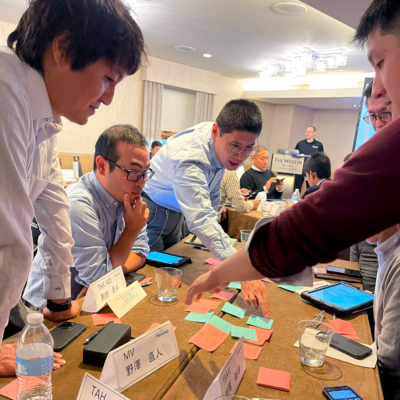
One last application for storytelling is team building. Building a cohesive team that communicates effectively and trusts each other starts with connection, and stories are one of the fastest ways to create it. Our Team PechaKucha event is a storytelling workshop activity designed to do exactly that: develop your storytelling skills while building valuable connections with your colleagues. It’s one of the most natural and human ways to team build, and you leave with a skill useful across every area of your work.

How to improve storytelling skills
So, how do you actually build better storytelling skills? Storytelling can feel like an intangible ability, but there are concrete steps you can take to improve.
Let’s start with practice. Practice makes perfect, and storytelling is no exception. The more you tell stories and become comfortable doing it, the better you’ll get. Whether that’s through storytelling workshop activities, structured exercises, or real-world opportunities, putting in the reps is essential.
Another way to learn how to improve storytelling skills is to study other great storytellers. There are incredible storytellers everywhere. Read, listen, watch. Take note of how they structure their narratives, connect with their audiences, and land their messages. There is a lot you can pick up simply by paying close attention.
The next one is something many storytellers overlook, but it can have a huge impact: listening. Good storytellers are good listeners first. They learn about the world and the people around them, and those details become the raw material for great stories.
Karen Eber made this point in her podcast episode, noting that introverts in particular have what she calls “the quiet advantage.” Because they tend to observe and notice things others miss, they’re often positioned to spot connections and highlight perspectives that others simply don’t see. That makes for compelling storytelling.
Preparation is the final piece most people underinvest in. Many people spend hours perfecting a slide deck but barely five minutes thinking about what they actually want to say. Flipping that around, and giving your story the thought and practice it deserves before you tell it, can make a significant difference in how it lands.
How storytelling can connect your team
Storytelling at work doesn’t just help individuals communicate more effectively; it can fundamentally change how a team operates together. Let’s look at a few specific ways it creates connection.
One of the most direct ways is by creating friendships and genuine relationships. Stories have brought people together for thousands of years, and they can do the same in your office. Gathering to share stories can grow friendships and build a sense of belonging, which is central to employee wellbeing. Employees who feel like they’re part of something bigger bring more to their work every day.
Stories can also help break down barriers and work through conflict. They provide context, insights, and lessons that make communication easier and allow teams to navigate disagreements more constructively. Whether you’re dealing with tension between departments or helping a team realign after a difficult stretch, a well-chosen story can do what a meeting agenda often cannot.
There’s also a cultural dimension to storytelling. Every organization tells a story through its day-to-day behaviors and interactions. The stories that get told and retold in your workplace shape what your culture actually is. Leaders who are intentional about the stories they share, whether in company-wide meetings or casual conversations, are actively shaping the environment around them.
Given that only 21% of employees globally are engaged at work, according to Gallup’s 2025 State of the Global Workplace report, the ability to connect, inspire, and communicate through story is more valuable than ever. Teams that feel connected to their leaders and to each other don’t just perform better; they stay longer and bring more energy to everything they do. Storytelling at work is one of the simplest and most human levers leaders have at their disposal.

Transform your team with TeamBonding
Storytelling exists all around us, but many overlook its role at work. Stories can help you bring people together, build relationships, connect your team, inspire real change, and so much more.
Transform your team today with TeamBonding. We have over 25 years of experience in corporate events, and we are here to help with employee engagement and satisfaction. With a huge selection of events, there’s bound to be something for your team. So get in touch with us today!


Get more insights in our newsletter:
* every subscription supports charity!
PODCAST

Get ideas, inspiration and best practices from across the globe.




Plays well with these activities.