

STRONG TEAMS DON’T HAPPEN BY CHANCE 
Team Building Strategies for Stronger Teams
w/ David Goldstein

Use the buttons above to listen now.
Transcript - Team Building Strategies for Stronger Teams
Rich Rininsland: On this episode of Team Building Saves the World…
David Goldstein: No, things seem to happen to me. I’m always in the wrong place at the right time or the right place at the wrong time, but yeah.
At the end of this time that we’re together, what do you want to walk away with? What are you hoping, to carry away?
I’ve actually went in a restaurant in my town with a friend going, “David, do you have a book? Would you sign it for me?” I’m like, I don’t know if that’s gonna be… That’s not what I imagined. But that’s the coolest thing I’ve ever done.
Rich Rininsland: Hello, team. It’s me, your old friend Rich Rininsland, host of Team Building Saves the World.
And on today’s episode, we’re having longtime friend of the show, and the man who made this podcast possible, David Goldstein. He’ll be talking about his book, Beyond Trust Falls: The Definitive Guide to Building Teams That Click. But first, I have to share some love with all of my supporters at TeamBonding.
If your team is ready to experience teamwork through the power of play, then visit teambonding.com to learn more. Now, team, let’s talk to the founder and creator of opportunities for TeamBonding and the author of Beyond Trust Falls, David Goldstein. David Goldstein, you have written a book.
David Goldstein: Yes, I have.
Rich Rininsland: The book is called Beyond Trust Falls: The Definitive Guide to Building Teams That Click. So you have been in this business for over 25 years, right? Yeah. How long you been doing this?
David Goldstein: PR people keep telling me, “35 years, David.”
Rich Rininsland: 35 years? 35.
David Goldstein: 35 years.
Rich Rininsland: Okay. Then I’ll just keep it at 20- That- Over.
David Goldstein: That ages me, because, you know… I started when I was seven.
Rich Rininsland: Fantastic. Let’s keep it at over 25 then.
David Goldstein: Sounds good.
Rich Rininsland: Okay. That’s what my sister does. But anyway, what made you decide now suddenly that you wanted to write a book?
David Goldstein: It’s, everything’s kinda somewhat accumulated. Over the years, we’ve done so many things and so many different things have happened.
It just seemed like the stories should be shared. I’m always been into storytelling.
I love listening to stories, I’ve been to storytelling workshops, and I just love telling my own stories, and it just seemed like the right idea to tell the stories of what happened to make TeamBonding a business.
Rich Rininsland: So yeah, does anybody who knows you, especially the length of time you and I have known together, I think… I think I figured it out today, I’ve worked with you for going on 17 years in this industry.
David Goldstein: Oh, so just a newbie.
Rich Rininsland: Yeah. Under 25.
David Goldstein: There you go.
Rich Rininsland: I guess we could say. But anybody who knows you as well as we do knows that you’re a storyteller, that you have these anecdotal evidence pieces that you’ve gone to your entire life.
Anytime you’re telling anybody a story of an event that’s occurred in your life or that you’ve heard of, it’s always a story. It’s not just A equals B equals C.
David Goldstein: No. Things seem to happen to me. So I’ve got, I’m always in the wrong place at the right time or the right place at the wrong time, but yeah.
Rich Rininsland: Plus, in the book, you don’t just tell the… It’s not a first person story, and it’s not just the technical aspects of team building and how to make good team building work. You also include some pretty, I wanna say famous, maybe infamous on the TeamBonding side-
David Goldstein: Very possibly, yes.
Rich Rininsland: Who are some of the people that you actually note in the book?
David Goldstein: The thing about team building is it takes a team. As they used to say, it takes a village, but in, it takes a team to do it. So we have a… It’s not just when we first started, the, the typical team building company was a guy in his basement, with a bunch of equipment who would be on the phone on the way from one gig to another.
But we created a little bit more of a process. So when we sell, it starts with someone that knows the programs, then it goes to a production manager or an event manager- … who can handle all the details, hires the assistants, confirms the facilitator. So we have a whole team of people that we use to make this all happen, and we’ve been doing that for a lot of years.
So I guess, I had facilitators, I had trainers, I had event managers, and one of the things I had at the very end is my family.
My wife Wendy is the operations manager, and we are not a family business per se, but we certainly have a good representation of the family in the business.
Rich Rininsland: So let’s go into a little bits and pieces of the book if we can. Looking at the different chapters, the different dividers that you’ve come up with for how the book runs, how it flows. Like I said, there’s a lot of anecdotal pieces that come to it. How much of that was personal, and how much of it is just, like you said, from those other people coming in and talking to you?
David Goldstein: I think the original, idea when I talked to the publisher from Wiley, I told them what I wanted in a book, and I said, I have these great stories, and I think the business is an interesting story in itself, how I started it, how I almost bankrupt us, how I brought it back.
Rich Rininsland: Yeah.
David Goldstein: He goes, “David, that’s really nice, but no one wants to read that.” “They wanna know what you’ve done to build better teams. They wanna know how you do it. They wanna know how they can do it themselves. And who you’ve trusted.”
So what I did is put together a team so the person that buys the book can learn from what we did to how do they do it themselves, and the successes that we’ve had and the failures that we’ve had. And what I’ve learned from those, and they can learn from the book.
Rich Rininsland: Do you consider yourself still learning, even at this point in your career?
David Goldstein: I think the one thing I’ve always said is I’m always curious, and I think curiosity is a big part of what we do. What’s behind, a shelf.
I used to say… this ages me a little bit, but to look for new programs, I used to walk through Barnes & Noble.
And I would read the business books and go, “This would be a good team building program.” Now it’s a little bit more like Instagram and going, “Oh, that’s really fun. Imagine they do that. This would be really fun,” and the things in our lives. So the inspiration and curiosity comes out of different places now, but it’s still the driver that moves us forward.
Rich Rininsland: So in the book especially, I love the point, you talk about this I can’t remember the name that you gave to him, but some marketing guy who was coming or HR person who was coming to you and saying that “My people just can’t get it together. They can’t build a team. I don’t know what’s wrong with them,” and that this person was automatically coming into it thinking “it’s just gonna be trust falls and kumbaya,” I believe was the quote that you used. How does the book teach them what team building is now to get them out of the mindset that this is what it was back when maybe the business started?
David Goldstein: I think the goal for team building is different than it ever used to be. I think initially it was just to get people out to have fun.
Rich Rininsland: Okay.
David Goldstein: I think when we built the first team building programs for TeamBonding, we were building something that was fun. But it was also getting you to do different things, getting people to know each other better, getting people to trust each other better.
Because the idea of bringing that back to the office, Rich, when you’re back in the office on Monday, and the things that we did together at the team building event, I go, “God, Rich can do that.” So… If I need something, I will ask Rich. And the idea of building that into programs, that have different themes, whether it be game shows or spy themes or, all sorts of different things.
It makes everything fun and interesting. I think one of the new programs we have is Passport to Adventure. That’s kind of an Indiana Jones story. The people relate to the theme, but what snuck into the exercises is learning and ways to be a better team. And that’s what I think, I share with the reader of ways that they can do it themselves, whether or not they hire us, whether they wanna just do it themselves.
Rich Rininsland: I assume you still want them to hire you, even if they’ve got the book.
David Goldstein: Absolutely. Okay. Or tell someone to hire us. Okay.
Rich Rininsland: And so it works for you. Thank you. I appreciate that. And I wanna keep that going too. But what is it you think, even especially today for anyone who may not have read the book yet or for anyone who is still getting team building wrong, what are you seeing that they’re getting wrong, and how do you recommend they change?
David Goldstein: I think the thing about team building is it’s an honest thing. You don’t wanna do it just to just check off a box. Let’s do team building. You wanna do something… I think when I was in the early parts of the sales process, I would always ask not, “What is it that you wanna do?” ‘Cause everyone say I see this on the website. “This is what I wanna do.”
It’s like “what do you wanna accomplish? At the end of this time that we’re together, what do you wanna walk away with? What are you hoping, to, carry away?”
I think that’s always the question to ask, is team building can do things. It can only do a certain amount of things. You do a two-hour program, you’re not gonna change your team forever. But you’ll certainly move things in the right direction. But if you commit to investing into your employees, in their engagement and their retention, team building is a good tool to have in your toolbox.
Rich Rininsland: Let’s, if we can, take a step outside the book itself for a while and just talk about some of the theories that you posit while you do your writing. You actually mentioned how connection can be a competitive advantage. Why, and how does that work?
David Goldstein: As many of the people that are listening know, I’m a big Red Sox fan.
And this has been the most challenging of seasons. But one of the things that I see in the team there is somewhere they lit a spark, that they all realize that one person kicks it off. Someone comes up and they’re the spark, and then someone else can do it, and then someone else can do it.
And it starts with one, and it starts with them believing in each other. And this is no different than a corporate team. You trust the people that you work with. You have to.
And I think that’s what we’re trying to engage in the process of team building, and what we’re sharing in the book, is that you are better as a team, and if you communicate better, if you know each other better, if you can depend upon each other…
Now, we’re not trust falling anymore. That was, you know-
Rich Rininsland: Yeah …
David Goldstein: that was-
Rich Rininsland: Very ’70s …
David Goldstein: very, yeah.
Rich Rininsland: Yeah.
David Goldstein: But we are finding other ways to learn the skills of different people in your group, whether it be through escape rooms, or puzzles, or different adventures. You can figure out what someone’s good at and what you can depend upon them when you need something to pitch a client or to deliver your service.
Rich Rininsland: And is this just on the employee level, the grunts on the front line, as it were? Or are you looking, are you hoping that this would expand upwards into the C-suites?
David Goldstein: The business does that. So it starts with an admin that might help their manager find a team building program.
But we do team building and these type of events for all sorts of groups. The C-suites, the people in the warehouse. We do a lot of different things. We do some things with the entire company you’re able to work with people that you wouldn’t normally know in accounting or HR or sales or, whatever they happen to do.
I think, depending upon what you’re looking for, we have a program that matches it.
Rich Rininsland: Sure.
David Goldstein: Whether it’s a culinary program, they learn to cook together, whether it’s a scavenger hunt. There are different things that bring out different skills for people.
Rich Rininsland: Okay. And ’cause we’ve heard a lot over the last few years on the podcast how the big thing that makes, the first thing that’s going to make someone leave a job is the manager above them.
David Goldstein: 100%.
Rich Rininsland: But those managers are the ones coming to you to say, “We need to build a bigger team.” Or a better team, I should say. Where’s the disconnect coming in? How are these managers not yet understanding that maybe it’s not I need my team to work better, but I also need me to be a part of that team?
David Goldstein: You see it on all the TV shows that, sometimes the manager will take all the credit for the employee’s work.
Rich Rininsland: Sure.
David Goldstein: I think you want trust to go both ways. You wanna trust your manager, the team manager wants to trust their people, so whatever they’re trying to create or build or sell or deliver is honest. So I think this helps, get people on the same page.
Rich Rininsland: Okay. Have you actually seen, you don’t have to give away any of the names, but have you actually seen, in your personal experience, a case where that happened?
David Goldstein: Oh, yeah, all the time. I mean…
Rich Rininsland: can you give me one?
David Goldstein: Oh, can I give you one?
That I probably can’t. Okay. But I can tell you that the favorite… We have a Slack channel just like a lot of companies have, and on the Slack channel there’s a testimonial page.
Rich Rininsland: Ah.
David Goldstein: Okay. And so when a client will call back or write back in after their event, they will write what their team benefited from.
I can read yous just a random some of those, because that’s my favorite page. I love… If I’m ever having a bad day, I will go to that Slack channel and see. They will write to the salesperson that, “You did great. Your team did great. Our event was great.” Nice. So it’s in a few minutes I’ll turn that on and I will share that with you.
Rich Rininsland: Nice. Good. In the meanwhile, we all know that six years ago when this podcast started, we were in the midst of the pandemic, and the world changed. What are we seeing now in 2026 as opposed to 2020 and pre-pandemic that you can comment on to not only how teams are working, but how teams need to improve?
David Goldstein: I think we’re still in flux.
I think what the pandemic taught us is that you can work remotely and you can work differently and you can-
Rich Rininsland: Yeah …
David Goldstein: have someone in, you know, we have virtual assistants.
And we had four of them during the pandemic, and we have one right now that’s in Argentina and another one that’s in Mexico and another one, you know, that was just from Jamaica.
And we were able to work with people from different cultures, never meeting them, and they were contributing to what we did.
And I think… There’s a struggle now and I can see both sides of it, about, remote work. Is it good? The the employees seem to like it. The younger generation seems to like it.
Rich Rininsland: Yeah.
David Goldstein: But then what happens when you have an entire office that used to be in the city, and now you don’t come into the city anymore?
What happens to that block? What happens to the neighborhood? What happens to the culture of the company? So you still need to build and maintain the culture of the company regardless of where people work.
Rich Rininsland: Okay.
David Goldstein: You came in today. And you said, “You know what? It’d be nice if the marketing team was here.”
Rich Rininsland: Yeah.
David Goldstein: But the marketing team for TeamBonding is remote. But yesterday, we did a remote virtual event and with you as the host. And I got fantastic feedback on it, and that was exactly what we needed.
The marketing and the sales team worked together. They got to know each other better, and it’s exactly what we needed. And that’s exactly what companies need. They need to invest in activities and opportunities to get people to work together. Because it’s much more fun to do it that way.
Rich Rininsland: How important is fun in all of this, in your opinion?
David Goldstein: Fun for fun’s sake is probably not all that important. But I think fun for a purpose is good. I think all of our activities and events and team building programs are fun, but you add into charitable programs where you are having fun building bicycles or donating to children or making skateboards.
You’re having fun, but you’re also doing something with a purpose.
And I think a shared purpose, that’s important.
Rich Rininsland: Okay. Speaking of purposes, talking about bike builds, we’ve been talking a lot about CSR this season. So CSR and focus-driven work, how does team connection, team building influence a company’s ability to make purpose-driven activities and focus a better part of their corporate world?
David Goldstein: I think when an employee is engaged, when they like what they do and they like who they do it with, I think they’ll come up with a better product. They’ll come up with a better service. We don’t want someone mailing it in. We want someone to go, “You know what? Not only do I deliver this widget, but I worked on the line. I’ve worked with the people that make it. I’ve worked, when it was developed and conceived.” That you want people that are committed to it, and I think people that are having fun, people that are engaged, people that connect, they’re better…
They make a better product. They deliver better service.
Rich Rininsland: And we’ve done a lot of amazing CSR programs throughout the years. Do you have a favorite?
David Goldstein: Oh, I have a lot of different favorites. I have favorites for different reasons. I think one of the first bike builds we did was down in Atlanta.
And the company, we were new to it, so it’s okay, we got a charity, we got everything all set. And we said to the company, “We are going to deliver this program, and the people that are going to get the bicycles are people that are siblings of cancer patients.”
And the company said, “You know what? We don’t want that. We want people that are poor. We want you to deliver to someone that, you know, that this really affects.
Rich Rininsland: That actually has a need.
David Goldstein: That actually has a need. And you know what? You can’t take it back from the people we promised to give it to.
And because they’re not poor enough. Believe me, the people that are siblings to the people that have cancer are just as much of a need.
So I think the way that it’s… And we’ve done so many things. I think one of the first ones we did were teddy bears. We donated teddy bears to children with Down syndrome.
And the children came and received the teddy bears, and the facilitator came back and said, “David, when I came into the room and I told the story and I showed these children, everyone in the room cried.” Can you imagine that? You do an event that everyone cries and that’s super successful.
The feeling that people get when they see the children, when they hear the stories, when they learn that the prosthetic hand is gonna go into someone’s actual arm and be able to change their life… that’s beyond team building. That’s really you’ve done something good in the world.
And I think the fact that team building has turned into something that can deliver that kind of emotion and activity and purpose is one of the things I’m most proud of.
Rich Rininsland: And you talk about that in the book, some of those shared experiences.
Not just are you learning more about the person, but you have something to connect with them throughout the years.
David Goldstein: Yes.
Rich Rininsland: How important is that to you when you’re talking to a manager afterwards, or, when the facilitators actually are doing their wrap-up about the event that just occurred?
David Goldstein: I think one of the best things that we have done is when you do something like a Do Good bus, and you all get on a bus and you have a shared purpose and you do something for a charity, and then you have lunch and you learn what the charity does, and then you go back and you talk about it, and you have that experience that you’ve gone out of the office and been transported somewhere else.
And then afterwards you go, “You know what? This charity was so interesting. I wonder if I can volunteer and do more work for them.” And that’s another way that it was successful. It was successful for the company and the team, but the person was inspired by what they did at work to give of their time, and you’ve introduced them to that, and that’s something I’m really proud of.
Rich Rininsland: I notice you got your phone back working. I have. Do you wanna share one of those experiences that you were talking about?
David Goldstein: I do. Absolutely.
Rich Rininsland: This is on your Slack channel, you said.
David Goldstein: It’s on my Slack channel. All right. I’m just gonna go from the bottom to the top. This is a recent one.
Rich Rininsland: Okay.
David Goldstein: It says, “Hi, Julie.” Julie’s one of our account managers. “Echoing the words I shared with Jayne, it’s always a pleasure working with Kevin and the TeamBonding crew. Many of our participants noted how much fun they had in the activity.” This is a team teddy bear rescue for a client in Illinois.
The one above it, this one may, might be a better one.
It says, “Hi Michelle, Lindsay. Wanted to follow up a quick debrief from our VP of CSR from Monday’s event in Newport. It was really well done. CJ from TeamBonding was great and engaging.
The bus activities were great. Grocery shopping and landscaping work was really fun, and they truly fulfilling to hear from Lucy’s Hearth administrators. Overall, this was a very well organized, fun, engaging, and mid fulfilling event. Lots of good feedback from those that attended. Cannot thank you enough.
So happy, excited to hear the feedback from this crew, especially loving our partnership, and we’ll continue to name drop you whenever we get a chance. I get off-site, on-site meetings. Thanks so much. It was so much fun, and this was for an, it’s for an incredible job for the Do Good Bus” so that’s just pages and pages of these type of quotes.
They come in, by the hour.
And it’s almost we’re speeding right into right into my arm of good work that we’ve done and that we share, and that we share with the team that does these things. Not just the facilitator, but the people that pack the equipment for the bus or the event managers or the salesperson. It goes through the entire company, and it feels so good.
Rich Rininsland: Okay. Let’s get back to the book again for a second if we can. What is something that you want… somebody who’s flipping through the aisle on Amazon, so to speak or, Barnes & Noble, wherever they happen to get the book.
What is something you want them to realize before they even pull the book down and start flipping through the pages?
David Goldstein: I think when I first decided that I wanted to write this book, I wanted to give value. I want, for the money that they pay for the book, I want them to think “wow I paid for this book, but I can make the money back.”
If I can learn one thing, or two things, or three things, or somehow, create a program internally that I can use this book for, ’cause it’s got tons of different exercises and activities that were written, by Tyler Hayden, one of my interviewees.
Rich Rininsland: Yeah.
David Goldstein: There’s so much value in this book that it’s, that it’s not… It feels like it’s not free, but it’s worthwhile, and that’s what I want people to see. This book is not just a read, and it’s not just David’s stories. This is something that a guy knows this business. He’s been doing it for 25 or 35 years.
Rich Rininsland: Over. Plus, 25 plus.
David Goldstein: A long time. And, it’s, the book is worth it, and I personally will guarantee it. If someone buys this book and they don’t find it worth it, I will refund their money.
Rich Rininsland: You heard it here, and only here, and only people who listen to this podcast will ever hear David say that again, because somebody’s gonna tell him never to promise that on air-
David Goldstein: No doubt. So we can cut this. You can edit this, right?
Rich Rininsland: Yeah, but that’s staying in. So what about a learning thing? What can they learn from the book that you don’t think they might know? ‘Cause I will admit, when I read the book, I was flipping through going, “Yeah, I know that. Yeah, I know that. Yeah, I know that,” because I have been under your auspices for 17 years.
So, it is nice to find a collection of all of the things that you have been teaching us over the years. What about people who don’t think about this first? ‘Cause we still… it’s even part of your book, those people who still hear team building and their eyes roll noisily in their heads.
We all see them when we go to facilitate, and you always have those people who walk in the room, and it might be a smaller percentage now than it was in the past, but they’re still, “Ugh,” when they think about what it is that we’re gonna be making them doing for the next hour and a half. What is the thing you would want to point at in the book to those people who don’t know what team building really is yet?
To say, “Here’s what you want to look at. Here’s what you want to take into your future with your company,” as to why team building works.
David Goldstein: I think, what I’d like them to look at is to realize that it’s not just a book of team building activities and events. It’s not just, it’s just not my stories.
It’s not things, how I built the business or what I did with the business. What it is when you look at the book is it tells you a little bit more about what I’ve done, what we’ve done, what we’re trying to do, and then how you can do it yourself. So it’s almost like a, a handbook. It’s a helper.
So if you looked at it… And you didn’t need to know, how to do it. It will tell you how to do it. And one of the things I’ve learned is that facilitators always tell me that you have three minutes, if not less, to get people’s attention and to get them involved and engaged. And if you can’t get them in three minutes, you’re not gonna get them.
I think that’s probably the most important thing that you’d learn is that you need to engage them early.
And that you’ll learn that and more in the book.
Rich Rininsland: Plus you go into the psychology behind it. All of these things that you have from th- these wonderful people, and friends of the show.
We’ve interviewed with Paul Giraud. We’ve interviewed Jayne and Shannon several times. I’ve talked to members of your family on the podcast. Why do you think that people still have a hard time believing that this works? If they’re gonna pick up the book, they have that curiosity about it. They have the, “I always wanted to try team building, but I don’t know that I…”
They’re still seeing it as the trust falls. Why do we still think or why do you think that by looking at this book, you’re gonna change their mind into thinking that suddenly this is correct, this is the proper way to go forward?
David Goldstein: All right, I’ll be honest with you. I don’t think the book will change their mind.
Rich Rininsland: Okay.
David Goldstein: I think the book, if you are a fan of team building or if you’ve done it or if you’ve seen other people do it, like you as a facilitator and I’ve been a participant… it’ll help you do it yourself. But I don’t know that all of a sudden you’re gonna pick up the book and go, “Oh my God, team building is the most amazing thing in the world.” I think if you hire us or a company like us and you do something that gives back or really, changes your team, that’s when you become a fan. It isn’t the book. It’s the actually doing the team building event. Being part of it, engaging, hiring someone just to do it and delivering what you want from it, and listening to the people that work for you and go, “Oh my God, this was amazing.” We have board breaking. One of the board breaking things, I think it’s the most amazing thing.
And you’re breaking through your barriers to get to the other side. And people cry, and people hug, and they just really are passionate about what they’re doing. That changes.
Rich Rininsland: And I can tell you, folks out there, my team, he is absolutely correct. Having assisted in board breaking before, you have those people who as soon as they step up to the board are telling themselves in their heads, and you can see it physically on their expression, “I can’t do this. I can’t do this. It’s a trick board. It’s fake. They’ve come up with something to try to snowball me, but I know that I’m not putting my fist through a board.” And then they do it, and they see the board broken in front of them, and they realize, “This isn’t a Velcro thing. This isn’t, somebody had a pre-cut board ready to go. This was me. I did this, and it really is moving.”
David Goldstein: What I think is the most interesting thing about that is the original idea of the board breaking is you are breaking through one of your barriers. “I can’t do this. I’m not able to do that.” And then someone may not be able to do it, and then the facilitator will say, “You know what? Maybe let’s turn it around.” “On the other side, write something you really want.”
And a lot of people, that is the way they are made. So they break the board much easier when they decide, “It’s not what I’m trying to break through, but what is it that I want?” And that’s fascinating, and that’s life changing and opinion changing.
Not a book. I love the book. Don’t get me wrong. But, the activity, the actual event of team building is the change, the game changer.
Rich Rininsland: As we’re getting close to wrapping up this, this episode, David, I just wanna ask you what’s your favorite takeaway from having written it?
At what point did you say to yourself, “I need to write this book.” Because I have also been a writer in the past. I’ve written scripts for you for shows that we’ve done, murder Mystery and so forth.
David Goldstein: Still do.
Rich Rininsland: And there are times in any given creative endeavor where you might say to yourself, “Ugh, oh, this is frustrating. This is not what I wanted to say. This is not how I wanted this to go. Now, is this worth my time? Is this worth my effort?”
Did you have that moment where you suddenly were saying to yourself not, “Let me finish,” but, “Let me rethink this. Let me reorganize this.” And how do you get yourself to a point where you can push through and continue the writing process?
David Goldstein: I think my, my goal for this book… the funny part or what I’ve thought is I want to, get on a plane someday, sit in my seat, and I want someone to be reading my book that I don’t know. And just going, “Hey, this is really good.” And then I want to say “I wrote that.”
I think the book was a means to an end. I think it tells a good story. It sums up, a lot of years doing a lot of good work and with a lot of good people.
I think it’s in appreciation as much as it is a guidebook. So I think just getting to the end of the book, I think that was the exciting part.
And right now, my friends or people that I know or people that I work with, I just… last night I was talking to a friend. He goes, “I want a book, and I want you to sign it.” I’ve actually been in a restaurant in my town with a friend going, “David, do you have a book? Would you sign it for me?”
I don’t know if that’s gonna be the, the… That’s not what I imagined. But that’s the coolest thing I’ve ever done.
Rich Rininsland: Nice. Nice. By the way, you’ve never signed my book. You gave me one. You gave me a copy, and I appreciate it, but you never signed my book.
David Goldstein: I would be happy to.
Rich Rininsland: I appreciate that. David, one more time, just for anybody out there who’s still listening, who still might be on the fence about it, first off, where can they find the book?
David Goldstein: They can find it… they… If you go to teambonding.com, just look up Beyond Trust Falls. But you can find it in Amazon. You can find it at Barnes & Noble. You can find it in a number of different places. Or call me. I’ll send you one.
Rich Rininsland: Fantastic. Also, give us something we can tell that person who’s still out there, who looks at it, sees it online, and says, “Should I read that?” why they should.
David Goldstein: I think if you’re on the fence on team building, I think I’m create a good argument of why it works, and I give you proof of how it works and what we’ve done and the companies we’ve done it for and the things that we’ve done. I think there’s a lot of… there’s a good argument for team building as something they could, should consider for their team.
Rich Rininsland: Okay. My friends out there, team, please give it up one more time, Mr. David Goldstein, everybody. So good.
David Goldstein: Thank you.
Rich Rininsland: Thank you. All right, boss. Did you have a good time?
David Goldstein: Yeah, it was good.
Rich Rininsland: Good. I’m glad you did. We’re not done though.
We’re gonna make you, we’re gonna make you do it again.
David Goldstein: 17?
Rich Rininsland: You’ve been… Yeah. Okay, we’ll get to that. Hold on. Just so you guys know, for those who might be new to the podcast, go back through the past several seasons. David has done at least one episode every year. Sometimes you did it with someone else, sometimes you did it solo, which means you’ve already done my speed round.
Secrets. Secrets So I was telling David before we came on that we are now at 17, 17 questions asked and answered in 60 seconds, and he doesn’t think he can do it. But I don’t know, we’re gonna see. We’re gonna see if together we can’t make this happen.
David Goldstein: Being in Boston, I’ve never been a Minuteman, but we’ll see how it goes.
Rich Rininsland: And being in Boston, I have several times, but that’s another story for another podcast.
David Goldstein: It is.
Rich Rininsland: Okay. I’m gonna start the clock. We’re gonna hear some music going on. While that music is happening, I’ll ask you questions. My friend, let’s see if we can’t beat 17, okay?
David Goldstein: You got it.
Rich Rininsland: All right. And then, I’m not even gonna cheat, so everybody knows. If you hit 18, this was not an edit. This is actually how it worked.
David Goldstein: I’m gonna be on speed.
Rich Rininsland: Okay, here we go. What’s your name?
David Goldstein: David.
Rich Rininsland: Pancakes or waffles?
David Goldstein: Pancakes.
Rich Rininsland: Apples or oranges?
David Goldstein: Apples.
Rich Rininsland: Who would you like to see play you in the movie of your life?
David Goldstein: Gene Wilder, but that would be impossible.
Rich Rininsland: Who would you like to do the audiobook version of your book?
David Goldstein: Morgan Freeman.
Rich Rininsland: Oh I can do that voice, sure. How many pets do you have?
David Goldstein: Right now we have no pets, but we have grand-dogs.
Rich Rininsland: Ah, nice. If you could ask your grand-dogs a question and get an answer, what would that question be?
David Goldstein: Do you wanna go out? Tell me when. And when do you wanna eat?
Rich Rininsland: Nice. Have you ever had a bad day in your life, and how’d you turn it around?
David Goldstein: God, I’ve had many bad days in my life. How I’ve turned it around is usually some type of ice cream.
Rich Rininsland: Excellent. What’s your flavor? Favorite flavor.
David Goldstein: Favorite flavor.
I have an Blue Moon’s ice cream. It’s now at Fenway. It’s all over the country.
Rich Rininsland: Fenway, you say?
David Goldstein: It’s at Fenway, but it’s usually raspberry chocolate chip.
Rich Rininsland: Okay. Favorite day of the week?
David Goldstein: A Wednesday.
Rich Rininsland: And favorite vacation place?
David Goldstein: God, favorite vacation place. We went to Italy last year with a bunch of friends from high school, with five couples, and it was the best time I’ve had in a long time.
Rich Rininsland: Nice. Very good. You didn’t beat 17, David.
David Goldstein: What did I get?
Rich Rininsland: No, you got 12.
David Goldstein: Do you think maybe you weren’t asking fast enough?
Rich Rininsland: That’s possible, but I also think I got you really stuck on ice cream.
David Goldstein: Yeah.
Rich Rininsland: David Goldstein, thank you very much for being on the show, my friend.
David Goldstein: 12.
Rich Rininsland: Yeah.
David Goldstein: What did I have the last time?
Rich Rininsland: You, I don’t know that you’ve gotten better than 13, 14.
No, I said I’m not doing that.
November 19, 2026
What does it really take to build a team that works well together? According to David Goldstein, it starts with connection.
In this episode, David joins Rich to discuss what inspired him to write Beyond Trust Falls and how decades of experience building teams have shaped his approach to effective team building. He reflects on how the industry has evolved, why traditional activities and check-the-box approaches often fall short, and what organizations can do to create experiences that foster genuine trust and collaboration.
David shares practical team building strategies for helping employees connect beyond their job titles, engage with one another, and bring stronger relationships back to the workplace. He also explores why shared experiences are so powerful, how to get even reluctant participants involved, and why meaningful team building should have a lasting impact beyond the event itself.
The pair also touch on the power of purpose-driven experiences, including charitable team building, and how doing something meaningful together can create lasting connections. Throughout the episode, David shares stories from his career that illustrate how the right experiences can help people break through personal barriers, build confidence, and see their teammates in a new light.
About David Goldstein
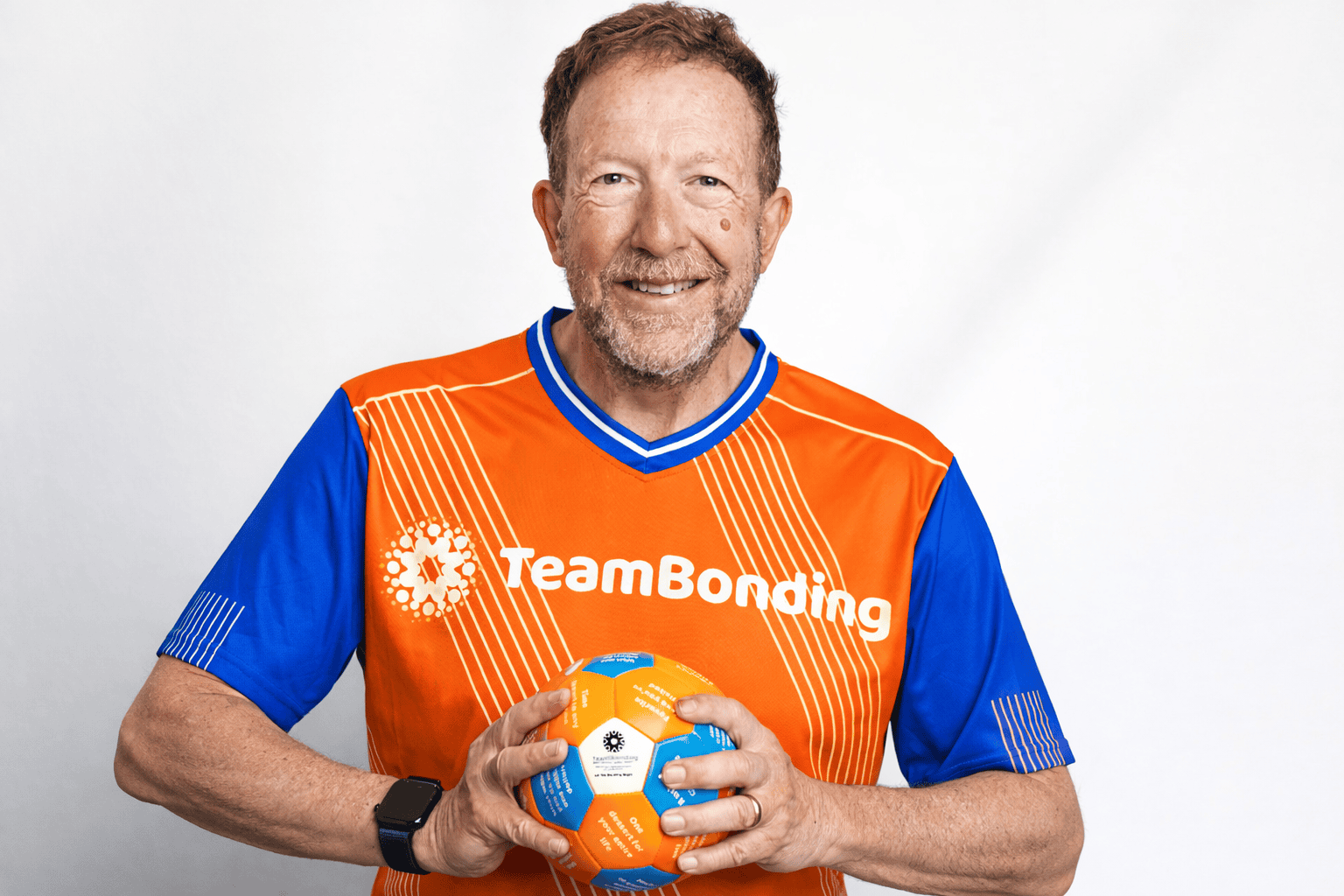 David Goldstein is the founder of TeamBonding, North America’s premier team building company, and the author of Beyond Trust Falls: The Definitive Guide to Building Teams That Click. After obtaining his bachelor’s degree in communication studies at Emerson College, David began designing interactive experiences like ski and rafting trips, unique scavenger hunts, and America’s very first murder mystery dinner theater.
In 1988, he launched TeamBonding with a philosophy centered on the “power of play,” using creative, engaging activities to build stronger teams. Drawing on nearly 40 years of industry experience, David shares his insights, stories, and proven strategies for building stronger, more connected teams in Beyond Trust Falls. Under his leadership, TeamBonding has evolved with industry trends, introducing virtual events, charity initiatives, and earning a spot on the Inc. 5000 list. When he’s not innovating, David enjoys poker, cheering on the Red Sox, and spending time with family and friends.
“Early in the sales process, I would always ask, ‘What’s the goal? At the end of the time we’re spending together, what do you want people to walk away having learned? What do you want them to carry back with them?’ I think that’s always the question.”
David Goldstein
Get ideas, inspiration and best practices from across the globe.




Subscribe Wherever You Listen To Podcasts




More great podcast episodes.
Season 7 | Episode 9
The Speed of Trust
Season 7 | Episode 8
Making Work More Human
Season 7 | Episode 7
What Happens After the CSR Event?
Season 7 | Episode 6
Turning Sustainability Into Employee Engagement
Season 7 | Episode 5
Building Brain-Healthy Workplaces
Season 7 | Episode 4
Bringing Compassion Back Into the Workplace
Season 7 | Episode 3
Corporate Responsibility and Sustainability
Season 7 | Episode 2
Empathy, Insight, Impact