

STRONG TEAMS DON’T HAPPEN BY CHANCE 
Corporate Responsibility and Sustainability
w/ Danny Sudman

Use the buttons above to listen now.
Transcript - Corporate Responsibility and Sustainability
Rich Rininsland: On this episode of Team Building Saves The World.
Danny Sudman: I think our big success and what we’re focusing on is behavior change.
My other pedestal that I’ve been saying a lot is people don’t like to be told what to do. Like you just start hearing people realize “oh, this just changed significantly,” and it’s when it comes down to actually implementing those solutions, there’s a lot of work to be done and it creates resistance. And I think there’s a whole another podcast episode on that topic.
Rich Rininsland: Hello team. It’s me. Your old friend, Rich Rininsland, host of Team Building Saves The World. Did you know Earth Day is coming? Yes. And today we’re gonna discuss how to create a renewed culture on sustainability and use it to find the leaders in your community, whether corporate or camp with facilitator and creator and executive director of Green Camps.
Danny Sudman, but first I have to share some love with all of my supporters at TeamBonding. If your team is ready to experience teamwork through the power of play, then visit TeamBonding.com to learn more. Now, team, let’s talk about saving the planet while saving your corporate culture with Danny Sudman.
Danny Sudman, my team out there. Welcome Danny. Thank you so much for coming on today. I appreciate you being here. You are the founder of Green Camps. Which is a not-for-profit for helping actual other, not-for-profits. Is that correct?
Danny Sudman: Yeah. Not-for-profits. A lot of summer camps is our primary targeted audience that we work with.
Youth summer camps. Did you ever go to camp as a kid?
Rich Rininsland: I did for one year and hated it.
Danny Sudman: And that’s, we have somebody’s connected in some regard to camp. I think they say 2.6 million youth and adults are impacted by the camp experience each year. Some more positive than others, as we see. But camp impacts a lot of people. So it’s a great network, a great group of people all over the country to use for messaging about sustainability.
Rich Rininsland: Okay. Now, by sustainability, what exactly do you mean?
Danny Sudman: Yeah. Oh, I’m glad you asked that. So I generally, I like to refer to the triple bottom line is how I think about sustainability and the way in which we make decisions. So the triple bottom line, if you think of three concentric circles, we’ve got people, planet, and profit.
So when you make a decision that’s sustainable, it thinks and considers the impact of the people that the decision’s impacting the planet as well as our profit. Most of our decisions are generally driven by profit, but a sustainable decision will take those other factors into consideration.
Rich Rininsland: Okay. And what kind of obstacles are people coming against?
Is it just the fact that they’re only focusing on the one aspect, not the variety, or is there something outside, something externally that, that kind of is the first increment. People come against the first the first antagonist against their personal story.
Danny Sudman: Yeah, absolutely. I think what I’ve learned over the last 10 years since I launched Green Camps is it’s not a resource problem.
There’s tons of resources on how to start composting programs. I used to joke our website was a black hole of resources like composting in bear country or laundry to landscape systems. What we’ve realized the big challenge is culture.
And how do we build culture and capacity for organizations to define what sustainability means and looks like to them, and then implementing long lasting systems.
Rich Rininsland: And how do you get them to recognize that’s what they need to focus on?
Danny Sudman: Ironically, it’s team building. It’s really been the core of the way we approach this problem is, in traditional team building and the work we do at TeamBonding, we bring a group of people together. We’re having fun, we’re engaging with our peers, we’re getting to know each other. But generally we’re also putting a problem in front of them, right?
Yeah. We’re gonna say, here’s a challenge and let ’em go at it. And that’s where the magic happens. We see the interactions, we see conflict. Sometimes we see problem solving. We see critical thinking. And so by leveraging that approach to these sustainability based problems that’s how we’re finding solutions.
We’re empowering organizations, giving youth voice, giving them agency to be a part of the solution and come up with some innovative solutions. They are. There’s some really innovative thinking out there, and we know that when a team comes together, we’ve got so many great resources within our circle that we stand there in our circle that we can really leverage to find good solutions to these challenges.
Rich Rininsland: Can you gimme an example, like a real success story for it or something that you’ve seen?
Danny Sudman: Yeah. I think it goes from big to small. I know a camp I was working with in New Hampshire, food waste was a big issue. And this is a big one. Food waste has been a big topic of conversation.
And actually I wanna start moving away from the term food waste.
Rich Rininsland: Okay.
Danny Sudman: And the idea of wasted food because it’s a resource, it’s a valuable commodity. Through the pandemic, they started realizing that they were hauling all these trash bags all the way across camp. It was smelly, it was stinky, and they wanted to figure out a solution for it.
So they brought in I believe it’s called a food to grid, or food to energy system where they’re actually using like a syncrator. Do you have a syncrator, where you chop it up? So they have a massive scale one that they put the food waste down the sink, it grinds it up, and it goes into a 3000 gallon tank in the basement.
And for $700 they can get that tank emptied. So what they were paying to have all their waste transported away. The physical part of carrying the waste across, the people that it caused to do that, they’re saving a ton of money. So it’s been a really success story. And even smaller cases of just clean play clubs where camps are engaging kids around this idea that take what you can eat and eat what you take. And I think behavior change, those massive systems is a big system they installed at that camp. It’s very expensive. Now, I think some of our most low hanging fruits come to behavior change. And so just talking to kids, education, modeling, behavior change is a great way to see those things happen.
And that’s our, I think our big success and what we’re focusing on is behavior change. How can we engage staff to model these behaviors for the kids that they’re engaging with every day?
Rich Rininsland: What about when it’s not working, though? What about the other end of the coin where, we have been talking about food culture in this country and around the world.
We have been talking about the environmental causes that are going on throughout the world, but still, there doesn’t seem to be enough fundamental changes. Why aren’t we seeing with all of these great organizations and great implementations of new methods, why aren’t we seeing a big enough change?
Danny Sudman: It’s a big, it’s a really big challenge,
Rich Rininsland: Sure. Yeah. And I’m not trying to underplay it. I’m not trying to say, you guys are just being too lazy. Get to where everybody get a syncrator, I’m not, that’s not what I’m trying to say. But let’s start looking at the problem as a problem and see, let’s have somebody who has the experience, for example, to tell us how we can actually make a better, more sustainable system.
Danny Sudman: Yeah I think prioritizing things, sustainability often gets kicked down the totem pole when it comes to priorities. Like it is definitely when I’ll go present on sustainability and often start that, we all can agree that sustainability is important and you get a room full of nodding heads, right?
It’s ” yes, of course it is.” But when it comes down to actually implementing those solutions, there’s a lot of work to be done and I think it’s also very overwhelming. I think we see the opportunities and sometimes. Hopefully we have emotional connection when we look around. We have a plastic bottle that we’re trying to recycle, and if you only see a trash can, then you’re gonna toss in the trash can.
And so hopefully there’s some emotional connection to that. Maybe not everybody has that emotional connection, but building the larger infrastructure and systems to facilitate. That’s really important. But as we mentioned earlier, those don’t work unless the people are bought in and there’s a culture piece of it.
So I think there’s two different things happening. I recently went to a recycling association conference for the Carolina Recycling Association. And I wanna write a blog or a book called Beyond the Bin because we are so disconnected to what’s happening on the backend with municipalities and waste hauling companies.
Like they are doing some amazing things. There’s amazing technology baked into it, but again, it’s the people disconnection. So I think both things are happening maybe somewhat in isolation, and the opportunity to bring those together, I think is where we stand to really see the big change happening.
Rich Rininsland: Are we just, do you think a part of this big problem is that the culture itself? It just, you have people who just think I throw things away and then it’s somebody else’s issue.
Danny Sudman: Yeah. Yeah. Where it’s baked into our society. There’s this great photographer named Peter Menzel that writes… he has these two books, one’s called Hungry Planet and the other One’s Material World.
And he goes around the world and he takes pictures of families with a week’s worth of food, or he takes a picture of a family outside of their house with all their belongings. And it’s really fascinating to look at a week’s worth of food. So imagine a week’s worth of food spread out on your counter.
Rich Rininsland: Yeah.
Danny Sudman: How much of that is packaged? How much of that’s gonna wind up in the landfill? I’m working on a presentation right now. 30 to 40% of food doesn’t even get eaten. It just goes straight to the landfill. Or it’s wasted. I don’t know what a percentage, what’s landfill versus composting, but there’s a big disconnect.
And then the packaging that goes along with it. It’s convenient, and we can look through history, the industrial revolution and the ability to quickly get that satisfaction. It comes into cost that there’s a lot of instant gratification, but it’s also single use thing. So I think there’s a lot of cultural pieces baked into it.
And behavior change I mentioned previously, I think it’s hard. Changing our behaviors are really hard. I just celebrated my 43rd birthday on Monday.
Rich Rininsland: Congratulations. Happy belated birthday!
Danny Sudman: Thank you. I appreciate it. And I’m a creature of habit and we have practices and things that we do on a normal day-to-day basis and to change our habits.
It’s tough.
Rich Rininsland: Yeah.
Danny Sudman: My other pedestal that I’ve been saying a lot is people don’t like to be told what to do.
Rich Rininsland: Yep. And when you make it, when you coach it in that way, you’re gonna get more pushback than ever.
Danny Sudman: Correct. And it creates resistance. And I think there’s a whole nother podcast episode on that topic of trying to tell people what to do.
And, but, even if you have the best interest in mind, if it’s backed by fact, by science, by information there’s still some pushback sometimes. And so again I think that this is where we have to build experiences that allow people to come to their own decision and make their own decisions on how can I change my behavior and does this really matter?
I think that’s a big one. You might not feel that putting a plastic bottle in the recycling is as a whole gonna have a big impact.
Rich Rininsland: But this brings us to your green team building now. Can you define that for my team out there? And what does it look like in practice? What are the things you’re trying to put forth to everybody as alternatives?
Danny Sudman: Yeah. So my background and how I came to work with TeamBonding. I grew up in the camp industry if that hasn’t been made clear. I’m a camper, I heart Camp, as we like to say. From the time I was seven years old, I went to summer camp and some of my most memorable experiences were through our low ropes activities like the balance beam, and the whale watch activity balance on these things and even up to high ropes. And so that was my leadership development time as I rose through the ranks at camp to become a camp leader. I later moved to a camp in California.
And I was the director for their outdoor education program. I was also the ropes course director, and so as all these things continued to grow, I started looking at this dichotomy of like challenge courses and sustainability, and especially my time in California really opened my eyes up to this idea that the natural world has so many lessons that can teach us about what sustainability means and looks like.
Rich Rininsland: Right.
Danny Sudman: But there’s this disconnect in what we come back to our home communities. And so as I continue growing in my experience as a ropes course, a professional ropes course facilitator, I started thinking about how do we change behaviors and how do we really make these again, not tell someone what to do. But give them an experience that allows them to come to their own decision and decide what behaviors they’re gonna implement. And so through that, I coined this idea of green team building. And so I take traditional team building experiences, like we said before, where you give a group a challenge and let ’em go at it. See where those critical thinking and problem solving skills come through. And as I continued down that road, I took a lot of the traditional team building events that I would facilitate for camp groups and corporate groups. And as I continue moving into that and I saw this opportunity to expand the conversation and build these things in, I could share a couple of those activities.
So that would be helpful to come please.
Rich Rininsland: Yeah. Hit me.
Danny Sudman: So one of my, one of my favorites I do one call the EQU distance game.
Rich Rininsland: Okay?
Danny Sudman: And so in the EQU distance game, let’s say we’re in a room, there’s 12 people, you’re gonna choose two other people in the room, without letting them know.
Rich Rininsland: Okay.
Danny Sudman: And then you’re gonna move and place yourself in equal distance between those two people. So if I chose two people, they might be in different spots of the room. I’m gonna have to move and place myself either like in a triangle.
Rich Rininsland: Yeah.
Danny Sudman: With the two lines the same or directly in between them.
And what’s gonna happen to those people? What do you think is happening? Meanwhile,
Rich Rininsland: They’re gonna start moving around themselves. And I assume the objective is to. Since everybody else is picking two of their own without telling them that they have to move compared to those two as well.
Danny Sudman: Correct? Yeah. They’re focused on their two people. And they, it ensues with anarchy, and I love a little bit of chaos.
Rich Rininsland: It’s a great game.
Danny Sudman: It’s so much fun. And as we walk away from that, the magic happens with the processing, right? The debriefing when we say “what happened? How can we tie this to other lessons?”
And I like to ask the question, “who is influencing your decisions?”
And so “who was telling you where to go?” And generally the response is the two people I was looking at.
But what’s really happening is everybody’s influencing others, and oftentimes we don’t even realize the influence we’re having on those around us.
From there. I often like to tell a story about my friend Becky that I worked with in California. Everywhere we went, Becky was picking up trash. She wasn’t doing it because she was told to. She wasn’t doing it as a way to say, “Hey, look at me. I’m a more of an environmentalist than any of you.”
She’s doing it because it was just within her nature to do that. And I don’t know that Becky truly knows the impact that had on me and maybe I’ll send her this podcast when we’re done recording. But it’s a powerful thing, right? And this is what I bring back when I lead this activity with the group of camp staff and say, “you are powerful influencers, you are modeling behaviors. These campers look up to you nice, and they’re gonna follow in your footsteps and do everything you do.” So if we model good behaviors, like turning the water off when we’re brushing our teeth, turning the light switch off when we leave the room, campers are gonna follow that. And I think it’s a powerful message to be able to understand that. So that’s just one. I’ve got so many games and activities that I could go through. The biggest one, and actually we’ve just launched this with TeamBonding, is Compost Heroes is a game that I created and we launched a great program for TeamBonding, which really excited about, it’s been a lot of fun.
Rich Rininsland: I’m looking forward to being a part of that one. Yeah.
Danny Sudman: Yes. Awesome. Yeah.
Rich Rininsland: Go. Can you tell us a little bit about it since you brought it up?
Danny Sudman: Yeah, absolutely.
Rich Rininsland: By the way, can, before we do, I just wanna say, Becky, we already know you listen to the show. Everybody’s a fan, so just reach out to Danny and let him know “thanks man. I appreciate hearing from you.” Go now. Compost heroes.
Danny Sudman: Compost Heroes. So one of our, one of our clients that I’d worked several jobs with they have us, their corporate social responsibility. Sustainability is a big part of the mission of their organization. It’s already built into that.
Rich Rininsland: Right?
Danny Sudman: And. After I’d led a couple of our activities, we did the water connection. And a couple other sustainability focused activities that TeamBonding is already leaning into.
Rich Rininsland: Yeah.
Danny Sudman: They said, we’re looking for something a little deeper around sustainability. We had some conversations. I love to learn where clients are at and what their needs are, and their audience. And through those conversations we came up with this idea for Compost Heroes. And the concept was we bring groups together. We’re gonna build and assemble compost tumblers, which are small backyard compost systems. I’ve got one in my backyard as well. And we can teach everyone about the basics of composting.
One of the other parts of the program, which I’m really excited about is we’re also creating like some STEM education ’cause this is meant to pass along to our charities. Excellent. A lot of our programs at TeamBonding, we were able to find a charity and one of my favorite things, whenever these charity representatives come in to receive these donations, it’s powerful.
So I was able to tie this program up with youth summer camps and we’ve had YMCA camps join Girl Scout camps and I think a, another Rescue Ranch is a an organization that does summer camp around animal rescue work. And they were our charity representatives and they came in and they received these compost tumblers.
We also assembled compost signage. I think behind me actually, this is one of the signs okay that we put together into a stand. And then we’re also, we’re sewing little compost, plush toys, and I just, I think something tangible when you’re teaching anything is really helpful for kids. And so to be able to sew these little plush toys and the response Rich everyone is usually very skeptical.
Maybe hesitant when it comes to sewing.
Rich Rininsland: Yeah.
Danny Sudman: But the responses and the pride that everyone was taking when they were making these was just so incredibly powerful. Excellent. So I’m going through the process. I’m creating this concept of Compost Heroes, and I think, how do we teach composting, like the most basic way to teach composting?
Who’s involved what? Who are the heroes of composting, if you will?
And the main workhorse are fungus, bacteria, and invertebrate. So FBI as I like to call them. So those, that’s a big piece of it. Now, we feed them, we’re feeding the FBI carbon and nitrogen, so browns and greens. So that’s our wasted food that we’re putting in our compost piles.
And then to keep them, to keep the fungus, bacteria, and invertebrates alive, they need moisture and airflow. They need oxygen and water. They’re living in organisms. And so I was thinking about these compost here. It was like, there’s a game in here somewhere. And as I continued to develop the program out, I went on the side and I started developing a card game.
And the concept of the card game is to build a compost pile. So you collect your compost heroes as you play your compost hero into your compost pile. It has an effect on the game and it’s meant to tie into, start teaching you some of those concepts around how a compost pile works. And it’s been super fun.
It’s been really challenging creating a game. There’s a lot to it, I guess I’ll say that.
Rich Rininsland: Yeah, you’re not wrong.
Danny Sudman: That’s the gist of the program, if you will.
Rich Rininsland: And I gotta just so everybody else out there knows, TeamBonding ran this for we facilitators just to get a hint of what the actual play is like.
And it’s really creative. It’s very creative, but it is also very… it’s so teachable as you’re playing it too. Plus who designed your superhero characters your FBI and other characters.
Danny Sudman: Yeah, I gave it the first stab, but we had a designer from the team that helped go through and clean ’em all up.
’cause I’m not a designer that’s not my background, but I’m a team building facilitator first and foremost. Yeah.
Rich Rininsland: But it’s a beautiful game. And a lot of fun to play. So highly recommended. But here’s the other thing I learned about you, Danny, knowing that you were coming on, I went and did a little background search on you, hit your LinkedIns, hit your socials and so forth.
You have this claim that the sustainability piece and the teaching people green piece can build leadership. How does that work? And what have you seen in that angle?
Danny Sudman: Yeah, I think that. I think everybody has leadership within them.
And I really feel that team building is a way to help bring that out.
When we look at a problem like composting, it takes a village, right? If you’re just doing it in your backyard, it’s a little bit different. But when you try to scale these efforts up. It takes a lot of people to be able to step up and understand how the system works.
And so to me it comes back to, I think everybody needs to take somewhat of a leadership role in speaking to where their background is and their understanding of these concepts and how it’s going to impact them. And by bringing these concepts to the table and having the conversation, we see these come through.
It’s not just one person that’s overarching saying, “this is what we should do”, because oftentimes people are overlooked. I see a lot of times in camps, we have a lot of like program teams and facilities teams. And the program teams are like, “oh, we love composting. This would be a great activity. Let’s do it. We’ll put it out in the back. And facilities, you’ll just pick it up and bring it out to the pile over there”. And they’re not really brought into that piece of it.
Yeah I think that leadership shows up in a lot of different ways and it could be an opportunity that someone who might not otherwise step up in other scenarios, might have something personal that really connects with them, that could give an them an opportunity to step up.
In terms of our work with camps, I’m really looking to give youth leadership and agency I know that. A lot of times I think youth probably feel like they just don’t have a voice anymore. And honestly, it’s oftentimes it’s a lot of adults talking in the room about what should we do for our education and how can we make this better for kids?
And I think there’s a balance of course, but to bring kids into the conversation and give them the opportunity to step up and have voice. But beyond that, like just really understanding the pragmatic or the real challenge involved in some of these things.
I have campers I think, have a desire to see these things happen.
Kids, our future generations are standing up and demanding, “why aren’t we composting? Why aren’t we recycling? Why are we wasting all this energy?” And they might not fully understand the implications of what it means to divert 20 or 30, 40,000 pounds of food that we’re creating that we just don’t know what to do with.
And so I think bringing them into the conversation and just being realistic with them really gives them an opportunity to understand like, “wow, that is a really big challenge”. And that’s how we develop those leadership skills to be able to ask the right questions to bring other people to the table and find those solutions.
Rich Rininsland: Do you find that at some point during your organization, your camps, trainings or teachings or even in a corporate setting, that you can start picking out leaders as they’re working? And what kind of skills do you see that goes “there’s one right there”?
Danny Sudman: Yeah. I laugh because I think of a team building game that I want to tell you about. That I think really highlights this. I think there’s so many different styles of leadership. There’s so many different styles of communication.
And we often think of the leader as the one who’s the loudest voice and who’s gonna. Step up first and take the charge.
Rich Rininsland: Yep. And that’s so rarely how it winds up by the end.
Danny Sudman: Exactly. So I want to tell you about a team building game that I’ve put together that I think really highlights this. And a lot of people might know this in traditional team building background, but it’s called the Chocolate River. Have you heard of the Chocolate River?
Rich Rininsland: Not by that name I’m sure, but go ahead.
Danny Sudman: Okay. I think Corporate Survivor, I think there’s a very similar version that we do with it. So Chocolate River, you basically create two boundaries and in the middle of the boundaries is the Chocolate River. Your goal as a team is to get from one side of the Chocolate river to the other side.
To get across the river. We give you marshmallows. They’re just like carpet squares, but they’re marshmallows. We hype it up and play the story ’cause that creates engagement and buy-in.
And if you put the marshmallow in the chocolate river. And you’re touching it. As long as you’re in physical contact, it’s safe.
As soon as you let go of it…
Rich Rininsland: it’s gonna rush down the river. Yep.
Danny Sudman: And so you give the group a pile of marshmallows and say, get across the river. And usually what happens, they make ’em a couple of mistakes. Somebody picks a foot up as they get across and they lose a marshmallow. They’re across the river, they figure it out and they’re across there.
I saw this game, I was like, “this is awesome”. But once you figure out the solution, once you failed a few times, which is important in team building, and you figure out the solution, then the learning is over. ’cause then it’s just muscle memory, right? So I took this concept to the Chocolate River and I turned it into a giant cup of hot chocolate. So instead of a river, we now have a giant circle, and that circle’s the largest cup of hot chocolate you’ve ever seen in your life. Just imagine like a cold winter night. You get out of the hot tub and you see this massive cup of hot chocolate.
How lovely that is. So I take two hula hoops and I put one hula hoop on one side of the massive cup of hot chocolate and one hula hoop on the other side. One hula hoop represents the handle. That’s where we start.
But you want to get to the spigot so that you can actually get the hot chocolate. So that’s across there. Same setup. I give them the marshmallows, they start making their way across. Generally our leaders are loud, like vocal people are the ones that step up and they start leaning across. They might make a few mistakes. They make it over. They step outta the other hula hoop, a couple other get through there, and then I pick up that hula hoop and I move it about a quarter of the way back around the circle.
Rich Rininsland: Okay.
Danny Sudman: So now we have the majority of the teams stretched across the middle of this giant cup of hot chocolate. Our leaders, they’re done, right? They’re still there, they’re still engaged and I don’t say anything like, you just start hearing people realize ” oh, this just changed significantly”.
And it’s fascinating at that point to watch and see who now is gonna step up as a leader. Sometimes it’s naturally whoever’s in the middle sometimes their secondary leaders will step up. So, the full circle, the point of this is I think everybody has leadership capability in within them.
And I think it’s providing the opportunity for them to find their voice, and the courage potentially to be able to leap into that. And I think this does a great opportunity of not forcing anyone. ’cause that’s not gonna do it if we force someone into a leadership role, that doesn’t wanna be there, that’s not great. But I’ve seen so many times where. You’re right. I can usually see the “loud” kind of “vocal” leaders.
Rich Rininsland: Yeah.
Danny Sudman: I use the quotes because here, of course, that’s leadership. That’s just one style of leadership. Sure. I also see the quiet people in the back that are processing and contemplating and thinking through those ideas.
And so it’s really fascinating in these moments to see how it opens up the opportunity for someone else to step up into there.
Rich Rininsland: It is always amazing to me to watch those people. And all they have to do is at some point early on in the game, whatever game it is, we’re putting ’em through to be able to say, “Hey guys, have you tried this? Maybe we could do this?” And from that point forward, if that works, everybody’s going, “what should we do next? What now?”
Danny Sudman: Yeah.
Rich Rininsland: There’s that natural leadership you’re looking for.
Danny Sudman: Yeah. And then the response you get, like the feel like if you’re nervous and you’re able to get that idea out and you get that positive response from your team.
How good is that for your ego, for your confidence?
Rich Rininsland: Yep. And good for the team.
Danny Sudman: Yeah. Absolutely. I love it. It’s so beautiful. That’s why I love this work. ’cause we get to facilitate and see those moments happening.
Rich Rininsland: And I always love pointing them out without naming names because sometimes those people still don’t want their name out there and that’s fine.
But talking about leadership, how do we lead them on the way, my friend? how do we get, whether it’s that manager out there who’s hearing this for the first time and going, “that is something we can actually take a step into” or it’s that team member who is going, ” that’s something that I’ve always been worried about, and I think my company should go ahead and start moving in that direction as well”?
How do we give them those first steps?
Danny Sudman: Yeah, I, so what I can share a little bit about the process we’ve developed at Green Camps. Over the last 10 years that I’ve been working and growing this organization, I’ve wanted to respond to any camp leader or camp professional that comes to me with a challenge, and I want to be able to respond and say, “this system, this process that we’ve develop; whatever your question is, whatever your challenge is, this is what I can provide you to help overcome that”. And we’re really excited for what we’ve put together. And I think the first part of it is data collection. And I think maybe before I dig too much into this I’ll share another little story.
But I ran my low ropes course program in California. I would have staff come to me all the time saying, we want to build a new low ropes element. And I love that energy, right? And I think about the same thing when somebody within an organization goes to leadership and say, “we should be composting right now. We should be recycling right now. We should be doing all of these things right now”. I love the energy and I think it’s great, but if you just go to someone and say, “we should, I wish we were”, then what? It’s really hard to create follow through in something tangible. And so what I would tell those staff when they would come to me with these ideas, I would say, “I love it. I love the initiative. Here’s what I need you to do. Can you please write a proposal for me? Give me some ideas. How much is this gonna cost? Who’s gonna be involved in this? How are we gonna manage this? Who’s gonna do the building and construction and such?” And honestly, probably 80% of them never came back again.
That was the end of the conversation. But I heard them, I saw where they’re at. I didn’t dismiss them and I gave them the opportunity to demonstrate leadership and take the next step.
Rich Rininsland: Okay.
Danny Sudman: Because my time is valuable, our time is valuable.
Rich Rininsland: Yeah.
Danny Sudman: It was a smart way to do that.
The 20% that did come back, I would sit down, review their proposals. I give them feedback, constructive feedback, and say, “go fix it based on this feedback, let’s come back with another one”. They bring it back again and again. We’re weeding ’em out. At this point, I had a couple come back and I think for two or three staff.
I said, “all right, we’re gonna schedule a meeting with the executive director and we’re gonna all sit down. We’re gonna have this conversation”. I was very fortunate, the executive director team at this camp, very supportive, and this is, I think a lot of what led me to respond this way as opposed to saying, “that’s not a really good idea. We’re just, we’re not gonna do that. We don’t, the time can’t do that”.
And we’d sit down with the executive director and get his feedback. I think over the course of the six years that I was living and working at this program, we built one new element, but the skills that individual learned. By not just coming and saying “we should do this” but really thinking like, “oh, if I create a proposal, if not only am I coming to you with a problem, but I’m helping take the first steps to create a solution, they’re gonna be much more successful”.
And I hope that resonated through that staff member, like through the rest of their career. Maybe they’re doing great things with that now because. That’s a powerful lesson, right? Don’t just go to someone and say, “we have a problem”. Go to them and say, “here’s the problem and here’s the work I’ve done to help start a solution”.
So when folks come to me and they want to do this, whether it’s an executive director or a board member or a camp staff member. I don’t know that I have a campers coming to me yet. But I’ll say “here’s what we’re gonna do and here’s our kind of our step approach”.
Number one is collect some data. ‘Cause data can help us make informed decisions. We live in a data-driven society. And data can be really valuable. Again, we have limited time and energy and money, so if we can make informed decision, that’s gonna be really powerful. So we have a needs assessment form on our website that we offer to camp organizations, but any organization could come in and take it if you want.
As you’re responding to these questions, there’s a logic matrix in the background that based on your response is gonna start generating recommendations. So if I ask you “what’s happening with your food waste in your household?”, and you say, “oh, everything is just going into the trash right now”, I’m gonna generate a recommendation to say “you should start monitoring your food waste”.
It doesn’t mean you have to start composting right away, but you can move in that direction. So data collection is the first piece of it.
The next step is invite people to the table. So if you take this information to leadership or within the organization, you can say, “all right, I’ve got this tool that will allow us to collect some data and then let’s invite people to the table to sit down and have a conversation”.
And I think this is the most important piece of it because I think what’s happening, and back to this original concept of the challenge that we’re trying to overcome, we’re trying to build culture.
Without culture and buy-in, putting recycling bins in your office space or putting compost collection spots, I think it’s gonna fall. I don’t wanna say it’s gonna fail. That sounds so negative. But again, without the culture and buy-in, you can have the best system in place, but it might fall short. So I think by inviting people to the table. And saying, “what does sustainability mean and look like to you? What’s important to you? What are some of the things that you see that we’re doing right now that are sustainable?”
Let’s celebrate the things that we are doing and let’s highlight those within our organization so that we don’t feel like we’re climbing this mountain that we’re at the very bottom of.
We can say, “look, we’re recycling all this paper. All our paper waste is being recycled”. Whatever actions and activities that you’re doing already. Highlight those. ‘Cause those are really important and I think should be shared within your organization and will help build pride, build culture, build buy-in.
The next step is to create a plan. Again, use the data, bring your team together and say, “what are the low hanging fruits? What are the important things that we should be focusing on?” We don’t need to do everything, and that can be very intimidating. I wrote a blog article. Where I use Legos as a metaphor.
Rich Rininsland: Okay. This is becoming the Lego season. That’s the only reason I laugh like I did. Go ahead.
Danny Sudman: It’s Lego season right now.
Rich Rininsland: It really is for this podcast. Yeah.
Danny Sudman: Perfect. Awesome. This all ties together. I love it.
Rich Rininsland: There you go.
Danny Sudman: I love how it all sequence this together. So I wrote a blog about Legos to think of them as. If you’re doing like this process and you look at your organization and you start pulling all the opportunities and all the resources and the challenges, imagine each one of those is a Lego. You take your Lego, I had a massive foot, what do you call ’em? The wagon? Not the wagon, the foot locker.
Rich Rininsland: Oh yeah.
Danny Sudman: Massive one full of Legos. So all those Legos are all of the challenges, opportunities and resources and people and energy and water and electric bills and all of the light bulbs, all the things, and we dump them out on the table.
It’s very intimidating to do that. I think the process of going through an assessment and collecting the data and having the conversation is how we can organize those legos. We can maybe just swipe a big bunch of ’em off the table. Composting might not be something that’s accessible for you.
I work with camps that are in national parks. And they’re not allowed to compost, right? ’cause of the wildlife concerns there, right? And so if that’s not something that’s an option for your organization, then just get rid of it. So organizing all those things really help highlight and show these are all the opportunities, and then we can just pick a couple.
And so I’m not helping camps make 30 year strategic plans. I think it’s a waste of time and energy rather, let’s pick some of the big things that we can really start working on. If food waste is a big challenge, let’s set a goal. Let’s say let’s divert 50% of our food waste from the landfill by the year. I’m trying to think of what year it is… By the year 2028, say two years to do that.
Rich Rininsland: Okay.
Danny Sudman: And then you create a plan. You bring your team together and you problem solve and think critically. And generally speaking, the first step you’re gonna do with any of these, is establish a baseline, get more data.
How much food waste are we creating right now so that we can know what is 50% of that so we know how do we cut our numbers down to reach those goals? Because goals are really powerful and we see this in the work we’re doing in team building. When you set a goal, or better yet, when your team sets their goal, not me setting it for my team.
When I ask my team, “how quick do you want to pass this tennis ball around the circle without dropping it and say everyone’s name?” and they get bought in and they get excited about it, and they say, “we can do it in 2.8 seconds”.
That’s awesome. They’re the ones that are now pushing for that goal.
So again, it circles back to building that culture, building the buy-in and having the people be a part of it, as opposed to me saying, “we’re gonna reduce food waste by 50%. I’m gonna put compost buckets in. You have to put all your food waste in”. That’s top down. And I just, and I think that’s really the big challenge.
We can build the best system in the world, but if you don’t include the people, I think those systems are gonna fall short.
Rich Rininsland: Fantastic, Danny. Wonderfully done. Wonderfully said. I think that’s actually a perfect way to end it right there. My team out there. Please give a huge round of applause for my friend Danny Sudman, everybody.
Now Danny, is there any way that my team who might be interested in learning more about this and about yourself, that they can find you out in the world?
Danny Sudman: Yeah, absolutely. greencamps.org is our website our social media @GoGreenCamps. Compost Heroes, @playCompostHeroes is our tag for that. And then compostheroes.org.
We actually… this is really exciting. We just launched an online version, so you can go to compostheroes.org. You can play an online version of that game as well, and LinkedIn is my favorite way to connect with people. So just Danny Sudman on LinkedIn, but would love to have conversations and learn more and share resources around sustainability and building culture and building buy-in.
Rich Rininsland: Beautiful. Thanks man. And did you enjoy being here? ’cause I love having you.
Danny Sudman: Absolutely.
Rich Rininsland: Fantastic. I hope you continue to feel the way though. ’cause as I told you in the beginning, it’s time for a speed round.
Danny Sudman: Oh, alright.
Rich Rininsland: Yeah, just so for anybody out there who doesn’t know, and Danny, in case you’ve forgotten this is just 60 seconds of me asking you silly innocuous questions, try to learn a little bit more about you.
But because this is a team building facilitator podcast, what I’ve done is try to see how many questions we can ask and answer in 60 seconds. Now, previously, just last season, we got up to 16 questions ask and answered, which means we’re gonna try to hit 17. You think you can do it?
Danny Sudman: It’s a high bar. I’ll give it my best.
Rich Rininsland: It’s okay. Alright. Once you hear the music start to play, that just keeps me in time of how much time I have left to ask. So we are gonna hit the ground running. Are you ready my friend?
Danny Sudman: Let’s do it.
Rich Rininsland: Let’s do it indeed. Here we go. What’s your name?
Danny Sudman: Danny.
Rich Rininsland: Do you have any pets?
Danny Sudman: I do not.
Rich Rininsland: Okay. What is your favorite karaoke song?
Danny Sudman: Hit me Baby One More Time.
Rich Rininsland: Nice. Pancakes or waffles?
Danny Sudman: Waffle.
Rich Rininsland: What was your first job?
Danny Sudman: Grocery store.
Rich Rininsland: Most embarrassing thing in your music library?
Danny Sudman: Hit Me Baby One More Time.
Rich Rininsland: If anybody could play you in the story of your life, who would you like it to be?
Danny Sudman: Ooh. Al Pacino.
Rich Rininsland: What fictional character would you like to portray?
Danny Sudman: Huckleberry Finn.
Rich Rininsland: Most unusual hobby you’ve ever had?
Danny Sudman: Roller hockey.
Rich Rininsland: Most adventurous thing you’ve ever eaten?
Danny Sudman: Frog legs.
Rich Rininsland: How do you stay creative?
Danny Sudman: Playing music.
Rich Rininsland: And most unusual job you’ve ever been a part of?
Danny Sudman: Setting up tables for events.
Rich Rininsland: If you could work anywhere in the world, where would you choose?
Danny Sudman: TeamBonding.
Rich Rininsland: Nice. 15 buddy.
Danny Sudman: Okay.
Rich Rininsland: 15. Very good.
Danny Sudman: I’ll take it.
Rich Rininsland: I should have thrown in a lot more this or that kind of questions we would’ve gotten there, but no Dandy Sudman. Thank you my friend. Thanks for coming on.
Danny Sudman: My pleasure. Thank you, Rich.
April 16, 2026
In this episode, sustainability educator and founder of Green Camps, Danny Sudman, explores how corporate responsibility and sustainability are shaped less by systems and more by culture and behavior. Drawing from his work with summer camps, nonprofits, and organizations, he breaks down how CSR and environmental protection efforts often struggle when they focus only on infrastructure and compliance, rather than engaging the people responsible for bringing those systems to life.
The conversation highlights how environmental corporate responsibility initiatives succeed when organizations prioritize participation, ownership, and behavior change. Through interactive team building experiences and his “green team building” approach, Danny shows how hands-on learning, collaboration, and play-based challenges can turn sustainability from a top-down mandate into a shared, actionable practice.
From food waste reduction and composting systems to leadership development through experiential learning, Danny emphasizes that lasting impact comes from empowering individuals within organizations to co-create solutions. The episode reframes sustainability not just as a policy goal, but as a cultural shift driven by engagement, accountability, and everyday decisions.
About Danny Sudman
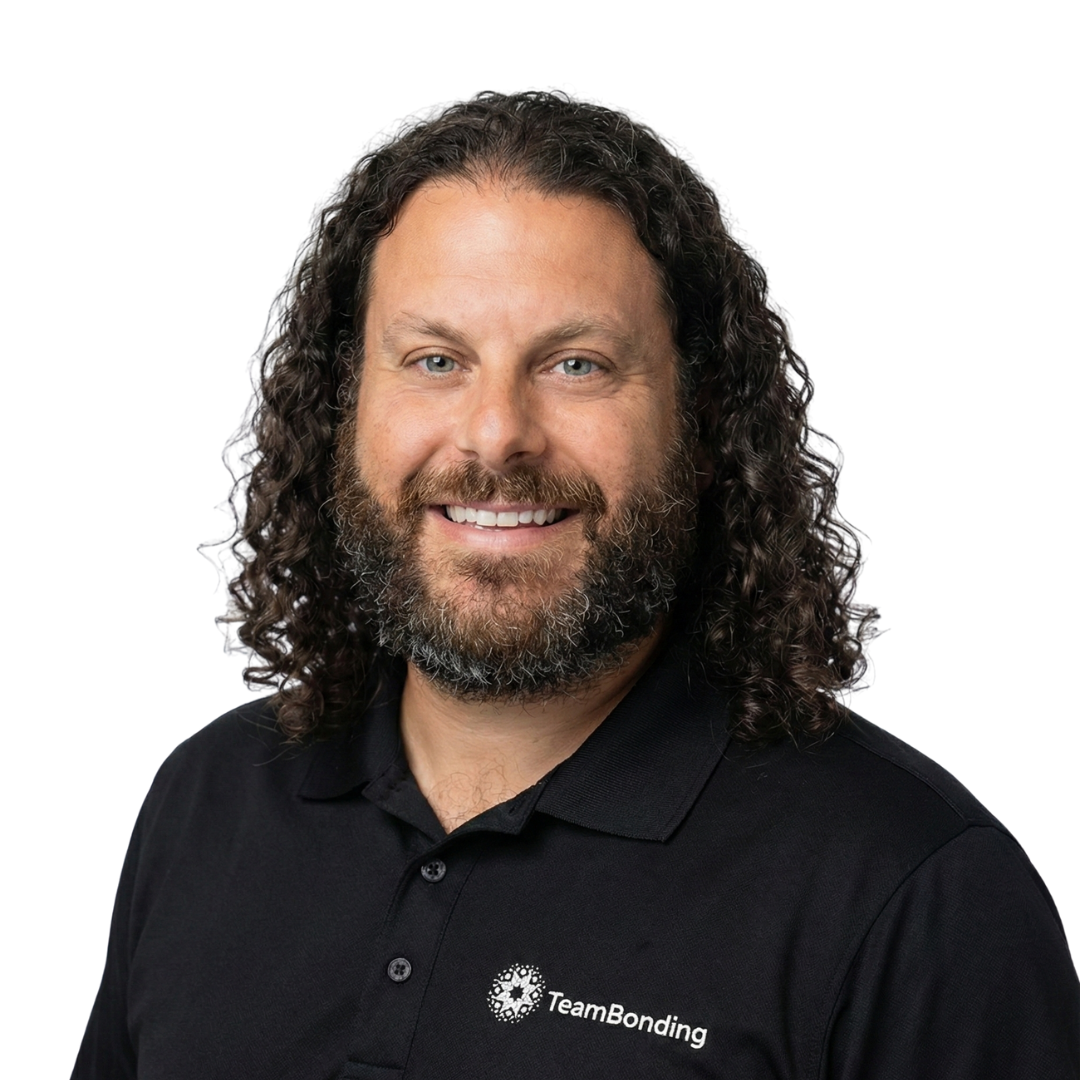 Danny Sudman is a team building facilitator, sustainability consultant, and Founder of Green Camps, a nonprofit helping youth organizations operate more sustainably. He specializes in “green team building,” using interactive experiences to turn sustainability into leadership development and culture change.
Danny works with camps, corporations, and educators to design practical systems that reduce waste, improve operations, and engage people in meaningful, hands-on action. His work uniquely bridges team engagement with real-world implementation—moving organizations from awareness to measurable impact.
“Sustainability works best when it’s something people experience, not something they’re told.”
Danny Sudman
Get ideas, inspiration and best practices from across the globe.




Subscribe Wherever You Listen To Podcasts




More great podcast episodes.
Season 7 | Episode 8
Making Work More Human
Season 7 | Episode 7
What Happens After the CSR Event?
Season 7 | Episode 6
Turning Sustainability Into Employee Engagement
Season 7 | Episode 5
Building Brain-Healthy Workplaces
Season 7 | Episode 4
Bringing Compassion Back Into the Workplace
Season 7 | Episode 2
Empathy, Insight, Impact
Season 7 | Episode 1
The L&D Approach That Actually Works
Season 6 | Episode 18
That’s a Wrap!