


STRONG TEAMS DON’T HAPPEN BY CHANCE 
Building Brain-Healthy Workplaces
w/ Jennifer Hoadley

Use the buttons above to listen now.
Transcript - Building Brain-Healthy Workplaces
Rich Rininsland: On this episode of Team Building Saves the World!
Jennifer Hoadley: This is like brand new, perfect timing that- that we’re having this conversation. That part of the brain isn’t storing recent events as memory, so they can’t backtrack. So I think it’s important to start early and find out what’s happening there.
Caregiving stress costs the US businesses $35 billion annually. None of this is groundbreaking, earth-shattering stuff that we don’t already know.
Rich Rininsland: Hello, team. It’s me, your old friend Rich Rininsland, host of Team Building Saves the World. Today, we’re gonna be talking about a very important subject, Alzheimer’s and dementia, and how best your corporate community can support caregivers in the workplace with the regional manager of Southeastern Massachusetts for Alzheimer’s Association, Jennifer Hoadley.
But first, I have to share some love with all of my supporters at TeamBonding. If your team is ready to experience teamwork to the power of play, then visit teambonding.com to learn more. Now, team, it’s time to talk about how we can best assist the caregivers in your workplace while also taking care of your own brain health with Alzheimer’s Association’s own jennifer Hoadley, thank you so very much for coming on the show.
We appreciate you being here today.
Jennifer Hoadley: Thank you so much for having me.
Rich Rininsland: To begin with, just to introduce you to my team out there, you are a certified dementia practitioner and the regional manager for southeastern Massachusetts at the Alzheimer’s Association.
Jennifer Hoadley: Correct.
Rich Rininsland: That’s a lot. Can you explain to us just to… as a getting to know you, how you got into this specific field? Was this, some sort of specified training you were going for, or was it something that just fell into you?
Jennifer Hoadley: Sure. Yeah. Back in college, I was studying therapeutic recreation and when it came time to decide what I wanted to do for an internship, there were a lot of different avenues I could go.
I chose to do my internship at a nursing home, and the memory care unit there, I felt very drawn to that. I really enjoyed working with the folks that had memory loss, some form of dementia and then personally, both my grandfathers had dementia, so felt extra rewarding to be able work with people that, that had dementia, knowing more from that.
So yeah that brought me to working in the assisted living world running memory care units and doing activities and getting to know the folks there as well as their families and then from there, I started working for the Alzheimer’s Association…..
Rich Rininsland: And just so we could be sure that everybody on my team are coming from the same level, can you define for us Alzheimer’s and dementia, and is there a difference between the two?
Jennifer Hoadley: Yes, that’s a great question, and it’s a question that we get asked very often. So, dementia is an umbrella term and what it really means is a decline in cognitive functioning that’s going to impact somebody’s memory, their thinking, and their behavior and that’s just a very general term but people who have Alzheimer’s, they will experience those symptoms of dementia but that’s the cause of it. There are a lots of other reasons why somebody might experience those symptoms so there’s a vascular type dementia. There’s Lewy body type dementia, frontal temporal type dementia.
There’s hundreds of different reasons why somebody might have that decline in cognition. But Alzheimer’s is the most common. We do help people, though, at the Alzheimer’s Association with varying types of dementia. It doesn’t matter if it’s Alzheimer’s. It doesn’t matter if somebody has an actual diagnosis or not, if they’re just concerned about memory loss.
Rich Rininsland: Gotcha.
Jennifer Hoadley: There’s lots of help for everybody.
Rich Rininsland: Okay, fantastic and we wanna get all that information toward the end, so don’t worry. We- just remind me if I forget, and I won’t but in case. To get back to that, so if people do wanna get ahold of them, they know where to go to. But I do wanna actually clear up if we can, because goodness knows there’s gotta be 100 misconceptions around what Alzheimer’s is, do I have it?
‘Cause I believe there’s a huge pandemic of just people misdiagnosing themselves. To be fair, I’m in my 50s, and I have discovered I have what I call my mother’s disease, which is forgetting names, the proper names of things. The minute I try to think of them, they’re gone. But that’s not Alzheimer’s.
So what other kind of misconceptions do people really have around dementia and Alzheimer’s in particular?
Jennifer Hoadley: Yeah. So we, we actually have like a brochure and an education program that’s all about what are the 10 warning signs. So things to be looking out forand really, with these 10 warning signs, it’s about are these things interfering with your everyday abilities to live your life?
So you might forget the name of an object and be like, “Oh, the thingamajig.” Yeah. But it comes to you later what it was and that’s not such a big deal, but for somebody who’s experiencing Alzheimer’s or another form of dementia, it really just stops, and they’re not able to move forward and they’re less likely to be able to come up with some other way of explaining what that item is or the other thing we think about is if I’m at the grocery store and I run into somebody who is a parent of a kid on my daughter’s soccer team- ..and I’m going, “What are their names?”
And it’s more just because they’re not in the place that I usually come across them, so it just throws me a little bit, but it might be 3:00 in the morning, and I think, “Oh, that’s their name.” That’s not such an issue. We do know that the brain shrinks a little bit as we age, but when somebody has, say, advanced Alzheimer’s disease- when you look at a brain scan, it has shrunk significantly so on average, a brain weighs about three pounds, like a healthy brain. A brain that has advanced Alzheimer’s disease weighs about one pound. So there’s a significant amount of cell death that causes that loss in mass. So some of the warning signs to be looking out for is just memory loss that disrupts your day- day-to-day life.
We might forget an appointment here and there, and then we go, “Oh my gosh, I can’t believe I forgot that.” Somebody with Alzheimer’s or another type of dementia just won’t remember it. It just, like it never happened and there is a part of our brain that is in charge of taking in new information and storing it as memory. That part of the brain starts to experience that loss, that cell death, and so it stops working. So new information comes in, and it never gets stored as memory this is why a lot of that memory loss happens but you might be able to talk to somebody about something that happened years ago and they could tell you about it in perfect detail because that part of the brain was working just fine when that got stored as memory. Another issue people experience is challenges in planning and solving problems.
Those executive functions start to diminish, familiar tasks become more and more challenging to complete. Sometimes even just being oriented to time and place, and you get extra confused about that and you might even see, as we go to our regular checkup, or even if you’ve ever had an emergency and the EMTs show up, they’ll ask questions like, “Do you know today’s date?”
“Do you know where you are?” That’s just to check to see, where is this person at with their cognition? Also, vision can change for people who have these brain changes happening- … where visual images and spatial relationships start to change, where depth perception can be impacted. So that can be a big issue with safety- where, if somebody’s still driving and their depth perception’s off, or even contrast of color, those kinds of things can be impacted. The one that you were talking about was problems with words and speaking and writing- ..and that is a sign, but it doesn’t always mean that it’s Alzheimer’s or dementia.
Again, if it’s impacting your day-to-day life and it gets… it’s out of character, it’s, you know- … becoming more of an issue. We are gonna sometimes have that inability to find the right word at times, and that happens to everybody. But if it’s more and more frequent and it’s really interfering, that’s when that’s something to discuss with a doctor.
It doesn’t always mean that it’s Alzheimer’s, though. It could be a ton of other things, too.
Rich Rininsland: Yeah, and my mother is 80 years old, and that’s really the only thing she has going on with her so I’m sure it’s fine.
Jennifer Hoadley: But this one also scares people.
The misplacing things and then losing the ability to retrace our steps. The second part is what matters. Yeah. So we’re all gonna misplace things from time to time. We have our regular spot, we put our keys on the counter or whatever- … it is. But sometimes we might get really busy, and so maybe we’re running in the house with an armload of groceries, and we’re trying to get inside to answer the phone, and we, just throw something on the counter and go to the phone and then later on we’re going, “Where are my keys?” And then you can backtrack and say, “Okay I know I got in the house.” And you may find them in the doorknob still ’cause you just rushed in. Somebody who has dementia is not going to be able to backtrack. So they may see, “Hey, my keys aren’t on the counter where I usually put them.”
And then because they’re trying to make sense of everything around them all the time- … they may start accusing people of moving things on them or somebody stealing from them. They just don’t have that ability. Again, that part of the brain isn’t storing recent events as memory, so they can’t backtrack.
It’s like it never happened. So to them- It only makes sense that if I always put my keys here and they’re not there, somebody must have done something with them
Rich Rininsland: Yeah and that behavioral shift is usually a component of it as well, right?
Jennifer Hoadley: Yes.
Rich Rininsland: Like somebody who might be a shorter fuse than they’ve ever been in their life.
Jennifer Hoadley: Correct. Yeah. Yeah and that’s a challenge for the people around them, it’s a challenge for themselves because, they’re not doing it on purpose, but people around them are looking at them like, “What is going on? Why are you being this way?” And that’s really difficult. The three other warning signs to look out for is just the person may have decreased or poor judgment, and that could be with finances, to how you’re dressed for the season or, making appointments for an oil change in your car and never doing it.
Rich Rininsland: I’m sorry. I’m laughing because I apparently had Alzheimer’s since I was 15.
Jennifer Hoadley: But again, if it’s not out of character- … this is just who you are.
Rich Rininsland: That may not be appropriately better.
Jennifer Hoadley: It’s when we it’s when we see a drastic shift and I do think that is appropriate because a lot of people do think that.
They say, “Oh, my gosh, this is, something going on.” But if it’s how you’ve always been, that’s not as big of a concern. Maybe it is to your day-to-day life,
Rich Rininsland: It always was to everybody I know …
Jennifer Hoadley: it’s not a change. Yeah. So I think that’s what’s important for people to focus on.
Another one that often will go unseen or unchecked for a while is people start to withdraw from work or social activities And I think we’re just really good as a society of making excuses for people. “Oh, maybe they didn’t feel well,” or, “Maybe they got mad at me for something I said,” or, “They just don’t wanna come hang out.”
And so we don’t think much about it until we look back and say, “Oh, all this adds up. They were withdrawing. They didn’t wanna come to the family barbecue,” or, they stop coming to the after-work social hour, or whatever and it just doesn’t really click right away that’s something that’s happening, because we do just chalk it up to they just didn’t feel like it.”
And
sometimes people don’t and, and-
Rich Rininsland: Sometimes being antisocial is the most social thing you can be.
Jennifer Hoadley: Yeah. So I think it is something that you know that often doesn’t… It’s not noticed right off the bat as a big warning sign. and then you mentioned the other one already, but changes in mood or personality, where the person, there is a shift in their behaviors. It’s something that’s typical and normal age-related change might just be that, we have a very specific way that we might have been doing things all of our life, and if that gets disrupted, our routine is disrupted, we might get a little irritable.
But for somebody who has Alzheimer’s or dementia, it could be a big shift where they change quite a bitand it’s very unlike their normal behavior.
Rich Rininsland: So I think this is an excellent time right now. If somebody out there who’s listening either has noticed these symptoms within themselves or within a loved one, where can they go?
Who can they reach out to?
Jennifer Hoadley: I think the biggest thing first is to understand that it’s not always Alzheimer’s. That is just… It could be. So I would say the best thing to do is start a conversation with your doctor. Go in for your checkup, talk about, “I’m feeling a little concerned.”
Some of the things I think that people don’t really think about, but this could be something that’s like a thyroid disorder that- … just needs treatment. It could be depression. It could be an infection. It could be that you’re on a new medication and it’s interacting funny with your system, or even just an over-the-counter vitamin that who knows? So it is important to find out and have the conversation. They’ll probably start with lab work and see, you know is there anything that stands out. They may rule out some things, and then if the lab work comes back kinda normal, then from there they may say, “Okay.
I think you should see a neurologist.” And I do think- This is an important part where people need to become their a self-advocate because sometimes it’s, our healthcare system might be a little slow, and so people want answers right away, especially if you’re feeling really off and just pushing a little bit, saying, “I’d like to, get a referral to a neurologist,” or, “I wanna find out what’s going on.” Just to push that forward so there’s not a lot of waiting and there is oftentimes, even just to get in to see a neurologist, there’s quite a wait list,
Rich Rininsland: like almost any doctor nowadays.
Jennifer Hoadley: Yeah. Yeah. Yeah. So I think it’s important to start early and find out what’s happening thereand not to totally You know, digress to a different topic, but- … it goes with this. There is a new blood test that is not currently something that you can just walk into your doctor’s office and it’s part of your normal blood panel, like cholesterol and all of that.
But we are working toward that in our advocacy work. So the hope is that you would get tested along with everything else, and it would look at a range of biomarkers to see if you’re within a normal range and if that skews, off the chart a little bit, then they may say it’s time for you to go get checked out and figure out what’s going on.”
And the beauty of that is that there are some new treatments available. This is a very exciting time in, in research to be able to access treatments, and the earlier people access them, the better.
Rich Rininsland: Excellent. Excellent. Thank you so much for that.
But of course, everybody now who’s been listening to the last 10 minutes of this episode are wondering what this has to do with corporate social responsibility, team building, so on and so forth.
One of the ways we do wanna tackle this, to ask you about, is what is happening today that corporations are doing? Because this kind of disease doesn’t just affect the sufferers. It affects everybody around them. So what kind of things are we seeing in the corporate workplace that are either happening for or against those people who are suffering under the burden of this disease?
Jennifer Hoadley: Sure. Yeah, so a couple of things that are really exciting that we’re working on as an organization to partner with the corporate world. So we know that one in six employees is a caregiverand we know that caregiving stress costs the US businesses $35 billion annually.
That’s just a lot of calling out to take care of somebody else or just, the stress involved- ..and not being able to focus on work, all of that. So we are working to bring education programs to the workplace. During your lunch break, you get on a Zoom, or we can come in person and do an education program for the employee workforce, just because it is really hard, especially for, say the sandwich generation to, after work, try to get their kids to soccer practice and take care of Mom and Dad and- “oh, now I’m gonna try to educate myself about how to be a better caregiver?” The time isn’t there. So- We’re trying to go to where they’re already at and offer education and resources so that they know about that, and hopefully it’ll make their job as a caregiver a lighter lift where they already know more about it to be able to do it better.
The other thing that we’re leaning into quite a bit is brain health at work. So this is like brand new, perfect timing that we’re having this conversation. But if people go to our website, there you can type in brain health at work, and our website is alz.org, and companies can actually take like a kind of a quiz to determine what is their score as an organization- for supporting their employees and then it’ll also say, “Here are some things that you could work on.” And they can sign on this is all free to do, by the way. So basically the first step would be that they complete an organization assessment, then they would access a tailored resource kit that this can help with templates and communication tips to share brain health and caregiver resources with their employees.
The third step would be they can celebrate their recognition. So there’s a whole toolkit on recognition to showcase the organization’s commitment to creating a brain healthy workplace and then the fourth step is just continuing that commitment. They can retake the assessment year to year and track their progress- and plan on different improvements that they might wanna do to the employee brain health offerings and caregiver support
Rich Rininsland: and what are some things, just to whet people’s whistle to when, to make them want to go to the website, but can you give me an example of some like healthier habits that people can undergo and that corporations can help their employees start to that?
Jennifer Hoadley: Sure. Yeah. So we actually have… We love the number 10, where we have 10 healthy ways. To love your brain. We know also, just as a side note, that what’s good for our hearts is good for our brains. So- we did fund a research study called the US Pointer Study, and that was based on lifestyle interventions and how that- can lower our risk for developing-
Alzheimer’s or another type of dementia. So things like not smoking. None of this is groundbreaking, earth-shattering stuff- … that we already know. But what’s amazing is that a lot of people, even though we know this, they don’t always know to take that next step and put it into action.
So we do have a whole education program that’s called Building Brain Healthy Habits, and it comes with workbooks that people can use to create an individualized plan on eating better, working out, if they are smoking to stop that. Looking at their numbers, like their blood pressure and their cardiovascular health and all of these things, to help create just a healthier lifestyle.
Things like wearing a helmet when we’re doing active risky sports like skiing or riding a bike or things like that and then also sleep hygiene, which I think probably everybody knows.
Rich Rininsland: Yep. That- Everyone’s heard of it, and no one does it right.
Jennifer Hoadley: Stop the doom scrolling before bed.
We have to have that habit and it is said that if we try to keep consistent and wake up and go to bed at the same time each day- … that is really good for our brains. Our brains love consistency. It loves structure, so giving it that. Another huge one is creating new neural pathways in our brains by learning new things, doing things just slightly outside our comfort zone.
So even though this sounds a little weird, but switch your hand that you hold your toothbrush in and brush your teeth with your non-dominant hand every once in a while. You, it sounds so easy, but you do have to think when you’re doing it. You’re like, “Oh, okay, this is weird.”
They say, take a different way home from work every once in a while when you’re driving because how often do we drive, scary, but how often do we drive and we just get there and we like, “I don’t remember that drive at all.”
Rich Rininsland: Yeah. Yeah, how long have I been in the car now? Yeah.
Jennifer Hoadley: We’re autopilotand so when we have to think, it helps. Okay. But also picking up things that are very challenging. So maybe you’ve always wanted to learn to play some musical instrument or learn a new language or cook something different that you aren’t usually used to doing. That kind of stuff really helps. Yeah and , trying to stay socially engaged is another huge one, too.
The social isolation. Like we saw and I can’t remember the exact percentage, but there was an increase in cases of Alzheimer’s and dementia during COVID because of that social isolation. It, and maybe it was already happening, those changes were happening in the brain, but it just was the thing that…
Rich Rininsland: it’s almost too perfect how well it all interlocked
Plus you’re , talking about social isolation, like you were saying yourself, you’re talking about depression. You’re talking about people who are suffering from PTSD. This is a major reason why these people just lock themselves away. They just feel safer not being out there but as you say, you gotta be out there because we’re a social species. We always have been. That’s amazing stuff. I can’t tell you how much I’m really enjoying this conversation but let’s talk about the work-based areas of it again. What are some ways that managers and those C-suite people who are gonna be listening to this can best support their people who are suffering now?
Besides just giving them the test to take home, or, one practice that they can start in their day.
Jennifer Hoadley: Sure. Yeah, I think having some sort of outlet, like a support type of thing where their, the employee base feels comfortable going to, whether it’s their manager or an HR person, to be able to tap into resources that are available to them.
We have a lot of support groups that we offer. Some organizations may even wanna start one at work. Employee resource groups are great. So some, like we have one at at my workplace that’s for new parents. So it could even be a support group for people that are caregivers as well to maybe their parents or to somebody at home that they’re caring for.
I think, just making it accessible and talking about it is the first thing, where so many people don’t wanna share, and unfortunately, there is still slightly a stigma attached to this disease. It is slowly going away. I think, years and years ago, people didn’t talk about cancer.
They would- … whisper it –
Rich Rininsland: People still don’t wanna talk about mental health anyway. That’s only now becoming a topic of conversation people need to take seriously
Jennifer Hoadley: And it’s amazing how many people it does impact, why aren’t we talking about it?
Rich Rininsland: Exactly right …
Jennifer Hoadley: so many people are impacted by it, and just knowing you could talk to somebody else that maybe has walked in your shoes or understood and has some, kind words or even resources to share is an important tool. So I think just employers can certainly help by getting that conversation started, and then pointing them in the right direction for where they should connect and Alzheimer’s Association is one organization that can certainly help with a lot of support. I think also in terms of, like- helping to get brain health part of just a regular day-to-day conversation and even starting, different groups where people could get involved. So it might be like, “Hey, let’s have a lunchtime walking club,” or
We’re gonna do healthy brain health recipe swap. … Lots of different things that can get people excited about making these changes in their life because, good working brains are good employees.
Rich Rininsland: So my little Sudoku books are actually helping me?
Jennifer Hoadley: They do and people do ask that.
Just don’t put all your eggs in one basket. So I tell people your crossword, your Sudoku, those are great. But if that’s all you did, it’s almost if I only lifted weights with my left arm. My left arm would be, like, in great shape- … but the rest of me needs help. So you want to do the Sudoku, you wanna, do that lifting that, but you also wanna explore lots of other things.
The more varied our interests, the better.
Rich Rininsland: Great. Great and you want to in- you wanna try to include physical as well as mental, yes?
Jennifer Hoadley: Yes, for sure.
Rich Rininsland: Fabulous.
Jennifer Hoadley: Anything that gets our heart rate up is helpful. Good cardiovascular health is- … is good for our brains. So every, beat of the heart, a certain percentage, and it’s a good percentage, I can’t think of the amount right off the top of my head, but it’s a good percentage of blood that goes to our brains.
So we wanna make sure that’s not blocked and that it’s, healthy and it’s filled with lots of rich nutrients that are gonna fuel our brains.
Rich Rininsland: Okay and talking about those people who right now might be listening who have somebody who’s suffering, and they are their primary caregiver, because I’m so certain nowadays there are those people whose a family member is suffering and they don’t have the financial, capabilities of bringing in an outside resource.
How can we best start helping them? Not only understanding what it is that’s happening, but even being able to communicate on a basic level with someone who is actually suffering?
Jennifer Hoadley: Yeah. Yeah. So I think education is key for any caregiver. There are certain programs that we offer. One of them is about communication.
Because communication does change for the person living with the disease. So in how they’re able to make their needs known as well as how they take in information and process that so as a caregiver or really anybody that’s interacting with this person, we do need to know, what can we change?
What can we do differently in our approach when we communicate with this person? One thing I’d say is slow things down. We don’t have to have everything, peppered at them all at once. So it might be that we’re asking them a question. Give them time to answer that. Sometimes it’s an awkward amount of time.
We’re like, “Oh, did they get that? But it does take a little bit of time for them to process the information and then come up with what they wanna say. Also, making sure that there’s less background noise competing with the conversation. That can be very distracting and really difficult for the individual with dementia to be able to focus on the conversation.
So I think, that’s really a huge building block is the communication piece. We also have a program about what behaviors are common with Alzheimer’s and dementia and what to be looking out for. Wandering can become an issue, where somebody could wander away from their home, and that’s a big safety issue.
So what are some things that you could do at your house to give you a little peace of mind that this person’s safe and they’re not gonna walk out the door in the middle of the night? So we have a lot of tips for people. I will say this is a very individualized disease.
There are some common factors, but if you’ve met one person with Alzheimer’s, you’ve truly just met one person with Alzheimer’s because of the history of who they are and what makes them up, that, their memories and their experiences in life. All of that comes into play as to how this impacts them and how they may react to certain situations.
Talking with one of our helpline consultants is really important to kinda walk through, “Here’s what we’re going through, here’s how it’s impacting us, and what kind of tips do you have for us?” And we can work with people on that.
Rich Rininsland: Fantastic. Jen, thank you so much. I do want to actually, so anybody out there hearing this can know, how can a corporation not just an individual, get involved with your Alzheimer’s Association?
Is it volunteering, partnerships? Can they bring you in or, like you said yourself, just be on a Zoom call and talk about it? What can they do to do more for you and have you do more for them?
Jennifer Hoadley: Sure, yeah. So there’s a ton of opportunities for both individuals and for corporations to get involved.
One, I would say the best thing is to host an education program. Yeah. They’re free. We come to you, or we can do it via Zoom, whatever works best for the environment that you’re working inand that is a great tool for people just to, to either… we have more general audience programs, like the Know the 10 Warning Signs and Building Brain Healthy Habits and Understanding Alzheimer’s and Dementia, and then we have some that are very specific to caregivers that are, about the communication- and behaviorsand we have a whole series that’s called “Empowering the Caregiver”, which is fantastic for people to really have everything they need to know about what it is to be a caregiverand then also, people, individuals and businesses as well could get involved with our Walk to End Alzheimer’s, either as a walk sponsor.
They can create a walk team. They can volunteer on the day of to help out, or they can be on the planning committee. There’s so many opportunities there and then we also have something called “Do What You Love to End Alzheimer’s”, which really is whatever people want it to be. … People do oh, my gosh, we have people that hike the 48 peaks in New Hampshire. We have people that do golf tournaments and barbecues, and I do a run from sunrise to sunset. We have kids that do lemonade stands. It’s whatever people wanna do, and it’s just a great way for people to raise awareness and funds and the funds go toward helping us to do what we do for providing support services at no cost to families. It also helps to fund the research, which we do a lot for funding research out in the world to move this mission forward, which is a world without Alzheimer’s.
Rich Rininsland: Fantastic. My team out there, please give a big round of applause to Jen Hoadley.
Jen- Thank you so much. This is amazing. I cannot tell you how excited I was when I heard you were coming on, just to find out more about this rather elusive, unless you really go digging for it, topic and one more time, can we give that website.
Jennifer Hoadley: Yeah, so the website is alz.org and I wanna also plug the helpline.
It’s 24 hours a day, seven days a week. You can call at 3:30 in the morning and a person will answer and be available to walk through whatever you’re going through, and that number is 800-272-3900. It’s nationwide. So you could be a long-distance caregiver, and you wanna know about resources across the country.
The database will pull all of that up for you and it’s getting you information and referrals to the various resources out there. So if somebody’s looking for an elder law attorney or a home care agency or, you name it, whatever people might need in terms of helping to care for somebody or get support they can access information about support groups around them.
They can get a care consultation. They can learn more about our trial match program, which goes into the research. They can actually take part in research trials that are happening.
Rich Rininsland: Excellent.
Jennifer Hoadley: They look for people that are healthy, have no history, or people that are experiencing the disease.
They look for everybody and anybody. So it’s a great way to learn more about the research that’s happening and you can either call the helpline at 800-272-3900 or go on the website at alz.org and learn more about that.
Rich Rininsland: So you heard it here first, team. Go on down there. Find some way to volunteer.
Let’s start helping these people. Jen, did you have fun being here today?
Jennifer Hoadley: I absolutely did. Thank you so much.
Rich Rininsland: Thank you. You were absolutely amazing. I hope you will always remember this as something very positive, even though I’m gonna force you to play a game now, ’cause it’s time for my speed round.
Okay, I’ll do what I can.
So just so you remember, I did tell you about this before we came on the air, but I wanna refresh everybody’s memory that this is just 60 seconds of completely innocuous questions. During that time, you can just answer however you like. The objective is to try to get quick, short, fast answers.
If you have If you want to be challenged, we have reached 16 questions asked and answered in one 60-second sitting. So we’re trying to see if we can beat it. Don’t feel like you have to. It’s fine either way.
Jennifer Hoadley: No pressure.
Rich Rininsland: Exactly. All right. So when you start hearing music, I will ask the first question.
Are you ready?
Jennifer Hoadley: I guess so.
Rich Rininsland: Let’s have some fun. What’s your name?
Jennifer Hoadley: Jen.
Rich Rininsland: How many kids do you have?
Jennifer Hoadley: Two.
Rich Rininsland: Which one’s your favorite?
Jennifer Hoadley: Neither.
Rich Rininsland: Do you have any pets?
Jennifer Hoadley: Yes.
Rich Rininsland: If you could ask your pet a question and get an answer, what would it be?
Jennifer Hoadley: Woof.
Rich Rininsland: No, what was the question?
Jennifer Hoadley: I’m speaking his language, woof.
Rich Rininsland: Okay.
Favorite children’s book?
Jennifer Hoadley: Ooh Poky Little Puppy.
Rich Rininsland: Pancakes or waffles?
Jennifer Hoadley: Pancakes.
Rich Rininsland: Best career advice you ever received?
Jennifer Hoadley: Don’t sweat the small stuff.
Rich Rininsland: If you could work anywhere remotely in the world, where would you work?
Jennifer Hoadley: Liquor Lent
Rich Rininsland: What job would you be terrible at?
Jennifer Hoadley: Oh gosh, a teacher?
Rich Rininsland: Favorite vacation?
Jennifer Hoadley: Disney.
Rich Rininsland: Guilty pleasure TV show?
Jennifer Hoadley: The Pit.
Rich Rininsland: How do you stay creative?
Jennifer Hoadley: I run.
Rich Rininsland: 15.
Jennifer Hoadley: Okay.
Rich Rininsland: 15. That… Not okay, that is amazing. That is really well done. ‘Cause there were a couple thinkers in there. There were a couple you had to pause.
Jennifer Hoadley: There were, and some of them I just spewed an answer ..and I don’t even know where that came from.
Rich Rininsland: That’s how you win. Most of them, yeah. That’s what, that’s all it is. Jen-
Jennifer Hoadley: What came to mind.
Rich Rininsland: Thank you again. I look forward to hearing more from you, especially about this really important topic, and actually I think… ‘Cause I have a lot of free time unfortunately in this economy.
Jennifer Hoadley: Then you can come and be a volunteer with us.
Rich Rininsland: That’s what I’m thinking. Yeah, you might hear from me soon. I think I might actually- Fantastic … be able to spend some time to come in and volunteer, and I hope everybody who’s listening out there takes the time and does the same. Jen Hoadley, thank you so much. Thank you.
June 8, 2026
In this episode, Rich sits down with Jenn Hoadley, Certified Dementia Practitioner and Regional Manager for the Alzheimer’s Association, to discuss the realities of Alzheimer’s disease, dementia, and caregiving. Jenn explains the differences between Alzheimer’s and dementia, breaks down common warning signs and misconceptions, and shares why early detection and diagnosis are so important.
The conversation also explores the growing impact of caregiving in the workplace, including how employers can better support employees caring for loved ones while promoting brain health across their organizations. Listeners will gain practical tips for maintaining cognitive wellness, communicating with individuals living with dementia, and accessing valuable resources through the Alzheimer’s Association.
Whether you’re a caregiver, manager, or simply interested in protecting your long-term brain health, this episode offers actionable insights and a deeper understanding of a disease that affects millions of families.
About Jennifer Hoadley
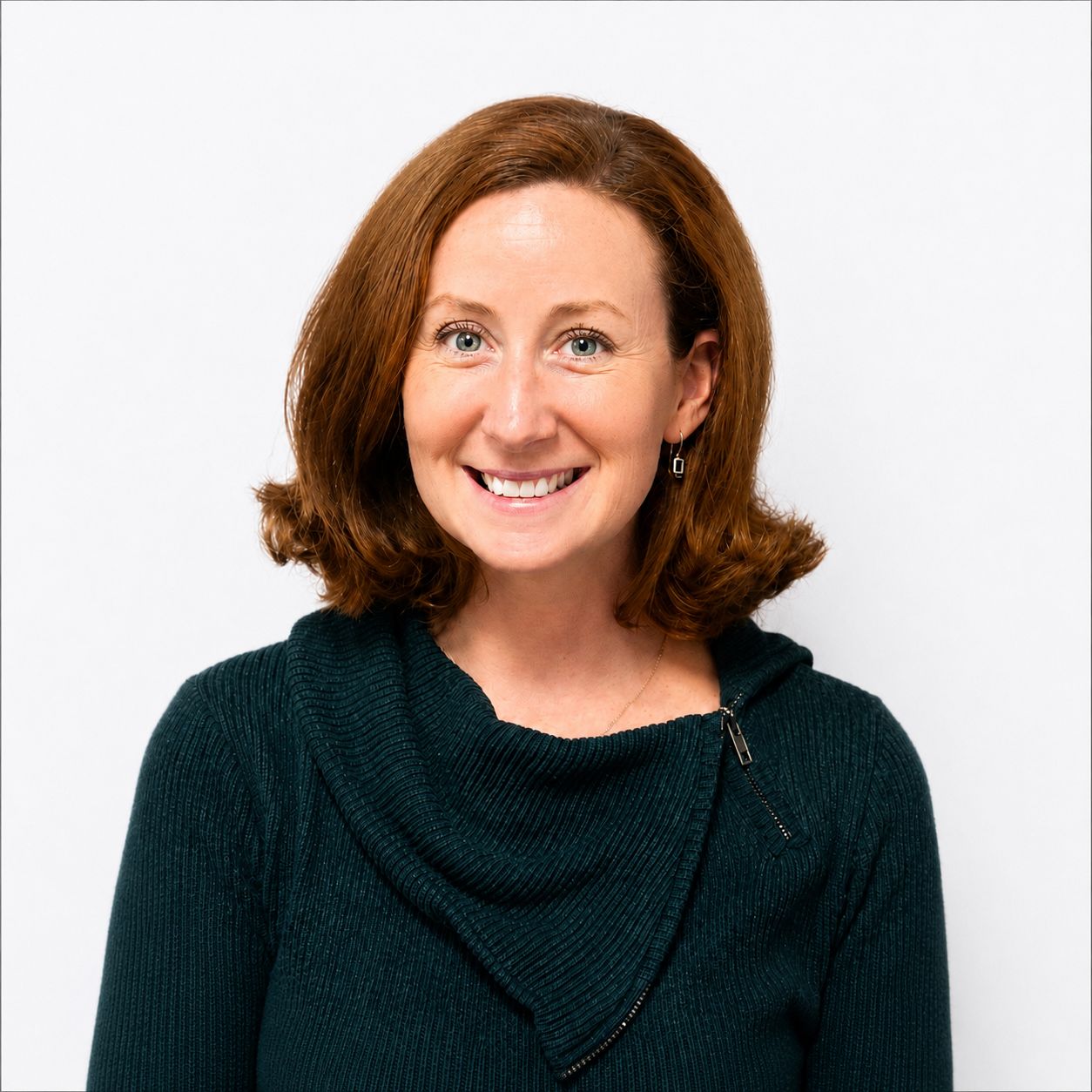 Jennifer Hoadley is a Certified Dementia Practitioner and Regional Manager for Southeastern Massachusetts at the Alzheimer’s Association, where she leads community outreach, education, support services, and advocacy efforts for individuals and families affected by Alzheimer’s disease and other forms of dementia. With a background in therapeutic recreation and more than a decade of experience working in memory care and assisted living communities, Jennifer is passionate about helping caregivers, employers, and healthcare professionals better understand the challenges of cognitive decline and the importance of brain health.
A dedicated advocate both professionally and personally, Jennifer is committed to advancing research, increasing access to resources, and creating more dementia-friendly communities. She is also a volunteer coach with Girls on the Run Greater Boston, helping young girls build confidence, resilience, and leadership skills through physical activity and mentorship.
"We know that one in six employees is a caregiver, and we know that caregiving stress costs U.S. businesses $35 billion annually."
Jennifer Hoadley
Get ideas, inspiration and best practices from across the globe.




Subscribe Wherever You Listen To Podcasts




More great podcast episodes.
Season 7 | Episode 8
Making Work More Human
Season 7 | Episode 7
What Happens After the CSR Event?
Season 7 | Episode 6
Turning Sustainability Into Employee Engagement
Season 7 | Episode 4
Bringing Compassion Back Into the Workplace
Season 7 | Episode 3
Corporate Responsibility and Sustainability
Season 7 | Episode 2
Empathy, Insight, Impact
Season 7 | Episode 1
The L&D Approach That Actually Works
Season 6 | Episode 18
That’s a Wrap!