

How to Bring Childlike Wonder Back to the Workplace
Walk into any store in late August, and you can feel it: the buzz of kids picking out fresh notebooks, arguing over backpack colors, and counting down to the first day of school. That kind of childlike wonder rarely survives the commute into most offices.
Somewhere between our first job and our fifth performance review, the excitement that once made a new week feel alive quietly slips away. Most of us barely notice it going.
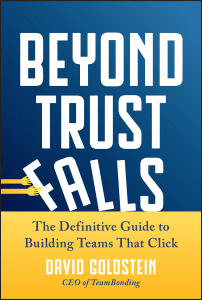
I’ve spent nearly four decades building team experiences, and I cared about this idea enough to write a whole book about it, Beyond Trust Falls. Here’s what I keep coming back to after thousands of events: the wonder kids feel at back-to-school time isn’t gone in us grown-ups. It’s just buried under deadlines and dashboards.
The back-to-school aisle is a handy annual reminder that the feeling is real and repeatable. If seven-year-olds can summon it every September, so can the rest of us.
This piece is about digging it back up and putting it to work, because a team that still knows how to be curious is a team that keeps getting better.
What happens to childlike wonder when we grow up?
We don’t lose childlike wonder so much as we quietly train ourselves out of it. Kids ask “why” and “what if” a hundred times a day because nobody’s told them yet which questions are allowed.
Then jobs, deadlines, and review cycles pile up, and the play we learned everything through as kids gets buried under the weight of adulting. We trade open questions for looking competent, usually without a second thought, and only later wonder where the spark went.
Innovation strategist Carla Johnson calls this the expertise trap: the more we know, the less we let ourselves imagine. Kids haven’t learned enough yet to rule things out, so they assume everything’s possible.
Anna Lambert, a director at Shopify, has a warmer name for the alternative. She calls it “kid brain,” that unfiltered sense of wonder most of us start suppressing around the time we sit through our first performance review.
Here’s a thread that runs through my book: play isn’t the opposite of serious work. Serious work mode runs on the brain’s analytical, step-by-step side, which is brilliant at known procedures and terrible at creative leaps.
Play switches the imaginative, intuitive side back on, the part most jobs leave dormant, and I’ve never found anything that wakes it up faster. It’s why I built a whole company around the power of play.
I’ve watched roomfuls of executives walk in stiff and skeptical, then light up like third-graders twenty minutes into a challenge. The wonder was never missing. It just needed an invitation.

Why does childlike wonder matter at work?
Childlike wonder at work matters because it’s the raw material for creativity, connection, and resilience. It isn’t a soft perk you bolt on once the “real” work is done.
Author Monica Parker, who studies awe, notes that moments of wonder have been shown to lower stress and deepen our sense of connection to others. She also makes a point I love: the single most common source of awe in our lives isn’t a mountain range or a cathedral. It’s other people.
That should get every leader’s attention, because it means wonder is already sitting in your building. It’s in the colleague who cracks a problem nobody else could, and in the new hire who asks the “obvious” question everyone else stopped asking years ago.
These aren’t spa-day extras. Lower stress and stronger bonds are what let teams stay creative under pressure and stay engaged when the quarter gets ugly.
Curiosity is where the next good idea comes from, and wonder is what keeps people curious. Kill it, and you don’t just lose a little fun; you lose the questions that lead to your next breakthrough, and eventually you lose the people who used to ask them.
I’ve never met a disengaged team that was overflowing with curiosity. The two travel together. When the wonder drains out, people stop volunteering ideas, meetings go quiet, and your strongest performers start glancing toward the door.
There’s a deeper reason wonder pays off, and it sits at the heart of my book: play builds psychological safety. People can’t innovate when they’re afraid their ideas will be mocked, and they won’t take risks when being wrong feels dangerous. Wonder hands them permission to ask the naive question out loud.
How do you get childlike wonder back?
You get childlike wonder back by deliberately building small doses of surprise, play, and novelty into the ordinary workweek. You don’t need a ropes course or a big budget; you need to interrupt the autopilot.
The good news is that wonder scales down beautifully, so tiny, repeated moments tend to beat one big annual blowout. Here are a few of my favorite ways to help a team regain childlike wonder as an adult:
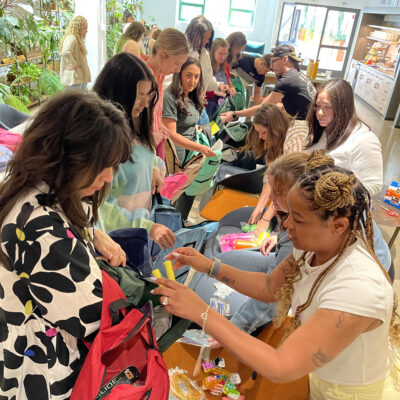
- Bring in new toys. Never underestimate a new tool. Kids light up at a candy store, and adults light up at a fresh gadget or a good game. Keep an icebreaker thumball or a set of We! Connect Cards around, and use them. Make a small event out of a new resource arriving, and share the good stuff around instead of letting it gather dust in a closet.
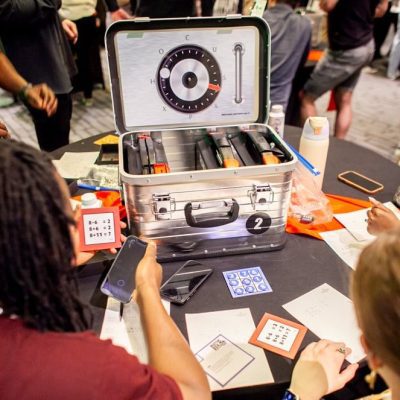
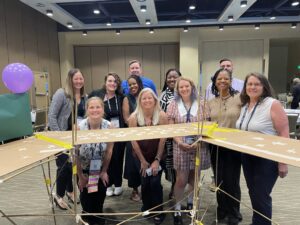
- Play together on purpose. A little childlike whimsy goes a long way. A hands-on challenge like Beat the Box gets people laughing, problem-solving, and seeing each other in a new light in under an hour. The point isn’t the activity itself; it’s the version of your teammates you meet while doing it.
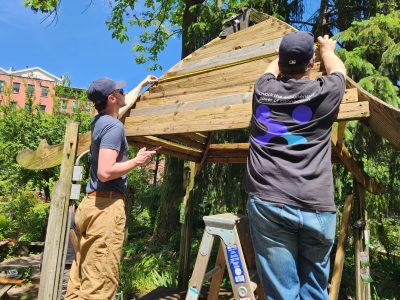
- Give back like a kid on a field trip. Some of the most wide-eyed moments I’ve witnessed come from purpose, not games. A program like Tools for Schools has teams building supplies for local classrooms, and back-to-school season makes it land especially well. People walk away genuinely moved, and that feeling sticks around long after the boxes are packed.
- Take a recess. Recess was the best part of school; who are we kidding? Build in real breaks, and put a proper corporate retreat on the calendar so people can step back and breathe. Even five minutes counts: open a meeting with a goofy prompt, like what everyone would blow $500 on, and watch the room loosen up.
- Ask “what if” out loud. Borrow the kid’s favorite question and put it back in your meetings. When someone hits a wall, reframe it the way a curious eight-year-old would: what if we did the opposite, or started from scratch? Naive questions crack open problems that expertise had quietly sealed shut.
None of these require permission from anyone but you. Pick one this week, and you’ve already gotten started.

Can leaders model childlike wonderment?
Leaders can absolutely model childlike wonderment, and teams take their cues from whoever’s in charge. If you roll your eyes at play, your team will too. Wonder is contagious, but somebody has to be patient zero.
Start with your newest people. Welcome new hires with a genuine splash instead of a form and a badge, because new people show up still carrying the spark the rest of us misplaced.
Use that first week to celebrate the team’s recent wins and point newcomers toward what’s coming. That way they feel like part of the story on day one, not just a name on the org chart, and their fresh eyes get treated as an asset rather than a nuisance.
Then keep your own curiosity fed. Some of the best ideas I’ve borrowed came from swapping notes with peers who run teams like mine, so go find those conversations. Just don’t linger too long with the chronically jaded; that energy is contagious too, in the wrong direction.
Then make it safe to be wrong. One of my clients, a tech startup, throws failure parties: cake, a little champagne, and an afternoon spent sharing the biggest misses and what they taught everyone. Their rate of innovation doubled once people stopped hiding mistakes.
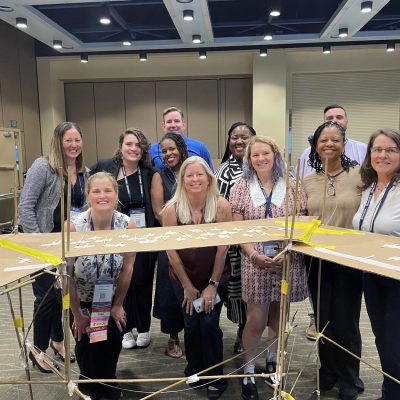
Try a few leadership activities that put you on the same side as your team, or a connection-focused experience like Bridging the Divide. The goal isn’t to perform fun for an audience. It’s to be the person who wonders first.
Making childlike wonder a back-to-school habit
Treat this season as your annual reset, and turn a one-time spark into a standing habit. Kids get a fresh start every fall, and no rule says grown-ups can’t borrow one.
The leaders who make wonder last are the ones who script it in small, repeatable doses rather than hoping it shows up on its own. It’s the little inputs, delivered often, that end up being the most contagious.
So take twenty minutes and plan your next month of energizers. Try a fresh question at Monday’s standup, a team experience that gets everyone out of their chairs, or a two-minute round where people share something that made them curious that week.
That childlike sense of wonder was never really gone. It’s just been waiting for you to invite it back in, one ordinary Tuesday at a time.


Get more insights in our newsletter:
* every subscription supports charity!
PODCAST
Get ideas, inspiration and best practices from across the globe.




Plays well with these activities.