


Employee Loyalty Is Earned: A Leader’s Guide to Making People Stay
Somewhere in your company right now, a good person is quietly deciding whether to stay. Employee loyalty rarely collapses in one dramatic exit. It erodes in small moments, when someone concludes that nobody noticed the weekend they gave up.
Plenty of people have reached that conclusion. Gallup’s most recent global workplace research found engagement slipped to 20% in 2025, the lowest reading since 2020 and the first back-to-back annual decline the firm has ever recorded.
I’ve been building teams since 1988, when I started TeamBonding around one stubborn idea: the power of play. Nearly four decades in, I’m convinced that loyalty for company slogans doesn’t exist. People are loyal to other people.
That’s the good news, because it means loyalty at work is something you can build on purpose. This article walks through why employee loyalty pays off, why people leave when it’s missing, and eight things you can start doing about it this quarter.
How does employee loyalty impact company performance?
Employee loyalty impacts company performance through four channels that all end up on a balance sheet: productivity, engagement, reputation, and turnover. None of them show up in a single quarter, which is exactly why they get ignored.
Loyal people give you their best work
A loyal employee brings discretionary effort, the extra push no manager can require. Without it, work becomes busywork, and busywork gets done at exactly the pace it’s measured at.
Dr. Froswa Booker, founder and CEO of Soulstice Consultancy and a researcher whose doctoral work focused on social capital, made this point on our podcast:
“People are going to be more loyal to a company where they feel invested in, and feel like they’re seen and heard and matter. Then they’re willing to stay another hour for work because they know that there’s a commitment to them.”
I’d underline “commitment to them.” Loyalty is a trade, not a gift.
Engagement rises alongside loyalty
Loyalty is one of the most reliable ways to keep employees engaged. People who feel like genuine members of an organization tend to give it their full attention.
That’s especially true when the work connects to something larger. I’ve watched quiet teams transform on charitable programs because the goal suddenly mattered beyond a spreadsheet.
Your reputation leaves with your people
People talk about their jobs at dinner tables and in group chats, and word travels either way. Employees who enjoy where they work become recruiters you never have to pay.
A strong reputation makes hiring easier and cheaper. Customers notice too, which gives you an edge over competitors burning through staff.
Worker loyalty brings turnover down
Worker loyalty and turnover move in opposite directions, and the link is close to mechanical. People who feel essential to an organization rarely go looking for the exit.
Replacing someone is expensive in ways that never fit neatly into a budget line: lost knowledge, disrupted teams, and months of ramp-up. Keeping people is almost always the better deal.
There’s a compounding effect too. Every person who stays another year knows your clients better, trains newer colleagues faster, and needs less oversight than the year before.
What employee loyalty isn’t
Let’s clear up a misconception, because it trips up a lot of well-meaning leaders. Loyalty is not tenure, and it isn’t gratitude for having a job.
I’ve met twenty-year veterans who checked out in year three and stayed for the pension. I’ve also met two-year employees who’d run through a wall for their team. Time served tells you very little.
Loyalty also isn’t blind allegiance. The most loyal people I’ve worked with are the ones who tell me when I’m wrong, because they care enough about the outcome to risk the conversation.
If your quietest team is also your most agreeable, that’s worth investigating. Silence often reads as harmony when it’s closer to resignation.
Why employees leave anyway
Some people insist loyalty died in the American workplace. I disagree. What changed is that employees got clearer about their own needs, and far less willing to stay when those needs go unmet.
Here are some of the most common reasons employees leave:
- Pay that doesn’t match the work.
- A job that stopped being challenging.
- Work they can’t find meaning in.
- A strained relationship with management.
- No visible path forward.
- No real work-life balance.
- A fuzzy or shifting company vision.
- Recognition that never arrives.
Look closely, and most of these are unmet needs, whether financial, professional, or personal. They’re also fixable, which is more than you can say for most business problems.
There’s one more factor that hides behind the others: community. People want to belong somewhere, learn from the people around them, and build real bonds. Strip that out and even a well-paid job feels hollow.
This is the one most companies underestimate, because it never appears in an exit interview. People rarely say they left because they felt alone. They cite salary instead, since it’s easier to explain.
Eight ways to start building employee loyalty
Building employee loyalty isn’t a program you launch and check off. It’s a set of habits. Here are eight that work.
1. Create incentives people genuinely want
Employee incentives work when they reflect what your people value, not what’s convenient to administer. Bonuses and profit sharing land well with some teams.
Others care far more about career advancement opportunities, wellness support, or experiential rewards. Ask before you assume.
2. Recognize people specifically

We all want our effort acknowledged. Vague praise, though, does almost nothing; “great job this quarter” evaporates on contact.
Name the thing. Tell someone which decision they made well and what it changed downstream. Specific recognition tells people you were paying attention, which is the whole point.
Peer recognition deserves a mention here as well. Praise from a colleague who watched you do the work often carries more weight than praise from two levels up.
3. Offer benefits that solve real problems
Benefits matter more every year as healthcare, education, and retirement costs climb. Offering meaningful support signals that your commitment runs both directions.
That might mean retirement contributions, childcare subsidies, or chances to upskill. Loyalty is earned, and this is one of the clearest ways to earn it.
4. Renegotiate before people resign
Ask your team what they need while they still want to tell you. Waiting until the exit interview means you’re gathering data you can no longer use.
These conversations don’t have to center on money. Flexibility, vacation, training, and role changes are all on the table.
Schedule them on a rhythm rather than waiting for a crisis. A short quarterly check-in about what’s working, and what isn’t, surfaces problems while they’re still cheap to solve.
5. Share where you’re going
People want to be part of something bigger, and they can’t be if you keep the destination to yourself. Publish your core values and talk about them more than once a year.
A clear mission statement gives everyone a common cause. Purpose is a powerful retention tool, and it costs nothing.
6. Strengthen the bonds between people
Relationships are the foundation everything else sits on. Dr. Booker described social capital this way:
“It’s about relationships. It is about the ability to use those relationships for the greater good. There are all these different types of social capital that I don’t think people recognize. I don’t think we realize that every single day we are using and exchanging social capital. Our relationships move the needle.”
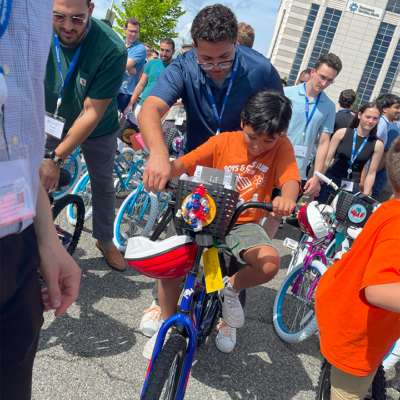
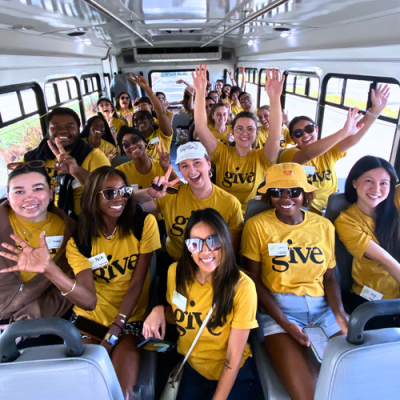
Great teamwork starts with great relationships, and relationships need occasions to form. Events like the Do Good Bus, Charity Bike Build, or Summer Camp Throwback create them.
That’s the logic behind team building generally. You learn more about someone in an hour of play than in a year of meetings.

7. Invest in leaders and growth
Managers shape the daily experience of work more than any policy you write. Give them development support, and their teams feel the difference within weeks.
Internal mobility matters just as much. When people can grow without leaving, they stop scanning job boards on their lunch break.
8. Protect the environment people work in
Nobody stays loyal to a workplace they dread. Toxic environments drive out your strongest performers first, because they have options.
Make it safe to raise concerns and act when someone does. Nothing teaches a team to stop speaking up faster than watching one person’s honest feedback disappear into a void.
Empathetic leadership isn’t softness; it’s the most practical retention strategy I know.
Loyalty at work is built, not assumed
Loyalty isn’t dead. It’s conditional, and honestly, that seems fair to me. Meet people’s needs, give them room to grow, create space for them to know each other, and loyalty tends to follow.
None of this happens in a single offsite event. It happens in the accumulated evidence that you meant it, delivered over months and noticed quietly by everyone.
That said, shared experiences accelerate everything else. Take a look at our events, or get in touch and tell us what your team is up against. We’ll help you build something people want to stay for.


Get more insights in our newsletter:
* every subscription supports charity!
PODCAST

Get ideas, inspiration and best practices from across the globe.




Plays well with these activities.