


How to Solve Silo Mentality and Unite Your Team
We’re more connected than ever, yet somehow teams still manage to work in complete isolation from one another. You’ve probably lived it: a project stalls because one department never looped in another, or you hear the dreaded “nobody told me” after a decision was already made. That’s silo mentality at work.
Left unchecked, it quietly chips away at productivity, morale, and the culture you’ve worked so hard to build. The good news is that it’s fixable once you understand how it takes hold.
In today’s article, I’ll unpack what silo mentality really is, why working in silos costs more than you’d think, and the practical strategies to break down silos at work so your people start talking to each other again.
What is silo mentality?
Silo mentality is the mindset that keeps a person, team, or department cut off from everyone around them, hoarding information and working in isolation instead of collaborating. It shows up when people protect their own turf, guard what they know, and treat other groups as outsiders.
Silos rarely form on purpose. More often they creep in through the shape of the work itself: rapid growth, mergers, or a move to hybrid and remote schedules where hallway conversations vanish, and teams cluster around their own tools and time zones.
It also helps to know that silos come in a few different shapes. They rarely look the same from one company to the next, so let’s break down the most common types.
- Organizational silos: These form when a business has too many departments and hyper-specialized sub-teams. Information slows or gets stuck, and insular groups take shape.
- Informational silos: Businesses run on information flowing freely. When a team juggles a half dozen disconnected tools with no central home for it all, details get lost, and an informational silo is born.
- Individual silo mentality: This one’s more personal. Employees who are burnt out, stressed, or simply aren’t natural team players can wall themselves off, keeping their ideas to themselves and sometimes slipping into disruptive behavior.
The common thread is siloed communication. Whenever information can’t move freely between people, a silo has room to grow.
And silos rarely stay contained. One guarded team quietly teaches the teams around it to guard right back, until isolation becomes the unspoken norm across the whole company.

Why working in silos hurts your business
Working in silos quietly drains productivity, morale, and culture, and the data backs that up. When your best minds can’t share what they know, the whole organization pays for it.
Start with productivity. To get the most from your people, you want them collaborating and pooling what they know. When someone chooses to work in a silo, that exchange stops and output takes the hit.
Poor communication is costly on its own. Grammarly and The Harris Poll found that knowledge workers now spend 88% of their week communicating, yet about one in five business leaders say they’ve lost business because of communication breakdowns.
Picture a sales team that promises a client a feature the product team hasn’t built yet, simply because the two rarely talk. Nobody set out to cause a problem, but the silo made the misfire almost inevitable.
There’s a quieter cost too: lost innovation. Breakthroughs tend to happen when ideas from different corners of a company collide, and siloed working keeps those collisions from ever happening. Customers feel it as well, through mixed messages and slow, disjointed service.
Then there’s morale. People want to feel like they belong and that their work matters. Silos make it hard to see the bigger picture, and that disconnection wears people down.
It’s worth noting that only 20% of employees worldwide are engaged at work, according to Gallup, and silos only deepen that gap. Staying connected is one of the simplest ways to keep employees engaged.
Here’s what siloed working tends to cost you:
- Lower productivity, as knowledge stops circulating and work gets duplicated.
- Sinking morale, since people lose sight of how their work fits the whole.
- Stalled innovation, because good ideas never leave the team that had them.
- A weaker culture, where limited communication breeds toxic behaviors and can tip into a toxic work environment.
If you want a healthier baseline, start by increasing workplace productivity through better communication, because that’s usually where the silo damage begins.
Strategies to break down silos at work
The most effective strategies to break down silos start with communication and end with genuine human connection. Breaking down silos in the workplace can feel daunting, but these steps make it manageable.
- Encourage open communication. One hallmark of a silo is that people don’t talk to those around them, so make it clear that communication is welcomed. Employees should feel comfortable sharing ideas, asking questions, and being heard.
- Promote cross-departmental collaboration. It’s easy to build a silo when a team rarely works with anyone else. Incentivize people to partner across departments, and pair different teams on shared projects that pull them out of their bubbles.
- Align around shared goals. People defend their silo when they’re measured only on their own team’s wins. Give departments an objective they can only reach together, and collaboration stops feeling optional.
- Celebrate diversity and inclusion. When people see the value in each other’s differences, collaboration follows naturally, and it gets much harder for a work in a silo habit to take root.
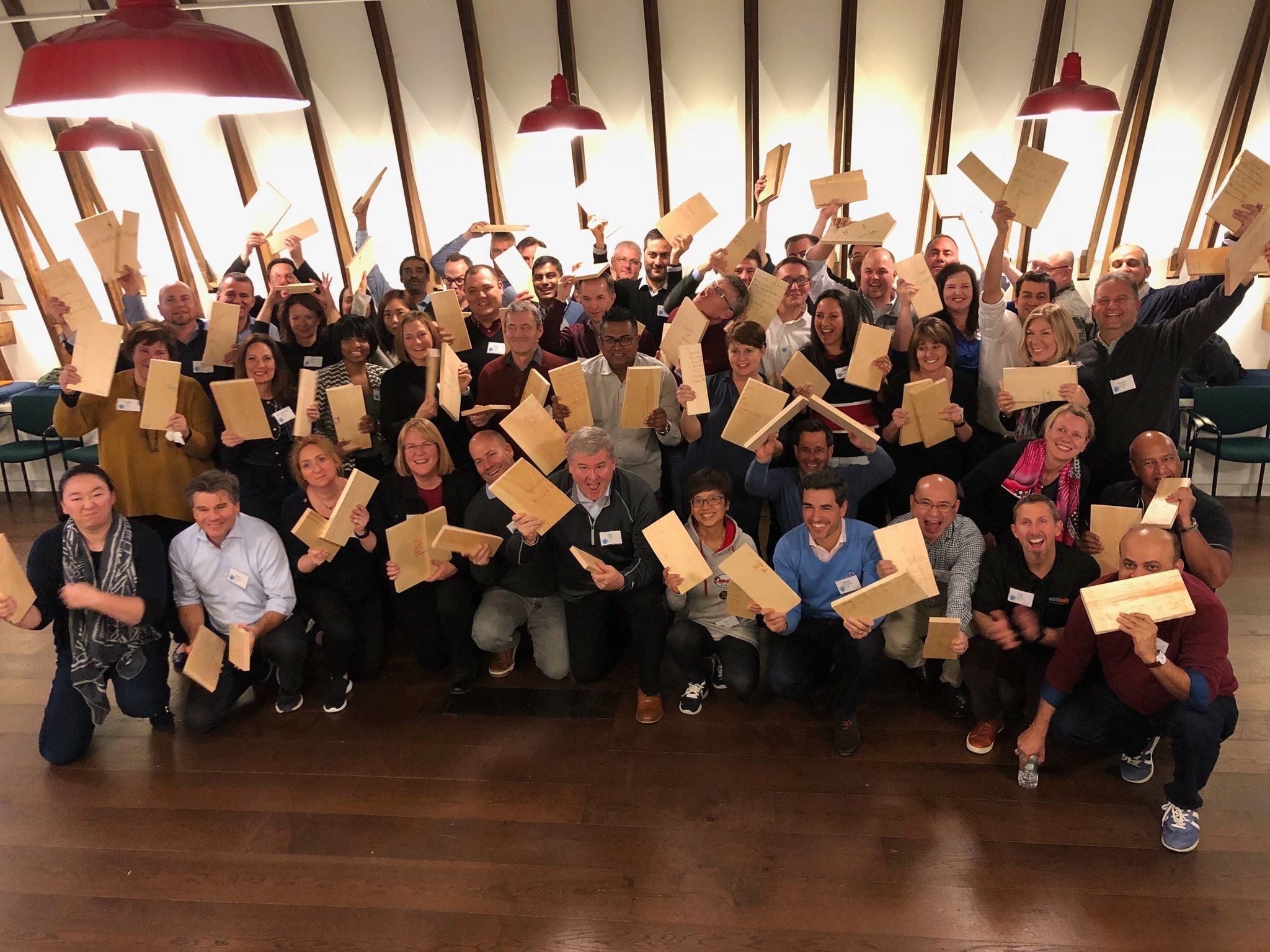
- Use team building to rebuild trust. Activities that build trust and camaraderie help people open up and take pride in their team. An event like Breaking Barriers helps people name their insecurities and goals so they can start tearing silos down.
None of this sticks without rhythm. Build in regular cross-team check-ins, shared channels, and a few recurring rituals so collaboration becomes a habit instead of a resolution everyone forgets by February.
I’m a big believer in the power of play, and one of my favorite ways to dissolve silo mentality is to help people discover how much they already have in common.
That’s exactly what Knowing Me Knowing You, our commonality game, is built to do. Teams race against the clock to uncover shared experiences, racking up points with every “wait, you too?!” moment they find.
When colleagues who’d normally never cross paths realize they share the same offbeat hobby or started out in the same industry, those walls come down fast. Once people genuinely know each other, future collaboration gets a whole lot easier.
Common ground is disarming. It’s hard to keep treating someone as “the other department” once you’ve learned you both coach little league or survived the same brutal commute.
Overcoming the challenges of siloed working
Breaking down silos comes with real challenges, so it helps to know what you’re up against before you start. Like any big workplace change, you’ll hit a few hurdles, and being ready for them makes all the difference.
The most common obstacle is a lack of leadership support. People follow by example, so if leaders aren’t visibly committed to breaking down silos, employees won’t be either.
To fix that, unify your leaders around common goals and the bigger picture. Once they see the damage silos cause, they can rally behind tearing them down together. Aligning leaders around shared purpose is exactly what our leadership activities are designed to do.
The other challenge is simply keeping the momentum going. Finishing one round of silo busting doesn’t mean you’re done, because silos can quietly reappear.
Make your changes the new standard. If you’re encouraging cross-department communication, keep it as standard operating procedure so it becomes part of daily life instead of a one-time push.
It also helps to track progress out loud. When people can see silos shrinking, in faster handoffs or fewer nasty surprises, they stay bought in and keep the momentum going.
How TeamBonding helps break down team silos
TeamBonding helps break down team silos by turning collaboration into an experience people genuinely enjoy. Over the years, we’ve helped countless organizations dismantle silos through events that make working together feel like play.
Take The Big Picture, one of our most popular programs. Small teams each paint a section of canvas, and those sections come together into one large mural.
It pushes people to coordinate within their group and across teams to land a satisfying result, chipping away at siloed communication and building a more collaborative culture. Here’s what the American Heart Association had to say about it:
“This was an excellent team bonding experience. Collaborating within your group and with other groups to find matching sections, as well as the overall group, to coordinate teams to create and supply various paint colors, it was great fun! Our mural turned out to be a vibrant work of art! Very well done! I would recommend this awesome activity without hesitation. Thank you for a great experience!”
That’s just one option. Knowing Me Knowing You tackles silos from the connection angle, while a program like the Domino Effect forces teams to plan, prototype, and sync up so every piece connects into one seamless chain reaction.
Different mechanics, same goal: getting people out of their silos and into the same room, working toward something together. That’s true whether your team is local, visiting from out of town, or flying in from across the country for the event.

Bring your team together with TeamBonding
Even in our hyper-connected world, silo mentality is still a problem, one that limits productivity, stalls collaboration, and erodes company culture. The good news is you can break it down.
It starts with encouraging communication, promoting cross-department collaboration, celebrating diversity, and leaning on team building to rebuild trust.
If you’re ready to unite your people, TeamBonding is here to help. We’ve got a wide variety of events built to break down silos in the workplace and get everyone pulling in the same direction.
Get in touch with us today, and let’s start building a stronger, more connected culture together.


Get more insights in our newsletter:
* every subscription supports charity!
PODCAST
Get ideas, inspiration and best practices from across the globe.




Plays well with these activities.