

What Team Building Consultants Do and Why Your Team Needs One
You booked the two-hour open bar. People laughed, somebody posted photos, and then everybody went back to their desks. Two weeks later, the same two departments still aren’t talking to each other.
That gap between a fun afternoon and a team that genuinely works better is where team building consultants earn their keep. This article explains what they do, why companies hire them, what to look for, and where team building consulting is headed next.
I started TeamBonding in 1988, back when I produced murder mystery dinner theater and noticed something: companies loved the laughs, but they wanted a reason to say yes.
So I built the company around what I call justifiable fun: real entertainment with a real purpose behind it. Nearly four decades later, the request has changed in one important way. Companies need an outcome, not just an event.
What’s the difference between team building events and team building consulting?
A team building event is one experience with a beginning and an end. Team building consulting is the thinking that wraps around it, so the experience lands on the right problem, and the effects outlast the day.
Side by side, they split like this:
Team building event
- Best for: A team that already works well
- Starts with: A date and a headcount
- Scope: One experience
- Win looks like: People had a great time
Team building consulting
- Best for: A team with a problem that keeps resurfacing
- Starts with: A conversation about what’s breaking down
- Scope: Diagnosis, design, delivery, and follow-up
- Win looks like: Something changed, and it stayed changed
Picture two companies calling me in the same week. The first has a healthy team and a new office to celebrate, so they want something memorable. The second has a sales group and an engineering group that keep blaming each other.
The first company needs an event. The second needs a conversation first, and then an event built specifically for that friction.
Consulting adds three things an event by itself can’t:
- Diagnosis, so you’re solving the problem you have instead of the one you assume you have.
- Design, so the activity maps to that problem rather than to whatever was popular last quarter.
- Follow-through, so managers know what to do on Monday morning.
Both approaches work. They just answer different questions, and the benefits of team building compound when you pick the right one.
What do team building consultants do?
Team building consultants figure out what’s really getting in your team’s way, then design and run experiences that address it. The event is the visible part. Most of the value sits on either side of it.
In practice, team building consulting services usually cover:
- Discovery, which means talking to leadership and often to the team itself about where collaboration breaks down.
- Program design, matching your goals, culture, budget, and group size to the right format.
- Facilitation, with a trained facilitator reading the room and adjusting in real time.
- Logistics, including venues, staffing, timelines, and the hundred details nobody wants to own.
- Debrief and follow-through, turning what happened in the room into something managers can keep using.
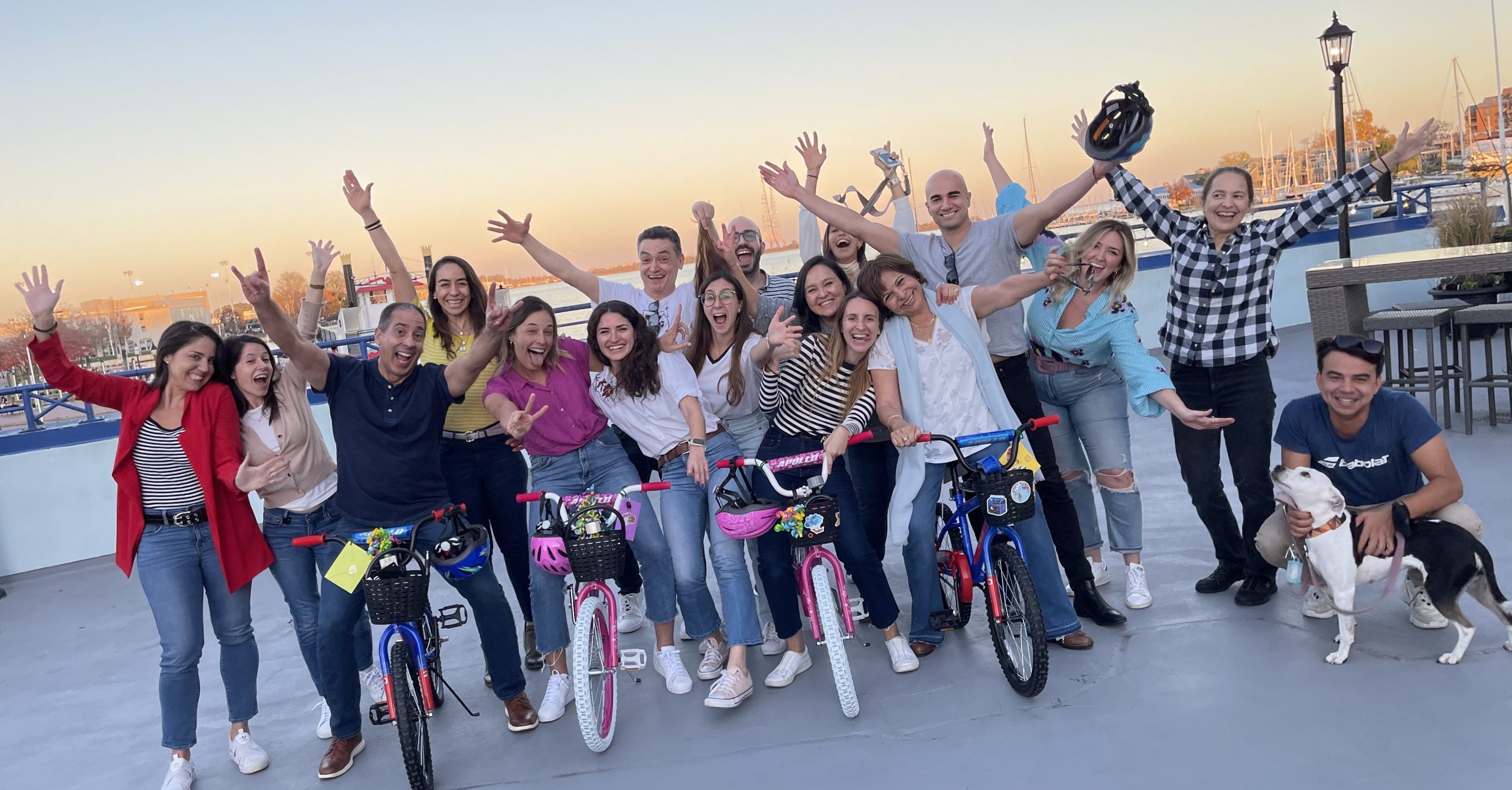
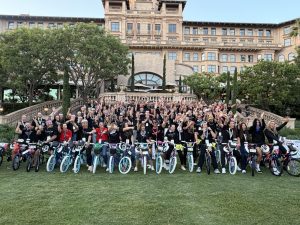
The range matters here. Sometimes the right answer is a professional development workshop on communication or conflict. Sometimes it’s a charity event where the team builds bikes for kids.
A good consultant will tell you which one fits, even when it isn’t the biggest line item on the invoice.
What are the benefits of team building consulting?
The biggest benefit is that you stop paying for activities that don’t change anything. Beyond that, the numbers behind engaged teams are hard to argue with.
Gallup puts global employee engagement at 20% in 2025, the lowest it’s been since 2020, with disengagement costing the world economy roughly $10 trillion in lost productivity. That’s the hole most leaders are trying to climb out of.
The upside is just as measurable. Gallup’s engagement research found that business units in the top quartile are 23% more profitable and have 81% lower absenteeism than those in the bottom quartile.
Consulting helps you aim at that gap on purpose. It also tends to deliver a few quieter wins:
- Less wasted budget, because you’re not repeating experiences that didn’t work.
- Faster trust between people who technically already work together.
- A clearer read on your culture, which feeds directly into your broader employee experience strategy.
- Managers who learn something about their own teams by watching them play.
That last one surprises people. I’ve seen a quiet analyst take charge of a build challenge while her manager stands back and rethinks who’s ready for more responsibility. Play reveals things meetings hide, which is why engagement activities are worth treating as more than a perk.
What are the key qualities of team building consultants?
The key qualities of team building consultants come down to curiosity, range, and honesty about results. If someone pitches you a program before asking a single question about your team, that tells you plenty.
Here’s what I’d look for:
- They ask first. Expect questions about your goals, your history, your group size, and what you’ve already tried.
- They’ve run the room themselves. Lived facilitation experience beats a slide deck about facilitation every time.
- They have range. One format for every client is a red flag, whether it’s ropes courses or improv.
- They talk about the day after. Ask what follow-up looks like, and listen for a real answer.
- They’ll push back. The best consultants will tell you when an event is the wrong tool entirely.
- They can connect the activity to purpose. Teams can smell a filler afternoon, and meaningful work is what makes the difference.
One more practical test: ask who will be standing in front of your team. Not the salesperson, the facilitator. The answer should come quickly and specifically.
The TeamBonding consulting process
Our process has four steps: we listen, we design, we deliver, and we follow through. You tell us what you want to change, and we handle the rest, from program design and logistics to facilitation and cleanup. You stay in control of the big decisions while we carry the workload.
Here’s what each step looks like.
1. We start with a conversation
Every engagement begins with questions. We’ll ask about your goals, your team, your group size, your budget, your timing, and what you’ve already tried. If something keeps breaking down, like two departments that don’t trust each other, we want to hear about it.
Not sure what you need yet? That’s okay. Plenty of clients call us with a hunch and no plan, and figuring it out together is part of the job.
2. We design an experience around your goals
With 200+ programs to draw from, we match your goals to the right format and then customize it to your culture and values. That might be a facilitated communication workshop, a high-energy competition, or a charity event like Charity Bike Build, where your team leaves something real behind for the community.
For larger initiatives, we go further with theme development, custom challenges, scriptwriting, and a full run-of-show.
3. We handle the logistics and run the room
Our event pros take care of planning, materials, staffing, setup, and cleanup. On the day, a professional facilitator leads the experience, reads the room, and adjusts in real time so everyone stays engaged, even the skeptics.
That frees you to participate alongside your team instead of managing from the sidelines.
4. We help you keep the momentum going
What happens after the event matters just as much as the event itself. We help you capture key learnings so leaders can share them and managers can build on them. If you’d like, we can also provide professional photos and recap videos.
Many clients take the next step and work with us on an annual event calendar that maps out quarterly culture experiences, CSR initiatives, holiday events, and virtual touchpoints. That way, engagement doesn’t depend on one great afternoon.
What does team building consulting look like in practice?

Every summer, a leading consulting firm welcomes more than 3,000 interns for weeklong training. They come from audit, tax, consulting, and corporate functions, and they arrive in waves. Each group needs to build relationships and feel part of the larger organization.
Since 2018, we’ve delivered more than 500 events for this firm as its preferred team building partner. Rather than repeat one signature event, the firm trusts us to choose the right experience for each group. That’s led to 35 different programs, from high-energy options like In It to Win It and Corporate Feud to CSR programs like The Big Give.
The process stays simple. The firm’s planner sends us dates, group sizes, and objectives. We handle the rest, including program selection, staffing, shipping, onsite requirements, and facilitators who have become an extension of the firm’s event team.
As the firm’s event contact told us,
“I know when y’all are onsite, I never have to worry about it.”
2027 trends in team building consulting
The clearest trend in team building consulting is a shift from booking activities to solving stated problems. Clients arrive with a goal now rather than a date, and that changes everything about how we work.
A few others worth watching as you plan next year:
- Manager-focused programs. Gallup found manager engagement fell to 22% in 2025, down from 27% the year before, so the people holding teams together need support of their own.
- Hybrid by default. Teams split across homes and offices need formats built for both at once, which is why we’re seeing more requests for hybrid events, not fewer.
- Human skills as the differentiator. As AI absorbs more routine work, the things it can’t do—reading a room, resolving tension, building trust—become the premium skills.
- Purpose attached to the fun. In our experience, CSR programs that produce something real for a community are the events people still talk about months later.
- Measurement that isn’t a smile sheet. Expect more pre- and post-pulse surveys, retention tracking, and honest conversations about what moved.
None of this makes the classic stuff obsolete. It just means the bar for why you’re doing it has moved up, which is good for everyone.
Ready to talk to a team building consultant?
If your team keeps having the same problem after every offsite, that’s your signal. The activity probably isn’t the issue, and no amount of trust falls will fix a diagnosis nobody made.
Start with a conversation about what you’re trying to change. Our corporate event consulting team will ask the questions first, then build something your team will genuinely want to show up for. And the best part is team building consulting is included when you book with us!
That’s the whole idea behind justifiable fun. Let’s find yours.
Talk to a Team Building Consultant today!


Get more insights in our newsletter:
* every subscription supports charity!
PODCAST
Get ideas, inspiration and best practices from across the globe.




Plays well with these activities.